

THE FORUM: NORTHWESTERN’S PREMIER LEGAL BLOG

The Legality of Fraudulent Cryptocurrency "Pump and Dump" Schemes
Claire Lu
By: Claire Lu
Edited by: Dheven Unni and Maayan Abouzaglo
The growth of the cryptocurrency market has been accompanied by rampant speculation and excitement. However, as buying cryptocurrency has become a popular form of investment, concerns about potential exploitation and fraud have increased concurrently.[1] The decentralized nature of cryptocurrencies makes this system of monetary exchange difficult to regulate, as information is stored and distributed through “blockchain” technology that oversees transactions and records data in place of the central banks that regulate traditional currencies.[2] This absence of an overseeing authority makes cryptocurrency prone to dramatic gains and losses. At the same time, the volatility of cryptocurrency prices offers high-risk, high-reward investments that offer instant gratification to its investors. To those who seek to gain some control over the cryptocurrency market's fluctuations, however, the internet is a network bringing together bad actors who seek to manipulate and profit from cryptocurrency trading.[3]
These online groups congregate in heavily-encrypted anonymous chatrooms such as Discord and Telegram where they openly strategize about “pump-and-dump schemes.”[4] Although pump-and-dump schemes (P&Ds) have existed since the 18th century, they have found new life in the cryptocurrency market. Traditionally, pump-and-dump schemes aim to artificially inflate the price of an asset. After buying an initial amount of a stock, the person orgroup behind the pump and dump will advertise and spread misinformation about the asset. As more people become excited by the prospect of gains and jump into buying assets of their own, the price rises. After a certain point, however, the original person or group will sell their assets at a significantly higher price, exit the market, and dissolve the publicity campaign, causing the price to drop drastically. Inexperienced investors who come into the market late to avoid missing out are then saddled with the devalued asset, no more buyers, and big losses.[5]
In the cryptocurrency market, the overall scheme of a pump-and-dump is identical, but several major differences exist. Unlike the meticulously planned pump-and-dump schemes that occur over several months, cryptocurrency P&Ds can elapse in a matter of minutes, making it nearly impossible for those without insider knowledge to benefit from the scheme. As a result, the modus operandi of cryptocurrency P&Ds relies on the concerted efforts of unrelated strangers who conspire over the internet to drive up the prices at designated times rather than just by spreading misinformation.[6] Perhaps more importantly, however, traditional pump-and-dump schemes have been outlawed by the U.S. Securities and Exchange Commission due to their damage on individuals and financial markets, whereas cryptocurrency P&Ds exist in a grey area that is yet to be addressed by the law.[7]
Despite evidence that P&D groups generate millions of dollars of trading activity – an estimate that may be grossly underrepresented, as it only factors in public P&D groups – cryptocurrency scammers are able to thrive in a decentralized and unregulated environment.[8] There is currently a legal vacuum that fails to properly regulate cryptocurrencies due to their stateless and multifunctional nature. Though cryptocurrencies such as Bitcoin are not considered legal tender in most developed countries, they cannot be classified as securities because they are used across diverse categories. This makes it difficult to apply existing securities laws to cryptocurrencies. In addition, despite the increasing efforts by governments to assign regulatory bodies to govern cryptocurrencies, the premise of cryptocurrency technology means that many transactions exist beyond the jurisdiction of governments.[9]
Therefore, while the obvious solution to protect investors from perpetrators of pump-and-dump schemes seems to be simply to issue a ban and prosecute those involved, many have questioned the feasibility and effectiveness of regulating cryptocurrencies. Some worry that increased government oversight would stifle financial innovation and induce a shift to other, less regulated platforms.[10] Others cite the challenges described earlier as evidence that regulation of the cryptocurrency market is simply impossible.[11]
While some of these are valid concerns, the damage that P&Ds inflict on individual investors and the health of the cryptocurrency market must be addressed. In 2017, a U.S.-based cryptocurrency exchange named Bittrex banned P&Ds. Though P&Ds were not completely eliminated, researchers found that there was not only a marked decrease in P&Ds, but this ban also increased token prices and liquidity, which proves that P&Ds lead to negative externalities in the market.[12] The Bittrex case study also demonstrates that a ban would be technologically possible, so the remaining challenge would be to create a legal framework that can feasibly impose some type of regulatory oversight over market manipulations in the cryptocurrency market.
Addressing this concern would require governments to establish new categories and laws to address the changing landscape of fintech.[13] Currently, the US government is attempting to apply existing laws to monitor cryptocurrency. For example, in January 2017the Department of Justice and Treasury Department's Financial Crimes Enforcement Network (FinCEN) used money-laundering provisions in the Bank of Secrecy Act to indict Coin.mx with bank fraud.[14] This approach is short-sighted, however, as cryptocurrencies fall outside of most currently-used categories, and existing laws will likely be inadequate as cryptocurrency evolves and new issues emerge. Therefore, while it may be possible to temporarily address P&D schemes with similar laws that ban stock-market P&Ds, it would be much more effective for the government to take proactive steps to properly address this new category of assets.[15]
As evidenced by the rampant exploitation of legal loopholes, the lack of appropriate governance over the cryptocurrency market contributes to a “Wild West” mentality. This comes with a sense of lawlessness and lack of accountability that creates a dangerous arena for inexperienced investors and threatens the credibility of cryptocurrencies. The ubiquity of fraudulent P&D schemes in the status quo points to a larger question about where and if cryptocurrencies fit in current legal frameworks. In order to create a more sustainable and ethical trading environment, governments must provide regulation over cryptocurrency exchanges by reimagining laws and offering protection for investors looking to expand into the crypto-space.
NOTES:
Yukun Liu and Aleh Tsyvinski, “Risks and Returns of Cryptocurrency,” The Review of Financial Studies, 2020, https://doi.org/10.1093/rfs/hhaa113.
Jake Frankenfield, “Cryptocurrency,” Investopedia (Investopedia, March 8, 2021), https://www.investopedia.com/terms/c/cryptocurrency.asp.
Galen Moore, “The Mechanics of Market Manipulation,” CoinDesk (CoinDesk, December 4, 2019), https://www.coindesk.com/the-mechanics-of-market-manipulation.
Josh Kamps and Bennett Kleinberg, “To the Moon: Defining and Detecting Cryptocurrency Pump-and-Dumps,” Crime Science 7, no. 1 (2018), https://doi.org/10.1186/s40163-018-0093-5.
Ibid.
Tao Li, Donghwa Shin, and Baolian Wang, “Cryptocurrency Pump-and-Dump Schemes,” SSRN Electronic Journal, 2018, https://doi.org/10.2139/ssrn.3267041.
J.T. Hamrick et al., “An Examination of the Cryptocurrency Pump-and-Dump Ecosystem,” Information Processing & Management 58, no. 4 (2021): p. 102506, https://doi.org/10.1016/j.ipm.2021.102506.
Josh Kamps and Bennett Kleinberg, “To the Moon: Defining and Detecting Cryptocurrency Pump-and-Dumps.
Donghwa Shin, “Should Cryptocurrency ‘Pump-and-Dump’ Schemes Be Regulated?,” Frank Hawkins Kenan Institute of Private Enterprise (The Kenan Institute, December 2020), https://kenaninstitute.unc.edu/kenan-insight/should-cryptocurrency-pump-and-dump-schemes-be-regulated/.
Ibid.
Daniel Araya, “The Challenges of Cryptocurrency Regulation,” The Regulatory Review, October 13, 2018, https://www.theregreview.org/2018/10/09/araya-challenges-cryptocurrency-regulation/.
Gideon Pell, “Regulating Crypto Exchanges: Mind The Gaps,” Forbes (Forbes Magazine, August 15, 2019), https://www.forbes.com/sites/gideonpell/2019/08/14/regulating-crypto-exchanges-mind-the-gaps/?sh=56b6deb16d9c.
Tao Li, Donghwa Shin, and Baolian Wang, “Cryptocurrency Pump-and-Dump Schemes.”
Rebecca M. Bratspies, “Cryptocurrency and the Myth of the Trustless Transaction,” SSRN Electronic Journal, 2018, https://doi.org/10.2139/ssrn.3141605.
Wong Paul, “Pump-and-Dump: Manipulation of Cryptocurrency Markets,” Humphreys Law, September 25, 2019, https://humphreys.law/block4-pump-and-dump/.
BIBLIOGRAPHY:
Araya, Daniel. “The Challenges of Cryptocurrency Regulation.” The Regulatory Review, October 13, 2018. https://www.theregreview.org/2018/10/09/araya-challenges-cryptocurrency-regulation/.
Bratspies, Rebecca M. “Cryptocurrency and the Myth of the Trustless Transaction.” SSRN Electronic Journal, 2018. https://doi.org/10.2139/ssrn.3141605.
Frankenfield, Jake. “Cryptocurrency.” Investopedia. Investopedia, March 8, 2021. https://www.investopedia.com/terms/c/cryptocurrency.asp.
Hamrick, J.T., Farhang Rouhi, Arghya Mukherjee, Amir Feder, Neil Gandal, Tyler Moore, and Marie Vasek. “An Examination of the Cryptocurrency Pump-and-Dump Ecosystem.” Information Processing & Management 58, no. 4 (2021): 102506. https://doi.org/10.1016/j.ipm.2021.102506.
Kamps, Josh, and Bennett Kleinberg. “To the Moon: Defining and Detecting Cryptocurrency Pump-and-Dumps.” Crime Science 7, no. 1 (2018). https://doi.org/10.1186/s40163-018-0093-5.
Li, Tao, Donghwa Shin, and Baolian Wang. “Cryptocurrency Pump-and-Dump Schemes.” SSRN Electronic Journal, 2018. https://doi.org/10.2139/ssrn.3267041.
Liu, Yukun, and Aleh Tsyvinski. “Risks and Returns of Cryptocurrency.” The Review of Financial Studies, 2020. https://doi.org/10.1093/rfs/hhaa113.
Moore, Galen. “The Mechanics of Market Manipulation.” CoinDesk. CoinDesk, December 4, 2019. https://www.coindesk.com/the-mechanics-of-market-manipulation.
Paul, Wong. “Pump-and-Dump: Manipulation of Cryptocurrency Markets.” Humphreys Law, September 25, 2019. https://humphreys.law/block4-pump-and-dump/.
Pell, Gideon. “Regulating Crypto Exchanges: Mind The Gaps.” Forbes. Forbes Magazine, August 15, 2019. https://www.forbes.com/sites/gideonpell/2019/08/14/regulating-crypto-exchanges-mind-the-gaps/?sh=56b6deb16d9c.
Shin, Donghwa. “Should Cryptocurrency ‘Pump-and-Dump’ Schemes Be Regulated?” Frank Hawkins Kenan Institute of Private Enterprise. The Kenan Institute, December 2020. https://kenaninstitute.unc.edu/kenan-insight/should-cryptocurrency-pump-and-dump-schemes-be-regulated/.
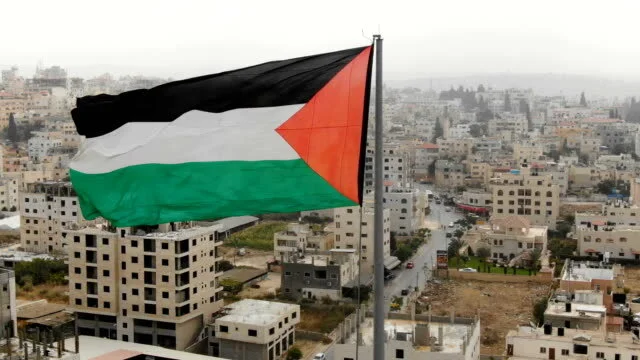
Significance and Challenges of the International Criminal Court's Decision on the Situation in Palestine
Rakkshet Singhaal
By: Rakkshet Singhaal
Edited By: Tess Ballis and Hannah Cheves
International law is the foundation upon which the rules-based international order is built. It is a joint commitment by all states to perform their operations in compliance with agreed-upon laws that have evolved over time. The absolute commitment to its tenets by all United Nations member states is crucial in attempts to resolve any intractable conflict, including that between Israel and the Palestinians. On February 5, 2021, International Criminal Court (ICC) ruled that it has jurisdiction over the suspected war crimes and international law violations committed in Palestinian territory since 2014.[1] ICC's decision to open an inquiry into the situation in Palestine is significant as it unbolts the door for justice in Palestine. Justice being the first step toward achieving peace, as the latter is meaningless without the former. This paper analyzes how the ICC has tackled the central issue of whether it has jurisdiction over Palestinian territory since its conception and examines the significance and challenges of the ruling given in 2021, especially its role in achieving peace in Palestine.
CENTRAL ISSUE
The Israeli-Palestinian conflict is one of the world’s most contentious conflicts. At its core, it is a conflict between two self-determination states claiming the same territory: the Jewish Zionist initiative and the Palestinian nationalist project. Attempts to resolve the conflict by the ICC have been made several times, but none have been fruitful. Every time the case is raised, the ICC has found itself without jurisdiction over the crimes committed in Palestine.[2]
It was first in 2009, after the Palestinian–Israeli war in Gaza, that the ICC got a declaration from the Palestinian Justice Minister, accepting the jurisdiction of the ICC under Article 12(3) of the Rome Statute of the International Criminal Court and a request to start an investigation into the humanitarian and human rights crimes committed during the war by Israel.[3] Article 12(3) allows non-signatory states to recognize the Court's jurisdiction over international crimes on an ad hoc basis. However, Article 12(3) declaration is not the same as referring to a situation; it merely recognizes jurisdiction in the absence of complete ratification. In the absence of a State Party or Security Council referral, it is a mandatory precondition for the Office of the Prosecutor to exercise its proprio motu powers that allow the ICC Prosecutor to launch an investigation, as laid down in Article 15(1).[4]
After acknowledging the declaration of the Palestinian declaration, the ICC Prosecutor launched a preliminary examination to determine if there is a legitimate ground to proceed with an investigation.[5] As stated in Article 53 of the Statute, the ICC conducts a preliminary investigation into the following matters: (1) whether the Court has jurisdiction; (2) whether the situation is admissible under the principle of complementarity (the ICC can only exercise jurisdiction when national legal structures refuse to do so, including when they appear to act but are unwilling or unable to carry out genuine proceedings); and (3) whether there are substantial reasons to believe that an investigation would serve the interests of justice.[6] The ICC Prosecutor usually conducts these investigations in the above-mentioned order because it would consider jurisdiction first even though a later consideration, such as admissibility, provides fair reasons not to proceed. This approach has the potential to lengthen the preliminary review process and increase the anxiety of states under investigation.
During the preliminary examination's early stages, the Goldstone Report was issued by the United Nations Fact-Finding Mission on the Gaza Conflict. The Mission found that both the Israeli and Palestinian military committed war crimes, as defined by Article 8 of Rome Statute during the conflict, including offenses that fall within the ICC purview. The Mission concludes that the Israeli armed forces' actions entail gross violations of the Geneva Convention relative to the Protection of Civilian Persons in Time of War (referred to as the Geneva Convention IV) in terms of deliberate killings and infliction of severe pain on protected individuals, and as such give rise to individual criminal liability. It also determined that the direct targeting and unlawful killing of Palestinian civilians violate the right to life. The Israeli armed forces used excessive violence, causing significant harm and devastation to civilian property and infrastructure, as well as misery to civilian populations. Based on the findings, the Mission made two recommendations: the Human Rights Council should forward the report to the ICC Prosecutor, and the Security Council should refer the case to the ICC if the examination that is being conducted by the ICC finds that the domestic authorities are not performing credible inquiries into the crimes committed. Furthermore, the Mission also suggested that the ICC Prosecutor should expedite the examination as much as possible.[7]
In April 2012, after much deliberation, the then-prosecutor, Luis Moreno Ocampo, stated that he would not continue an inquiry because he reckoned that the Court's jurisdiction only pertained to states included by the Statute. He believed that it was not up to the ICC to determine whether Palestine is a state or not but, “[i]t is for the relevant bodies at the United Nations or the Assembly of States Parties to make the legal determination whether Palestine qualifies as a State to accede to the Rome Statute and thereby enable the exercise of jurisdiction by the Court under Article 12(1).”[8]
Instead of looking at it as a setback, this decision provided Palestine with an opportunity to move beyond the parameters of statehood set by the Montevideo Convention, which required a state must have a permanent population, a fixed territory, a government, and the ability to engage in foreign relations.[9] Gaining recognition from the General Assembly would allow the ICC Prosecutor to start an investigation into the suspected war crimes committed in Palestine.
On November 29, 2012, in a closely watched vote by the international community, the General Assembly adopted resolution 67/10, which recognized Palestine as a sovereign state by granting it non-member observer status, similar to that of the Holy See. A crucial step that facilitated Palestinian efforts to bring the suspected war crimes committed by Israel before the ICC.[10]
The change in status enabled Palestinian delegates to continue participating in general debate, cosponsoring motions, and voting in some procedural votes. They were, however, powerless to ask for a referendum or vote on substantive issues. According to reports, several European countries exchanged a “yes” vote for the resolution 67/10, for promises that Palestine will not hurry to join the ICC. With the promise from Palestinian authorities, there also came a gentle reminder that Palestine's right to decide whether to join ICC and given Palestine's goals and best interests, they will determine the appropriate pacing.[11] Within a month of the decision, the Secretariat started using the designation of “State of Palestine” in all official UN documents[12] and precisely one year later, the Palestinian delegation cast their first vote in General Assembly.[13]
Following the Battle of Gaza in 2007, Hamas, a Palestinian Sunni-Islamic fundamentalist group, became the de facto ruling body of the Gaza Strip. Hamas was established in order to free Palestine, especially modern-day Israel, from Israeli occupation and to create an Islamic state in what is now Israel, the West Bank, and Gaza.[14] In July 2014, Israel launched “Operation Protective Edge,” a military operation in the Hamas-ruled Gaza Strip, following the kidnapping and murder of three Israeli teenagers by Hamas’s members. A seven-week conflict broke out, with both sides taking part in airstrikes and ground bombardment, killing thousands and leaving tens of thousands homeless.[15]
As soon as the conflict ended, ICC had to issue a statement on whether it has jurisdiction over Palestine due to immense pressure from the media and their claim that ICC is avoiding investigation over crimes committed in Gaza due to international pressure. ICC reiterated that the situation on Palestinian territories was outside the ICC's jurisdiction at the time, despite certain legal scholars' such as Geoffrey Robertson claiming that the Court should interfere even though formal jurisdictional parameters have not been reached as “it would be a new and possibly productive way to deal with the cloudy legalities.”[16]
With the memory of the conflict still fresh, multiple attempts were made by Palestinian authroity in the General Assembly and Security Council for Palestine’s statehood, but they all failed.[17] With complete statehood out of sight, on December 31, 2014, President Mahmoud Abbas ratified the Rome Statute of the International Criminal Court, giving non-member observer status. The ratification placed the Palestinian Authority's territories under the jurisdiction of the ICC.[18] In addition, President Abbas and the Palestinian Authority released a new Article 12(3) resolution acknowledging the ICC's retroactive jurisdiction, “for the purpose of identifying, prosecuting and judging authors and accomplices of crimes within the jurisdiction of the Court committed in the occupied Palestinian territory, including East Jerusalem, since June 13, 2014.”[19] Within seventeen days (January 16, 2015) of ratifying the Rome Statute, a preliminary examination was opened by the ICC Prosecutor “in order to establish whether the Rome Statute criteria for opening an investigation [were] met.”[20]
After almost five years of examination, on December 20, 2019, ICC Prosecutor Fatou Bensouda established that the preliminary inquiry into the Situation in Palestine has ended with the conclusion that all of the relevant requirements under the Rome Statute for the opening of an investigation have been fulfilled, after a comprehensive, unbiased, and impartial review of all credible evidence available to her office. However, considering the procedural and factual problems surrounding this case, the Prosecutor demanded from Pre-Trial Chamber a jurisdictional decision on the extent of the ICC’s territorial authority in Palestine under article 12(2)(a) of the Rome Statute, which gives the ICC jurisdiction over offenses committed on the territories of a State party to the Rome Statute.[21]
Adhering to the request made by the Prosecutor, on January 28, 2020, the ICC Pre-Trial Chamber released an order outlining the protocol and timetable for submitting findings under Article 19(3) of the Rome Statute regarding the extent of the Court's territorial authority in the situation in the State of Palestine.[22] After a year of investigation, the ICC decided by the majority that in the situation in Palestine, they have jurisdiction over the territory annexed by Israel after 1967, including Gaza, the West Bank, and East Jerusalem.[23] After two decades of struggle and multiple rejections by the ICC, finally, on March 3, 2021, the ICC Prosecutor announced the start of a formal investigation into the Palestinian situation.[24]
SIGNIFICANCE AND CHALLENGES
Around the world, international humanitarian and human rights law is under pressure from and being weakened by a growing culture of impunity. For more than five decades, Israel has occupied Palestinian territories, which has been marked by flagrant violations of international humanitarian law and human rights law. Dozens of UN resolutions and international calls to end Israel's long-term occupation and allow Palestinians to exercise their right to self-determination have been ignored. Not only has the Israeli government refused to meet its most fundamental commitments as an occupying force under international humanitarian law to ensure the safety and protection of the civilian community in the occupied Palestinian territory, but it has also fostered a culture of impunity within its military.[25]
The crisis has been exacerbated by a military justice system that avoids conducting serious and unbiased investigations by relying entirely on debriefings of troops, which are sometimes mislabeled as "operational investigations," to decide whether or not a Military Police inquiry is necessary.[26] Moreover, the Supreme Court of Israel, which established its jurisdiction over the occupied territories shortly after the occupation in 1967, refused to apply the terms of the Geneva Convention IV on the security of citizens, which Israel has ratified. Israel’s stance is that the Convention is not valid within the occupied territories, despite the dominant opinion in international law and among the international community. This stance also allowed the Court to avoid questioning Israeli settlements' legitimacy in the occupied territories in compliance with Geneva Convention IV, article 49, paragraph 6,[27] which states that “the Occupying Power shall not deport or transfer parts of its own civilian population into the territory it occupies.”[28]
For a long time, the international community's apparent neglect of international humanitarian law application had compelled individual Palestinians and international human rights organizations to investigate possible ways of privately applying the law in the occupied territories in foreign domestic courts. Credible processes of accountability are required to bring this practice to an end. The significance of an ICC investigation lies in its potential to confront Israel's decades of impunity, through which Palestinian injustice is profoundly rooted. The ICC has the authority to try suspects of specific crimes committed in Palestine. As a result, it offers a significant avenue for pursuing the adoption of the UN investigatory bodies' guidelines for transparency in Palestine.[29] The ICC’s investigation into the Situation in Palestine must now build on dossiers on suspected offenders proposed by the UN Commissions of Inquiry on the 2014 Gaza Conflict and the 2018 Great March of Return, which was tasked with “identifying those responsible.” The investigation discovered that Israeli security forces were responsible for 189 deaths and over 300 casualties. Furthermore, the investigation discovered that the responsibility for wrongful deaths and accidents was shared mainly on two fronts. First, anyone that used deadly force, participated in its use, or allowed its use in exceptional circumstances, such as where there was no immediate danger to life or the target was not actively engaging in hostilities; this involves snipers, spotters, and/or commanders on the ground. And second, those who wrote and accepted the rules of engagement.[30]
As significant as the ICC mechanism is in addressing Israeli impunity, it is insufficient on its own and must be pursued with other routes of accountability. The 2018 Commission of Inquiry emphasized that states parties to the Rome Statute and the Geneva Convention IV have an obligation to exercise criminal authority and punish or extradite alleged suspects of crimes committed in Palestine in their own courts.[31]
The root causes of Palestinian injustice, including Israel's protracted occupation, the closing of Gaza, and the ongoing deprivation of the Palestinian people's right to self-determination, must be resolved if the Palestinian people's situation is to be meaningfully changed by international justice and transparency processes. Treating only the effects of the Palestinian people's more significant expulsion and dispossession would amount to nothing more than "temporary band-aids." While international criminal justice is critical for confronting Israeli impunity, it must be balanced by targeted multilateral sanctions and other successful punitive actions by third party countries in order to end the illegitimate situation levied on the Palestinian people and deter more crimes in Palestine.[32]
While the Palestinian Authority has accepted the ICC decisions, even though the ruling has implications on both the parties concerned, Israel has refused to cooperate and has fiercely criticized the decision.[33]
Israel's diplomatic allies have aided its attempts to sway the Court. For example, in a letter sent in February 2020, Canada reportedly told the ICC of its opposition to criminal prosecution in Palestine while also informing the Court of Canada's annual commitment to its budget.[34] This was accompanied by various state representations challenging the Court's work in Palestine, including those from Austria, Australia, Brazil, the Czech Republic, Germany, Hungary, and Uganda.
The most blatant effort to undermine the ICC, though, came from the United States. Following the Court's assessment of the situation in Palestine and suspected war crimes committed by US personnel in Afghanistan, the Trump administration released an executive order permitting penalties to be placed on critical members of the Court's team, including its chief Prosecutor, Fatou Bensouda.[35] ICC has described Trump's executive order as an "unprecedented" assault on justice and the rule of law. In a statement issued by a spokesman, Ned Price, the State Department voiced "serious concerns" about the ICC’s decision. He further stated that “the United States has always taken the position that the court's jurisdiction should be reserved for countries that consent to it, or that are referred by the UN Security Council.”[36] However, with the new administration in power, Joe Biden rescinded these sanctions on April 2, 2021, as he claimed that the issue could be handled by engaging with all parties of the ICC process rather than imposing sanctions. Despite the lifting of sanctions, the new administration appears to strongly disagree with the ICC's conduct pertaining to the Palestinian situations and opposes the ICC's attempts to claim jurisdiction over personnel of non-State Parties such as Israel.[37]
International support would be critical now that the ICC decision has been made public; all states must honor their legal commitments, as enshrined in the Rome Statute and the Geneva Conventions, and not stand in the way of what Palestinians have long requested.
Despite the political environment in which the ICC would have to operate, it is essential to recognize that the Court's very structure contains various limits. The Palestinian citizens have been colonized, displaced, and oppressed far beyond the Gaza Strip and West Bank, including East Jerusalem, and yet the International Criminal Court (ICC) will only prosecute international crimes committed within the geographical unit.[38]
The Court's temporal jurisdiction is fixed from June 13, 2014, according to the terms of the State of Palestine's accession to the Rome Statute, a time interval that spans just a fraction of the decades-long deprivation of the Palestinian people's human and communal rights since the Nakba of 1948, where half of Palestine's population was forced to flee or was driven from their homes.[39] There has been no concrete international inquiry or UN process that addresses the situation of the Palestinian community as a whole, including Palestinians on both sides of the Green Line as well as Palestinian refugees and exiles refused their right of return.[40]
Importantly, Palestinian oppression is a long-term and systematic process, but the ICC is intended to seek justice on a case-by-case basis. Individual perpetrators of Rome Statute offenses will and should be adjudicated by the ICC, for instance, the building and maintenance of Israeli settlements, as well as the indiscriminate targeting of civilians. However, the Court's mandate is limited in terms of fixing root causes.[41] Despite these restrictions, the ICC must understand the broader sense of Israeli fragmentation of the Palestinian community, particularly by investigating violations that breach the Green Line, the demarcation line established in the 1949 Armistice Agreements between Israel's army and those of Egypt, Jordan, Lebanon, and Syria following the 1948 Arab–Israeli War. This should include the unlawful movement of Palestinian captives from the occupied territories to Israeli detention centers, where they are subjected to torture and other kinds of ill-treatment on a regular basis.[42]
CONCLUSION
ICC ruling on the situation in the state of Palestine, which came six years after the Court's Chief Prosecutor's Office, Fatou Bensouda's, launched a formal inquiry into Israeli conduct in the territories was a precedent-setting decision. ICC ruled that it has jurisdiction over suspected war crimes and violations of international law committed in Palestinian territory, providing the opportunity for a criminal investigation into Israeli actions. It provides the ability to hinder the growth of the conflict fueled by the lack of admissibility to investigate and prosecute the alleged crimes and the unwillingness to recognize international rules. The ruling by ICC broke the continuous cycle of immunity, which has protected all parties involved in the conflict in Palestine for crimes under international law and has opened the doors for justice in the occupied territory where an investigation can finally happen. However, the Court's very structure has limitations in that it not only prosecutes international crimes committed inside the geographical area, but it also has a limited time constraint that does not account for suspected war crimes done before 2014. Moreover, the constant international pressure from nations worldwide makes it hard to find a suitable decision. Nevertheless, the ICC's ruling reaffirms the Court's impartiality, integrity, and ability to respect the rule of law and its aim to ensure that no government, no matter how large or small, is above the rules.
NOTES:
Decision on the 'Prosecution Request Pursuant to Article 19(3) for a Ruling on the Court's Territorial Jurisdiction in Palestine'," International Criminal Court, https://www.icc-cpi.int/Pages/record.aspx?docNo=ICC-01/18-143.
James L. Gelvin, The Israel-Palestine conflict: One hundred years of war, Cambridge University Press, 2014.
Sung Un Kim, "ICC Lacks Jurisdiction to Investigate Palestine War Crimes Claims: Prosecutor," Jurist 3 (2013).
"Rome Statute of the International Criminal Court," https://www.icc-cpi.int/NR/rdonlyres/EA9AEFF7-5752-4F84-BE94-0A655EB30E16/0/Rome_Statute_English.pdf.
"Timeline: Palestine and the International Criminal Court," Just Security, January 29, 2019, https://www.justsecurity.org/5199/timeline-palestine-icc/.
"Rome Statute of the International Criminal Court," https://www.icc-cpi.int/NR/rdonlyres/EA9AEFF7-5752-4F84-BE94-0A655EB30E16/0/Rome_Statute_English.pdf.
United Nation Human Rights Council 12/48, Human Rights in Palestine and Other Occupied Arab Territories, A/HRC/12/48 (September 25, 2009), https://documents-dds-ny.un.org/doc/UNDOC/GEN/G09/158/66/PDF/G0915866.pdf?OpenElement.
“Situation in Palestine,” International Criminal Court, https://www.icc-cpi.int/NR/rdonlyres/9B651B80-EC43-4945-BF5A-FAFF5F334B92/284387/SituationinPalestine030412ENG.pdf.
"Montevideo Convention on the Rights and Duties of States," The Faculty of Law, https://www.jus.uio.no/english/services/library/treaties/01/1-02/rights-duties-states.xml.
General Assembly 67/10, Cooperation between the United Nations and the Eurasian Economic Community, A/RES/67/10 (February 6, 2013), https://documents-ddsny.un.org/doc/UNDOC/GEN/N12/479/20/PDF/N1247920.pdf?OpenElement.
Al Jazeera, "Palestinians Renew Statehood Bid," Europe News | Al Jazeera, November 29, 2012, https://www.aljazeera.com/news/2012/11/29/un-votes-to-upgrade-palestinian-status.
United Nations Department of Public Information, Secretary-General Appoints Yeocheol Yoon of Republic of Korea Chief of Protocol, March 8, 2012, https://www.un.org/News/Press/docs/2012/sga1336.doc.html.
Palestinians Cast First-ever Vote in UN General Assembly," The Jerusalem Post | JPost.com, November 18, 2013, https://www.jpost.com/Middle-East/Palestinians-cast-first-ever-vote-in-UN-General-Assembly-332160.
Philip Mattar, Encyclopedia of the Palestinians, Infobase Publishing, 2005.
Eitan Shamir, "Rethinking operation protective edge," Middle East Quarterly (2015).
"Statement of the Prosecutor of the International Criminal Court, Fatou Bensouda: 'The Public Deserves to Know the Truth about the ICC's Jurisdiction over Palestine'," International Criminal Court, September 02, 2014, https://www.icc-cpi.int/Pages/item.aspx?name=otp-st-14-09-02.
Michael R. Gordon, and Somini Sengupta, "Resolution for Palestinian State Fails in United Nations Security Council," The New York Times, December 30, 2014, https://www.nytimes.com/2014/12/31/world/middleeast/resolution-for-palestinian-state-fails-in-security-council.html.
Noah J. Gordon, "Why the Palestinians Joined the International Criminal Court," The Atlantic, December 31, 2014. https://www.theatlantic.com/international/archive/2014/12/Abbas-Palestine-International-Criminal-Court-Rome-Statute/384159/.
International Criminal Court, Declaration Accepting the Jurisdiction of the International Criminal Court, December 31, 2014, https://www.icc-cpi.int/iccdocs/PIDS/press/Palestine_A_12-3.pdf.
International Criminal Court, State of Palestine, ICC-01/18, https://www.icc-cpi.int/palestine.
"Statement of ICC Prosecutor, Fatou Bensouda, on the Conclusion of the Preliminary Examination of the Situation in Palestine, and Seeking a Ruling on the Scope of the Court's Territorial Jurisdiction," International Criminal Court, December 20, 2019, https://www.icc-cpi.int/Pages/item.aspx?name=20191220-otp-statement-palestine.
"ICC Pre-Trial Chamber Invites Palestine, Israel, Interested States, and Others to Submit Observations," International Criminal Court, January 28, 2020, https://www.icc-cpi.int/Pages/item.aspx?name=pr1512.
Decision on the 'Prosecution Request Pursuant to Article 19(3) for a Ruling on the Court's Territorial Jurisdiction in Palestine'," International Criminal Court, https://www.icc-cpi.int/Pages/record.aspx?docNo=ICC-01/18-143.
"Statement of ICC Prosecutor, Fatou Bensouda, Respecting an Investigation of the Situation in Palestine," International Criminal Court, March 03, 2021, https://www.icc-cpi.int/Pages/item.aspx?name=210303-prosecutor-statement-investigation-palestine.
"Promoting Impunity: The Israeli Military’s Failure to Investigate Wrongdoing," Human Rights Watch, https://www.hrw.org/report/2005/06/21/promoting-impunity/israeli-militarys-failure-investigate-wrongdoing#.
"Promoting Impunity: The Israeli Military’s Failure to Investigate Wrongdoing," Human Rights Watch, https://www.hrw.org/report/2005/06/21/promoting-impunity/israeli-militarys-failure-investigate-wrongdoing#.
"Legal Consequences of the Construction of a Wall in the Occupied Palestinian Territory: International Court of Justice," International Court of Justice, https://www.icj-cij.org/en/case/131/advisory-opinions.
"IV Geneva Convention Relative to the Protection Of Civilian Persons in Time of War " United Nations, https://www.un.org/en/genocideprevention/documents/atrocity-crimes/Doc.33_GC-IV-EN.pdf.
"Is the Hague Finally About to Challenge Israeli Impunity?" Novara Media, February 23, 2021, https://novaramedia.com/2021/02/23/is-the-hague-finally-about-to-challenge-israeli-impunity/.
"No Justification for Israel to Shoot Protesters with Live Ammunition," OHCHR, https://www.ohchr.org/EN/HRBodies/HRC/Pages/NewsDetail.aspx?NewsID=24226&LangID=E.
"Report of the Independent International Commission of Inquiry on the Protests in the Occupied Palestinian Territory," OHCHR, https://www.ohchr.org/EN/HRBodies/HRC/RegularSessions/Session40/Documents/A_HRC_40_74_CRP2.pdf.
"Putting the International Criminal Court's Palestine Investigation into Context," Opinio Juris, April 02, 2021, http://opiniojuris.org/2021/04/02/putting-the-international-criminal-courts-palestine-investigation-into-context/.
“Netanyahu: An ICC Investigation of Israel Would Be 'Pure Anti-Semitism',” Aaron Boxerman and TOI staff, Nathan Jeffay, Jacob Magid, Judah Ari Gross and TOI staff, AFP and TOI staff, et al, The Times of Israel, February 6, 2021, https://www.timesofisrael.com/netanyahu-an-icc-investigation-of-israel-would-be-pure-anti-semitism/.
Ron Csillag, "Canada Backs Israel in ICC Challenge," The Canadian Jewish News, February 27, 2020, https://www.cjnews.com/news/canada/canada-backs-israel-in-icc-challenge.
Jennifer Hansler, "Trump Authorizes Sanctions against International Criminal Court Officials," CNN, June 14, 2020, https://edition.cnn.com/2020/06/11/politics/icc-executive-order/index.html.
"Statement of the International Criminal Court on Recent Measures Announced by the US," International Criminal Court, June 11, 2020, https://www.icc-cpi.int/Pages/item.aspx?name=200611-icc-statement.
"US Lifts Trump's Sanctions on ICC Prosecutor, Court Official," Reuters, April 02, 2021, https://www.reuters.com/article/us-usa-icc-sanctions/u-s-lifts-trumps-sanctions-on-icc-prosecutor-court-official-idUSKBN2BP1GY.
International Criminal Court, Declaration Accepting the Jurisdiction of the International Criminal Court, December 31, 2014, https://www.icc-cpi.int/iccdocs/PIDS/press/Palestine_A_12-3.pdf.
International Criminal Court, Declaration Accepting the Jurisdiction of the International Criminal Court, December 31, 2014, https://www.icc-cpi.int/iccdocs/PIDS/press/Palestine_A_12-3.pdf.
Micheal G. Kearney, "The Denial of the Right of Return as a Rome Statute Crime," Journal of International Criminal Justice (2020).
"Report on Preliminary Examination Activities (2017)," International Criminal Court, December 04, 2017, https://www.icc-cpi.int/Pages/item.aspx?name=171204-rep-otp-PE.
"Addameer Collects Hard Evidence on Torture and Ill-Treatment Committed against Palestinian Detainees at Israeli Interrogation Centers," Addameer, December 23, 2019, https://www.addameer.org/news/addameer-collects-hard-evidence-torture-and-ill-treatment-committed-against-palestinian.
BIBLIOGRAPHY:
"Addameer Collects Hard Evidence on Torture and Ill-Treatment Committed against Palestinian Detainees at Israeli Interrogation Centers." Addameer. December 23, 2019. https://www.addameer.org/news/addameer-collects-hard-evidence-torture-and-ill-treatment-committed-against-palestinian.
Csillag, Ron. "Canada Backs Israel in ICC Challenge." The Canadian Jewish News. February 27, 2020. https://www.cjnews.com/news/canada/canada-backs-israel-in-icc-challenge.
"Decision on the 'Prosecution Request Pursuant to Article 19(3) for a Ruling on the Court's Territorial Jurisdiction in Palestine'." International Criminal Court. https://www.icc-cpi.int/Pages/record.aspx?docNo=ICC-01/18-143.
Gelvin, James L. The Israel-Palestine conflict: One hundred years of war. Cambridge University Press, 2014.
Gordon, Michael R., and Somini Sengupta. "Resolution for Palestinian State Fails in United Nations Security Council." The New York Times. December 30, 2014. https://www.nytimes.com/2014/12/31/world/middleeast/resolution-for-palestinian-state-fails-in-security-council.html.
Gordon, Noah J. "Why the Palestinians Joined the International Criminal Court." The Atlantic. December 31, 2014. https://www.theatlantic.com/international/archive/2014/12/Abbas-Palestine-International-Criminal-Court-Rome-Statute/384159/.
Hansler, Jennifer. "Trump Authorizes Sanctions against International Criminal Court Officials." CNN. June 14, 2020. https://edition.cnn.com/2020/06/11/politics/icc-executive-order/index.html.
"ICC Pre-Trial Chamber Invites Palestine, Israel, Interested States, and Others to Submit Observations." International Criminal Court. January 28, 2020. https://www.icc-cpi.int/Pages/item.aspx?name=pr1512.
International Criminal Court, Declaration Accepting the Jurisdiction of the International Criminal Court, December 31, 2014. https://www.icc-cpi.int/iccdocs/PIDS/press/Palestine_A_12-3.pdf
International Criminal Court, State of Palestine, ICC-01/18. https://www.icc-cpi.int/palestine
"IV Geneva Convention Relative to the Protection Of Civilian Persons in Time of War " United Nations. https://www.un.org/en/genocideprevention/documents/atrocity-crimes/Doc.33_GC-IV-EN.pdf.
"Is the Hague Finally About to Challenge Israeli Impunity?" Novara Media. February 23, 2021. https://novaramedia.com/2021/02/23/is-the-hague-finally-about-to-challenge-israeli-impunity/.
Kearney, Micheal G. "The Denial of the Right of Return as a Rome Statute Crime." Journal of International Criminal Justice (2020).
"Legal Consequences of the Construction of a Wall in the Occupied Palestinian Territory: International Court of Justice." International Court of Justice. https://www.icj-cij.org/en/case/131/advisory-opinions.
Mattar, Philip. Encyclopedia of the Palestinians. Infobase Publishing, 2005.
"Montevideo Convention on the Rights and Duties of States." The Faculty of Law. https://www.jus.uio.no/english/services/library/treaties/01/1-02/rights-duties-states.xml.
“Netanyahu: An ICC Investigation of Israel Would Be 'Pure Anti-Semitism'.” Aaron Boxerman and TOI staff, Nathan Jeffay, Jacob Magid, Judah Ari Gross and TOI staff, AFP and TOI staff, et al. The Times of Israel, February 6, 2021. https://www.timesofisrael.com/netanyahu-an-icc-investigation-of-israel-would-be-pure-anti-semitism/.
"No Justification for Israel to Shoot Protesters with Live Ammunition." OHCHR. https://www.ohchr.org/EN/HRBodies/HRC/Pages/NewsDetail.aspx?NewsID=24226&LangID=E.
"Palestinians Cast First-ever Vote in UN General Assembly." The Jerusalem Post | JPost.com. November 18, 2013. https://www.jpost.com/Middle-East/Palestinians-cast-first-ever-vote-in-UN-General-Assembly-332160.
"Palestinians Renew Statehood Bid." Europe News | Al Jazeera. November 29, 2012. https://www.aljazeera.com/news/2012/11/29/un-votes-to-upgrade-palestinian-status.
"Promoting Impunity: The Israeli Military’s Failure to Investigate Wrongdoing." Human Rights Watch. https://www.hrw.org/report/2005/06/21/promoting-impunity/israeli-militarys-failure-investigate-wrongdoing#.
"Putting the International Criminal Court's Palestine Investigation into Context." Opinio Juris. April 02, 2021. http://opiniojuris.org/2021/04/02/putting-the-international-criminal-courts-palestine-investigation-into-context/.
"Report of the Independent International Commission of Inquiry on the Protests in the Occupied Palestinian Territory." OHCHR. https://www.ohchr.org/EN/HRBodies/HRC/RegularSessions/Session40/Documents/A_HRC_40_74_CRP2.pdf.
"Report on Preliminary Examination Activities (2017)." International Criminal Court. December 04, 2017. https://www.icc-cpi.int/Pages/item.aspx?name=171204-rep-otp-PE.
"Rome Statute of the International Criminal Court." https://www.icc-cpi.int/NR/rdonlyres/EA9AEFF7-5752-4F84-BE94-0A655EB30E16/0/Rome_Statute_English.pdf.
Shamir, Eitan. "Rethinking operation protective edge." Middle East Quarterly (2015).
Rudoren, Jodi. “Joining International Criminal Court Wouldn’t Guarantee Palestinians a War Crimes Case.” The New York Times. January 1, 2015. https://www.nytimes.com/2015/01/02/world/middleeast/court-membership-wouldnt-guarantee-palestinians-a-war-crimes-case.html
Sella, Amnon. “Custodians and Redeemers: ISRAELI Leaders' Perceptions of Peace, 1967–79.” Middle Eastern Studies 22, no. 2 (1986): 236–51. https://doi.org/10.1080/00263208608700661.
“Situation in Palestine.” International Criminal Court. https://www.icc-cpi.int/NR/rdonlyres/9B651B80-EC43-4945-BF5A-FAFF5F334B92/284387/SituationinPalestine030412ENG.pdf
"Statement of the International Criminal Court on Recent Measures Announced by the US." International Criminal Court. June 11, 2020. https://www.icc-cpi.int/Pages/item.aspx?name=200611-icc-statement.
Statement of ICC Prosecutor, Fatou Bensouda, on the Conclusion of the Preliminary Examination of the Situation in Palestine, and Seeking a Ruling on the Scope of the Court's Territorial Jurisdiction." International Criminal Court. December 20, 2019. https://www.icc-cpi.int/Pages/item.aspx?name=20191220-otp-statement-palestine.
"Statement of ICC Prosecutor, Fatou Bensouda, Respecting an Investigation of the Situation in Palestine." International Criminal Court. March 03, 2021. https://www.icc-cpi.int/Pages/item.aspx?name=210303-prosecutor-statement-investigation-palestine.
"Statement of the Prosecutor of the International Criminal Court, Fatou Bensouda: 'The Public Deserves to Know the Truth about the ICC's Jurisdiction over Palestine'." International Criminal Court. September 02, 2014. https://www.icc-cpi.int/Pages/item.aspx?name=otp-st-14-09-02.
"Timeline: Palestine and the International Criminal Court." Just Security. January 29, 2019. https://www.justsecurity.org/5199/timeline-palestine-icc/.
United Nations, Department of Public Information, Secretary-General Appoints Yeocheol Yoon of Republic of Korea Chief of Protocol, March 8, 2012. https://www.un.org/News/Press/docs/2012/sga1336.doc.html
United Nations Human Rights Council 12/48, Human Rights in Palestine and Other Occupied Arab Territories, A/HRC/12/48 (September 25, 2009). https://documents-dds-ny.un.org/doc/UNDOC/GEN/G09/158/66/PDF/G0915866.pdf?OpenElement
Un Kim, Sung. "ICC Lacks Jurisdiction to Investigate Palestine War Crimes Claims: Prosecutor." Jurist 3 (2013).
"US Lifts Trump's Sanctions on ICC Prosecutor, Court Official." Reuters. April 02, 2021. https://www.reuters.com/article/us-usa-icc-sanctions/u-s-lifts-trumps-sanctions-on-icc-prosecutor-court-official-idUSKBN2BP1GY.

The Informational Crisis & Political Polarization in American Society
Sara Ibrahim
By: Sara Ibrahim
Edited by: Allison Rhee and Hannah Cheves
The spread of misinformation, proliferated by powerful platforms such as Facebook, Twitter, and Google, is one of the most important legal issues affecting political polarization and discourse today. According to the legal concept of systemic duty of care, content moderation should be obligatory in order to mitigate the detrimental effects of misinformation. Additionally, to hold platforms accountable for effective content moderation, Congress should consider serious revisions to Section 230 of the Communications Decency Act.
Currently, Americans are suffering from an informational crisis, where the spread of misinformation[1] is shared at an alarming rate— profoundly polarizing those of different political affiliations. Misinformation has been found to spread at a faster rate than true information: according to an MIT Sloan School of Management research project, “falsehoods are 70% more likely to be retweeted on Twitter than the truth, and reach their first 1,500 people six times faster.”[2] Additionally, according to a Pew Research study, false information “may actually be accelerating the process of polarization” by “driving consumers to drop some outlets, to simply consume less information overall, and even to cut out social relationships.”[3] Political polarization results in the demonization of opposing political parties, which exacerbates legislative inaction greatly. Compromise and political discourse is increasingly difficult to have when each side does not respect the other enough to collaborate.
The effects of polarization go far beyond just politics. As a society, polarization segregates people, making them cling to their own social and political groups and refusing to bridge over to other groups, further dividing us as American citizens. Misinformation is spreading faster than true information, making misinformation an epidemic that affects many facets of society.
Search engines contribute to the polarization of American society by manipulating how their users see facts. Search engines are first and foremost businesses where consumer attention is the product. In the documentary The Social Dilemma, whistleblowers from Google and Facebook speak on how our worldviews are limited by search engines. They assert that many factors, including where you live and your personal search history, affect your search results. For example, if you Google search “climate change is,” you will find the suggested searches to be anywhere ranging from “a hoax” to “disrupting the planet” depending on what Google knows about your search history, preferences, and location. These results also may not always be scientifically accurate as the algorithm is not programmed to provide suggestions based on true and accurate information, but rather to keep the attention of consumers. This results in the spread of misinformation, which results in the polarization of thought, because each person now relies on a different set of facts. When we all have different facts, meaningful discourse surrounding controversial issues becomes difficult and compromise is unlikely.
Through content moderation, rules, and regulations consistent with a systemic duty of care, platforms’ systems need to be modified to prevent online harm.[4][5] This is nuanced because there is no clear definition of what is classified as “harmful”. Taking down posts that are illegal is one thing; however, “harmful” is an arbitrary and subjective standard. Many would make the argument that removing “harmful” content is a breach of freedom of expression and content moderators should not have such authority. However, this argument ignores that free speech is not absolute and has limitations such as libel and slander, and that these limitations are widely considered to be “harmful.” Moreover, content moderators should have the authority to regulate their content, and the law should foster harm-reductive content moderation.
Section 230 of the Communications Decency Act is one of the most important existing laws when it comes to platform regulation and is crucial to discuss when talking about online misinformation. It essentially grants platforms immunity from liability regarding third party posts while simultaneously allowing them to moderate posted content. Section 230 has been broadly interpreted and gives no incentive for platforms to take down harmful content. It should be revised to only apply to platforms that enact effective content moderation.[6] Generally, conservatives want to repeal Section 230 as they argue it has been used to silence conservative voices. Liberals argue the opposite, that Section 230 allows platforms to ignore slanderous and harmful content, enabling hateful speech. However, Section 230 does not mention neutrality or impartiality. It merely allows companies to set their own regulations when it comes to content moderation, which is harmful because, as noted earlier, companies are in the business of keeping consumers’ attention, not protecting the truth.
Ultimately, the spread of misinformation is an issue that results in political polarization and the perpetuation of echo chambers— affecting all aspects of American life and political discourse. Without agreeing on what information constitutes facts, it becomes very difficult to solve any other issues or for meaningful conversations to take place, which then rules out the possibility of political actions to take place as well. To keep meaningful discourse and the hope of unity alive Section 230 must be modified, as it has the power to hold search engines accountable and help curb the spread of misinformation. This legal issue is pivotal and it is the basis of every other issue because if each person has their own facts, divisions are created, which threatens societal stability and peace. Moreover, content moderation should be enacted under the legal protections of systemic duty of care and Section 230 in order to mitigate political polarization and keep meaningful discourse and unity alive.
NOTES:
false information that is disseminated regardless of intent
Sara Brown, “MIT Sloan Research about Social Media, Misinformation, and Elections,” MIT Sloan School of Management. October 5, 2020, https://mitsloan.mit.edu/ideas-made-to-matter/mit-sloan-research-about-social-media-misinformation-and-elections.
David A. Graham, “Some Real News About Fake News,” Atlantic (Atlantic Media Company, June 12, 2019), https://www.theatlantic.com/ideas/archive/2019/06/fake-news-republicans-democrats/591211/.
A systemic duty of care is a legal standard that states that “platforms are dependent on their users’ social connections and, thus, are obliged to reduce online harms to those users.”.
Alex Engler, “How Biden Can Take the High Road on Misinformation,” Lawfare, 2020, https://www.lawfareblog.com/how-biden-can-take-high-road-misinformation.
Olivier Sylvain, “Section 230's Challenge to Civil Rights and Civil Liberties,” Columbia University, April 6, 2018, https://knightcolumbia.org/content/section-230s-challenge-civil-rights-and-civil-liberties.
BIBLIOGRAPHY:
Brown, Sara. “MIT Sloan Research about Social Media, Misinformation, and Elections,” October 5, 2020, https://mitsloan.mit.edu/ideas-made-to-matter/mit-sloan-research-about-social-media-misinformation-and-elections.
Engler, Alex. “How Biden Can Take the High Road on Misinformation,” Lawfare, 2020, https://www.lawfareblog.com/how-biden-can-take-high-road-misinformation.
Graham, David. “Some Real News About Fake News,” The Atlantic (Atlantic Media Company, June 12, 2019), https://www.theatlantic.com/ideas/archive/2019/06/fake-news-republicans-democrats/591211/.
Sylvain, Olivier. “Section 230's Challenge to Civil Rights and Civil Liberties,” Knight First Amendment Institute at Columbia University , April 6, 2018, https://knightcolumbia.org/content/section-230s-challenge-civil-rights-and-civil-liberties.
Author's Social Media Usernames: Twitter (@ibrahimrsara) and Instagram (@ibrahimm.s)

Kramer vs. Kramer and the Kafkaesque Resolution of Disputes in Family Law
Avanish Kar
By: Avanish Kar
Edited By: Allison Rhee and Danielle Spitz
The 1979 classic film Kramer vs. Kramer, starring Academy Award-winning performers Meryl Streep, Dustin Hoffman, and Justin Henry, portrays the struggles of an American couple fighting over custody of their only child, who is wedged in between his parents’ marital issues. While the movie showcases the struggle between two adults and the pain and suffering they cause their child, it also asks a broader and more socially relevant question: is our legal system obstructing justice instead of providing it?
Although the movie was released over 40 years ago, the problems portrayed in the plot still persist in our families and courtrooms. The story centers around Ted Kramer, a New York-based workaholic executive at a top advertising firm who is too busy to pay attention to his family life. This work-life imbalance causes his homemaker wife Joanna emotional turmoil, and his son Ben to be devoid of paternal care and attention. While Ted achieves new heights in his career, his wife’s displeasure increases and he comes home one day to find his wife leaving him and their son. The following few weeks are difficult for Ted and Ben, who face a great deal of trouble balancing Ted’s career, Ben’s schoolwork, daily chores, and the painful loss of the woman of the house. However, as time passes, Ted realizes the importance of Ben in his life and reciprocally, Ben develops an unbreakable bond with his once emotionally distant father. In a turn of events, after being away for 18 months, Joanna is back to regain custody over Ben. Ted, being possessive of his son, refuses to give in to Joanna’s demands and what ensues is a mentally and financially taxing courtroom battle between Ted and Joanna.
Ted perfectly embodies the problems inherent in our legal system when asked by his lawyer to list the pros and cons of pursuing the case against Joanna for custody of their child. There was no entry in the “pros'' column, while there were many in the “cons” column, which included: “Money,” “No Privacy,” “Work affected” and “No social life.” While these are very valid concerns for any litigant, they draw attention to additional problems with our legal systems that need to be highlighted and addressed.
The very purpose of legal systems worldwide is to ensure that our dispute resolution processes are easy, accessible and beneficial to all parties whilst maintaining a degree of objectivity and fairness during the entire process. The legal drama between Ted and Joanna in the movie is completely absent of these elements, which make any legal system reliable and credible.
The most problematic aspect of what was showcased in the movie during the legal proceedings was that there was an adversarial system of dispute resolution between an ex-husband and an ex-wife.The adversarial system has many benefits, especially in criminal trials. One of these is that “the right to confront your accuser” which is enshrined in the 6th Amendment to the Constitution of the United States, is in the best way exercised [1]. However, even the most tenuous of relationships between a husband and wife should ideally not be characterized as one which is adversarial (unless there are criminal charges involved). This is because the focus of the attorneys shifts from arguing on the merits of the case with respect to the law, to engaging in a character assassination of the litigants.
This was seen in Kramer vs. Kramer quite evidently, especially when Ted’s lawyer informs him that their side has the burden to prove that Joanna was an unfit or cruel mother in order to ensure that he gets custody of Ben. Ted’s lawyer follows through with this idea and engages in a very harsh line of questioning, even going so far as to asking her how many boyfriends she has had in order to extract a confession that she has not been a good mother. This is reciprocated by Joanna’s lawyer, when he tries to allude to the fact that Ted was an inept parent because he failed to protect Ben from an injury which was purely accidental and beyond his control. This type of adversarial questioning only worsens the relations between two already distant individuals and does no good to either side.
Furthermore, the role of the court in perpetuating gender norms by assigning particular roles to men and women is an example of outdated thinking and arbitrariness, which is aptly dismantled by the movie. The fact that emphasis was placed on ideas like “motherliness”, where women have the exclusive ability to care for their children in certain ways, was refuted by showing the audience that with the right amount of intent and diligence, men can take care of the child like a woman is traditionally expected to. This is very poignantly expressed in the movie. In the beginning of the movie, Ted is unable to make French toast for Ben, but when Ben is ready to go to his mother after she wins the court case, Ted perfectly makes it. This shows us that changes are possible and that the rigid legal system must be reformed to account for the possibility of change.
Therefore, in light of the above arguments, it can certainly be said that as shown in Kramer vs. Kramer, the litigant, who for the courts is merely a litigant, loses out as a parent regardless of the outcome of the case. This happens when they are subjected to the Kafkaesque injustices that are meted out by the courts which have failed in their primary duty of providing justice in a non-prejudicial manner. The only way to improve this is by making judges rethink their gender biases.
Recent examples of initiatives in this direction are the international conferences organized by the National Supreme Court of Justice of Mexico where hundreds of judges engaged in a thoughtful discussion of court decisions from across the globe with regard to gender bias [2]. More such initiatives should be encouraged in other jurisdictions which are in desperate need of a gender sensitive judiciary.
NOTES:
“Right to Confront Witness.”, Legal Information Institute, Cornell Law School https://www.law.cornell.edu/wex/right_to_confront_witness
Vanessa Ruiz, “The Role of Women Judges and a Gender Perspective in Ensuring Judicial Independence and Integrity. (Ruiz 2019)”, January 8, 2019, UNODC https://www.unodc.org/dohadeclaration/en/news/2019/01/the-role-of-women-judges-and-a-gender-perspective-in-ensuring-judicial-independence-and-integrity.html
BIBLIOGRAPHY:
Benton, Robert, dir. 1979. Kramer vs. Kramer.
Ruiz, Vanessa. 2019. “The Role of Women Judges and a Gender Perspective in Ensuring Judicial Independence and Integrity.” UNODC. https://www.unodc.org/dohadeclaration/en/news/2019/01/the-role-of-women-judges-and-a-gender-perspective-in-ensuring-judicial-independence-and-integrity.html.
Legal Information Institute, Cornell Law School. n.d. “Right to Confront Witness.” Legal Information Institute. Accessed September 23, 2021. https://www.law.cornell.edu/wex/right_to_confront_witness.