

THE FORUM: NORTHWESTERN’S PREMIER LEGAL BLOG
The Legality of Humanitarian Intervention
By: Sam Bull
Edited By: clark mahoney and william tong
On April 6, 1994, a plane carrying Juvénal Habyarimana, the president of Rwanda at the time, was shot down over the small central African country’s capital of Kigali. [1] Within hours, the Rwandan military and several militant groups belonging to the country’s Hutu ethnic majority initiated their plan to systematically slaughter Rwanda’s Tutsi minority. In the next 100 days, these groups killed an estimated 800,000 people—wiping out 70% of Rwanda’s Tutsis and 10% of the country’s total population—in what is today known as the Rwandan Genocide. [2] Great controversy arose over a lack of a coordinated response from international institutions like the United Nations (UN), and in the years that followed, the event spurred discussions of tweaking international law with regard to interventions in global humanitarian crises.
The Rwandan Genocide serves as an example of one of international law’s greatest flaws—there is no superior authority to enforce rules, principles, or recommendations created by international institutions. Thus, while many components of international law are recognized as “binding” between states, there exists great ambiguity (and thus intense debate) over the true authority of a wide array of international principles and the cases to which they may apply.
Rarely does this ambiguity prevail more glaringly than in the realm of humanitarian intervention—using armed forces to prevent human rights violations within another state’s borders. Such action successfully prevented the escalation of human suffering in Iraq in 1991, in Kosovo in 1999 and in Libya in 2011—so where was it in Rwanda when nearly one million people were killed? On a broader level, the legality of humanitarian intervention and the manner in which it should be used are topics of much importance as well as much obscurity. Intervention is legal and can be carried out under some circumstances outlined by the UN, but factors like the recommendatory nature of that institution, potentially contradictory statutes of international law, and calls for systemic international reform, among other things, cast doubt upon the principle and the practical applications of that standard.
At the 2005 UN World Summit, the international community attempted to improve after the failure of Rwanda through the unanimous approval of a principle creating more concrete obligations toward preventing mass atrocities: the Responsibility to Protect (R2P) doctrine. The doctrine has three tiers: the first states that every state has the responsibility to protect its own population from genocide, war crimes, ethnic cleansing and crimes against humanity. The second states that the broader international community has a responsibility to assist nations in holding up the first tier within their own borders. The third tier states (most controversially) that if a state is “manifestly failing” to protect its people, the international community must work to take collective action quickly, decisively and in accordance with the UN Charter. [3] In establishing R2P as an international norm, “diplomats sought to close the gap between the existing legal responsibilities of states, already articulated in international humanitarian and human rights law, and the reality of populations threatened with large scale and systematic violence.” [4] R2P has become a solidified norm (at least in theory) in the decades since its conception, yet the all-important third pillar concerning the use of military force remains a source of great controversy.
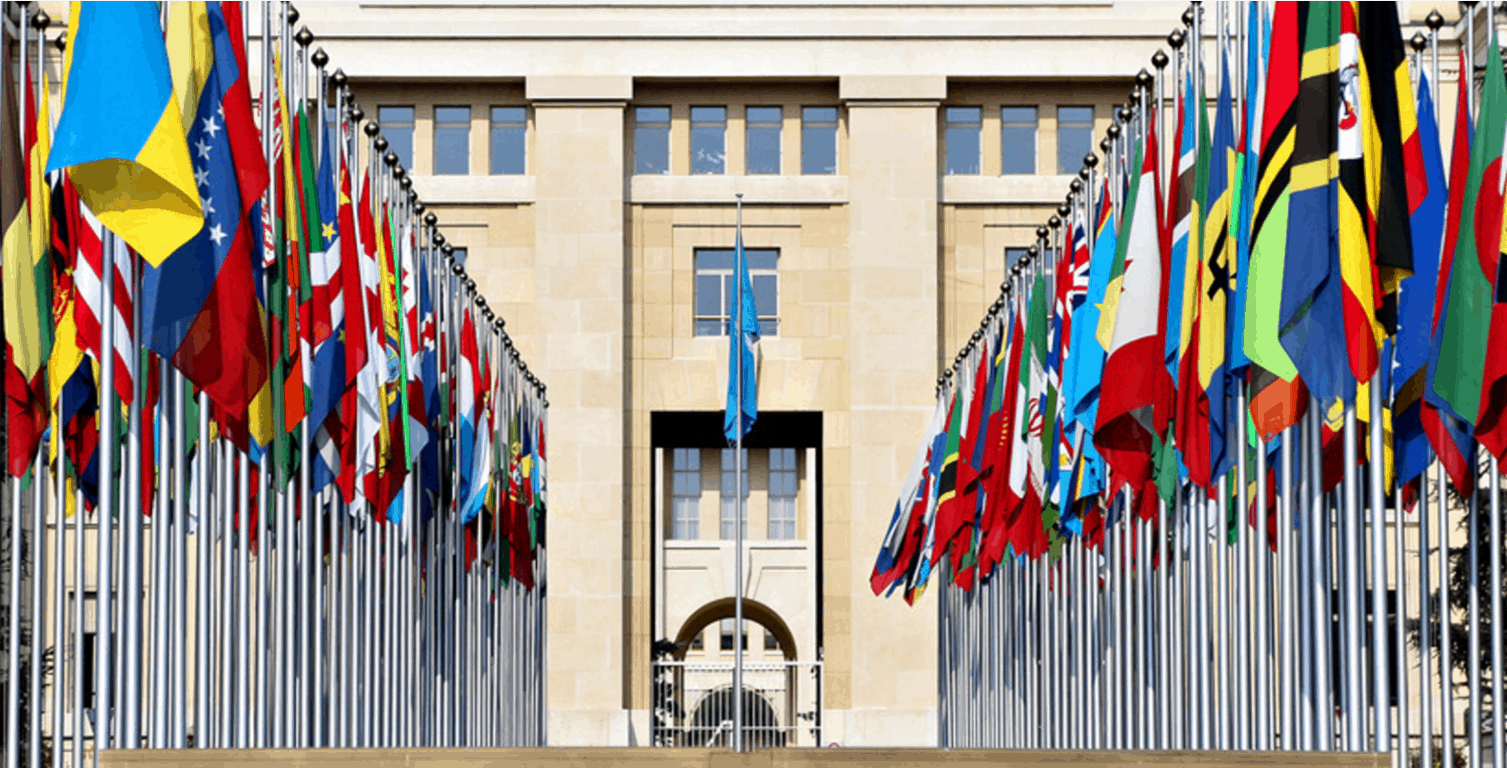
The UN makes clear in its official Charter under Article 2(4) that its 193 member states must refrain “from the threat or use of force against the territorial integrity or political independence of any state,” but outlines two exceptions to this rule in later articles: self-defense (in Article 51) and UN Security Council (UNSC) authorization (Articles 24, 39-42, etc.). The UNSC is composed of 15 members, with five permanent members (China, England, France, Russia and the United States) and 10 nonpermanent members that are elected in two-year terms by the General Assembly.[5] When a state brings a dispute to the Council, it explores three options, moving on to the next if the former proves inadequate: peaceful resolutions, diplomatic or economic sanctions, and, finally, if deemed a “breach of peace” under Article 39, the use of force. [6] The Council can only act if nine of the 15 members (including all five permanent members) vote in the affirmative.
In Northwestern prof. Ian Hurd’s analysis, the Charter articles outlining the UNSC’s powers “establish that the Council has the ‘primary responsibility for the maintenance of international peace and security’ (Article 24) and that it can take what measures it deems necessary in that pursuit, including military action against states or other threats (Article 42).” [7] However, the most significant contributor to the UNSC’s power is Article 25 of the Charter, which directly states that the UN and all its member states must comply with UNSC decisions—giving it significant authority in choosing if, when and how to proceed with a humanitarian intervention for a given crisis. Thus, if intervention through use of force is authorized via the UNSC and complies with the Council’s authority over “threats to international peace and security,” it is “unambiguously legal.” [8] Further, though flanked by powerful allies like the international status quo and the voluntary participation of most of the world’s countries, the UN generally functions as a recommendatory body; however, the UNSC’s option of the use of force (and thus actual enforcement of international law) gives it much more power than the rest of the UN assembly or any other international institution.
Though humanitarian intervention is sometimes legal by standards created by the UN and the UNSC, the composition and existence of the UNSC itself is a matter of debate in the scholarly community—with some arguing that the immense influence and power that the five permanent members have reflects a colonialist past that existed at the end of World War II when the Council was created. Many scholars and advocates call upon the Council to either expand its permanent members to include the “G-4” countries (Japan, Brazil, India and Germany) or countries from underrepresented regions like the Middle East and Africa, while others say that the only way forward is to disband the Council’s permanent membership altogether due to its enhanced focus on Western priorities and its poor track record in handling humanitarian crises in South Africa, Rwanda, Iraq, and Yemen, among others. [9]
Despite calls for reform, the UNSC remains an institution of significant authority. While intervention is essentially legal under UNSC authorization, the questionable acceptability of use of force by individual states under the cover of “humanitarian intervention”—such as the US’s invasion of Iraq partially under the justification of freeing the Iraqi people from humanitarian crises under Saddam Hussein—outlines the sinister nature of its use in practice. De facto justifications for intervention (such as the 1948 Genocide Convention’s diction in Article I potentially implying that the states involved have an obligation to “prevent and punish” genocide in another state) are consistently used to justify individual use of humanitarian intervention, but the principle argument against intervention’s legality is the UN Charter—which makes abundantly clear under Article 2(4) its intentions to outlaw individual state use of force and centralize these intervention decisions strictly to the UNSC. [10] Pro-intervention scholars often use, either explicitly or implicitly, the “illegal, but…” justification for individual state intervention, implying that intervention is illegal but justified or legitimate because of the atrocities it can prevent. However, these justifications rely on a “defense of necessity” argument—or the idea that commiting a crime is justified in order to prevent a worse crime—an insufficiently concrete ideal in comparison to the much stronger one of state sovereignty and the prohibition of its violation under the UN Charter and many other international institutions. [11]
The debate surrounding humanitarian intervention and its legality paints an important picture for international law as a whole; lack of strict enforcement on the international stage means that essentially every statute, even those enshrined in the UN Charter or other “binding” pieces of international legislation, is up for debate and can be easily violated with little pushback. For example, scholar Thomas Franck said of Article 2(4) that states have “violated it, ignored it, run roughshod over it, and explained it away,” depreciating its value as a respected and enforced law. [12] Thus, international law essentially rests on the intentions of the most powerful countries in the world in a given era of history, which right now centers around permanent UNSC members like China, Russia and the US. Ambiguity will persist in a domain lacking enforcement, but creation of new, widely supported norms can set a precedent for what the international community is willing to accept as well as what actions can prevent atrocities like the Rwandan Genocide from happening again.
NOTES:
History, History.com Editors. “Rwandan Genocide.” History.com, 14 Oct. 2009, https://www.history.com/topics/africa/rwandan-genocide
Bhalla, Nita. “Factbox: Rwanda remembers the 800,000 killed on 25th anniversary of genocide.” Reuters, 6 April 2019, https://www.reuters.com/article/us-rwanda-genocide-anniversary-factbox/factbox-rwanda-remembers-the-800000-killed-on-25th-anniversary-of-genocide-idUSKCN1RI0FV
“What is R2P?” Global Centre for the Responsibility to Protect, https://www.globalr2p.org/what-is-r2p/
Welsh, Jennifer. “Norm Robustness and the Responsibility to Protect.” Journal of Global Security Studies, Volume 4, Issue 1, January 2019, Pages 53–72, https://academic.oup.com/jogss/article/4/1/53/5347912?login=true
United Nations, Charter of the United Nations, 1945, 1 UNTS XVI, https://www.un.org/en/about-us/un-charter/full-text
Britannica, The Editors of Encyclopaedia. "United Nations Security Council". Encyclopedia Britannica, 20 Sep. 2022, https://www.britannica.com/topic/United-Nations-Security-Council.
Hurd, Ian. “Is Humanitarian Intervention Legal? The Rule of Law in an Incoherent World.” Ethics & International Affairs, no. 3 (2011), pp. 293-313. https://faculty.wcas.northwestern.edu/ihu355/Home_files/is%20hi%20legal.pdf
Hurd, Ian. “Is Humanitarian Intervention Legal? The Rule of Law in an Incoherent World.” Ethics & International Affairs, no. 3 (2011), pp. 293-313. https://faculty.wcas.northwestern.edu/ihu355/Home_files/is%20hi%20legal.pdf
Ryder, Hannah et al. “Decolonizing the United Nations Means Abolishing the Permanent Five.” Foreign Policy, 17 Sep. 2020, https://foreignpolicy.com/2020/09/17/decolonizing-united-nations-means-abolish-permanent-five-security-council/
UN General Assembly, Convention on the Prevention and Punishment of the Crime of Genocide, 9 December 1948, United Nations, Treaty Series, vol. 78, p. 277, https://www.refworld.org/docid/3ae6b3ac0.html
Paddeu, Federica. “Humanitarian Intervention and the Law of State Responsibility.” European Journal of International Law, Volume 32, Issue 2, May 2021, Pages 649–678, https://academic.oup.com/ejil/article/32/2/649/6324071
Franck, Thomas. “Who Killed Article 2(4)? Or: Changing Norms Governing the Use of Force by States.” The American Journal of International Law, Vol. 64, No. 5 (Oct., 1970), pp. 809-837. https://www.jstor.org/stable/2198919?seq=1#metadata_info_tab_contents
BIBLIOGRAPHY:
Bhalla, Nita. “Factbox: Rwanda remembers the 800,000 killed on 25th anniversary of genocide.” Reuters, 6 April 2019, https://www.reuters.com/article/us-rwanda-genocide-anniversary-factbox/factbox-rwanda-remembers-the-800000-killed-on-25th-anniversary-of-genocide-idUSKCN1RI0FV
Britannica, The Editors of Encyclopaedia. "United Nations Security Council". Encyclopedia Britannica, 20 Sep. 2022, https://www.britannica.com/topic/United-Nations-Security-Council.
Franck, Thomas. “Who Killed Article 2(4)? Or: Changing Norms Governing the Use of Force by States.” The American Journal of International Law, Vol. 64, No. 5 (Oct., 1970), pp. 809-837. https://www.jstor.org/stable/2198919?seq=1#metadata_info_tab_contents
History, History.com Editors. “Rwandan Genocide.” History.com, 14 Oct. 2009, https://www.history.com/topics/africa/rwandan-genocide
Hurd, Ian. “Is Humanitarian Intervention Legal? The Rule of Law in an Incoherent World.” Ethics & International Affairs, no. 3 (2011), pp. 293-313. https://faculty.wcas.northwestern.edu/ihu355/Home_files/is%20hi%20legal.pdf
Paddeu, Federica. “Humanitarian Intervention and the Law of State Responsibility.” European Journal of International Law, Volume 32, Issue 2, May 2021, Pages 649–678, https://academic.oup.com/ejil/article/32/2/649/6324071
Ryder, Hannah et al. “Decolonizing the United Nations Means Abolishing the Permanent Five.” Foreign Policy, 17 Sep. 2020, https://foreignpolicy.com/2020/09/17/decolonizing-united-nations-means-abolish-permanent-five-security-council/
UN General Assembly, Convention on the Prevention and Punishment of the Crime of Genocide, 9 December 1948, United Nations, Treaty Series, vol. 78, p. 277, https://www.refworld.org/docid/3ae6b3ac0.html
United Nations, Charter of the United Nations, 1945, 1 UNTS XVI, https://www.un.org/en/about-us/un-charter/full-text
Welsh, Jennifer. “Norm Robustness and the Responsibility to Protect.” Journal of Global Security Studies, Volume 4, Issue 1, January 2019, Pages 53–72, https://academic.oup.com/jogss/article/4/1/53/5347912?login=true
“What is R2P?” Global Centre for the Responsibility to Protect, https://www.globalr2p.org/what-is-r2p/

The Shroom Boom
By: Noah Coyle
Edited By: micah sandy and connor tooman
In 1970, psychedelics were classified as Schedule I drugs under the Controlled Substances Act (CSA). [1] Psychedelics were thereby said to have no accepted medical use and to have a high potential for abuse. Thus, they were prohibited to both the public and most medical researchers. [2] [3] The primary reason for this ban is up to debate; most who study the subject conclude that it resulted from a moral panic against psychedelics that took place during the 1960s while others hold that neo-puritanical values and the biases of mid-20th-century psychiatrists are to blame. [4] In any case, medical research into psychedelics, which flourished in the 1950s, has been strictly limited, but what little medical research that has been done on psychedelics since the enactment of the CSA suggests that they hold great potential in the treatment of mental illnesses such as major depression and post-traumatic stress disorder. [5] [6] These findings have spurred a push among mainstream actors — such as Johns Hopkins, Yale, the University of California, Berkeley, and Mount Sinai Hospital in New York — to pursue further research into psychedelics. [7]Such research would be abetted by stripping psychedelics of their Schedule I status. Furthermore, psilocybin – widely known as “magic mushrooms'' – has been legalized in Oregon and Colorado and other states are set to follow suit, representing a trend toward the legalization of psychedelics for recreational use in addition to medical use. [8] Regardless of where one stands on the issue of legalizing psychedelics, the fact that this issue is even up for contention signifies a profound shift in the perception of drugs in the United States, where even alcohol was federally prohibited a century ago.
In considering how psychedelics went from receiving a federal ban half a century ago to being widely accepted by the public and medical researchers today, it appears that this shift has been driven by the confluence of four factors. [9] The first of these factors is the positive portrayal of psychedelics in the popular media, which has promoted enthusiasm about their benefits to mental health. [10] The second factor is a pushback against the criminalization of drugs in the aftermath of the war on drugs, which is reflected not only by the legalization of psychedelics but also by the legalization of marijuana in many states. [11] The third factor is the support given to psychedelic legalization by socioeconomically advantaged actors, be they wealthy and influential individual enthusiasts or reputable academic institutions. [12] The fourth and final factor is the financial benefits of psychedelic legalization, both for private institutions through the sale of psychedelics for medical or recreational use and for the government through tax revenues that may be generated from psychedelics. [13] The widespread legalization of certain psychedelics — most notably psilocybin — has become a very real possibility, and supporters of legalization point to not just their demonstrated medical benefit but also their safety relative to other drugs, as psychedelics are apparently non-toxic and non-addictive. [14] Others are more cautious, arguing that more research is needed to understand the benefits and risks of psychedelics, particularly as they relate to individuals who are predisposed to severe mental illness. [15]
It appears that broad swaths of the public hold a laissez-faire view of psychedelics that runs counter to the United States’ puritanical heritage. This attitude is nothing new – August Vollmer, widely recognized as the father of modern policing, wrote that drug use should not be policed all the way back in 1936 – but never has it received such strong public support; in fact, a Pew Research Poll from 2014 showed that two-thirds of Americans support the decriminalization of drugs. [16] [17] Furthermore, it is not just the public that is pushing for the legalization of psychedelics but individuals and institutions in power, lending the weight of the establishment to the psychedelic legalization movement. Just how far the legalization of psychedelics will go in the United States remains to be seen. Only two states have legalized psilocybin as of 2022 — though others are poised to follow suit — and if the widespread use of psychedelics produces unforeseen consequences as naysayers of legalization fear it may, a second moral panic against psychedelics may ensue. [18] Yet it appears that in the aftermath of the war on drugs and amid a mental health crisis that traditional psychiatric interventions have failed to curb, America is ready to give psychedelics a second chance. [19]
NOTES:
Conrad Sproul, “‘Don't Kill My Buzz, Man!" - Explaining the Criminalization of Psychedelic Drugs,” Oregon Undergraduate Research Journal (University of Oregon, June 1, 2021), https://scholarsbank.uoregon.edu/xmlui/handle/1794/26389.
Sproul, “‘Don't Kill My Buzz, Man!"
“Overview of Controlled Substances and Precursor Chemicals,” USC Environmental Health & Safety (USC Administrative Operations), accessed November 18, 2022, https://ehs.usc.edu/research/cspc/chemicals/.
Sproul, “‘Don't Kill My Buzz, Man!"
Sproul, “‘Don't Kill My Buzz, Man!"
Andrew Jacobs, “The Psychedelic Revolution Is Coming. Psychiatry May Never Be the Same.,” The New York Times (The New York Times, May 9, 2021), https://www.nytimes.com/2021/05/09/health/psychedelics-mdma-psilocybin-molly-mental-health.html.
Jacobs, “The Psychedelic Revolution Is Coming.”
Danica Jefferies, “Colorado Just Legalized ‘Magic Mushrooms,’ an Idea That’s Growing Nationwide,” NBCNews.com (NBCUniversal News Group, November 11, 2022), https://www.nbcnews.com/data-graphics/magic-mushrooms-psilocybin-map-colorado-us-states-rcna55980.
William R. Smith and Paul S. Appelbaum, “Two Models of Legalization of Psychedelic Substances,” JAMA (U.S. National Library of Medicine, August 24, 2021), https://www.ncbi.nlm.nih.gov/pmc/articles/PMC8753745/.
Smith and Appelbaum, “Two Models of Legalization.”
Smith and Appelbaum, “Two Models of Legalization.”
Smith and Appelbaum, “Two Models of Legalization.”
Smith and Appelbaum, “Two Models of Legalization.”
Sproul, “‘Don't Kill My Buzz, Man!"
Smith and Appelbaum, “Two Models of Legalization.”
Annalee Newitz, “How the Father of Modern Policing 'Abolished' the Police,” The New York Times (The New York Times, June 3, 2021), https://www.nytimes.com/2021/06/03/opinion/august-vollmer-abolish-police.html.
Sproul, “‘Don't Kill My Buzz, Man!"
Jefferies, “Colorado Just Legalized ‘Magic Mushrooms.’”
Deidre McPhillips, “90% Of US Adults Say the United States Is Experiencing a Mental Health Crisis, CNN/KFF Poll Finds,” CNN (Cable News Network, October 5, 2022), https://www.cnn.com/2022/10/05/health/cnn-kff-mental-health-poll-wellness.
BIBLIOGRAPHY:
Jacobs, Andrew. “The Psychedelic Revolution Is Coming. Psychiatry May Never Be The Same.” The New York Times. The New York Times, May 9, 2021. https://www.nytimes.com/2021/05/09/health/psychedelics-mdma-psilocybin-molly- mental-health.html.
Jefferies, Danica. “Colorado Just Legalized ‘Magic Mushrooms,’ an Idea That’s Growing Nationwide.” NBCNews.com. NBC Universal News Group, November 11, 2022. https://www.nbcnews.com/data-graphics/magic-mushrooms-psilocybin-map-colorado-us-
states-rcna55980.
McPhillips, Deidre. “90% Of US Adults Say the United States Is Experiencing a Mental Health Crisis, CNN/KFF Poll Finds.” CNN. Cable News Network, October 5, 2022. https://www.cnn.com/2022/10/05/health/cnn-kff-mental-health-poll-wellness.
Newitz, Annalee. “How the Father of Modern Policing 'Abolished' the Police.” The New York Times. The New York Times, June 3, 2021. https://www.nytimes.com/2021/06/03/opinion/august-vollmer-abolish-police.html.
“Overview of Controlled Substances and Precursor Chemicals.” USC Environmental Health & Safety. USC Administrative Operations. Accessed November 18, 2022. https://ehs.usc.edu/research/cspc/chemicals/.
Smith, William R., and Paul S. Appelbaum. “Two Models of Legalization of Psychedelic Substances.” JAMA. U.S. National Library of Medicine, August 24, 2021. https://www.ncbi.nlm.nih.gov/pmc/articles/PMC8753745/.
Sproul, Conrad. “‘Don't Kill My Buzz, Man!" - Explaining the Criminalization of Psychedelic Drugs.” Oregon Undergraduate Research Journal. University of Oregon, June 1, 2021. https://scholarsbank.uoregon.edu/xmlui/handle/1794/26389.
What Should Free Speech Look Like on College Campuses?
By: Mollie Guba
Edited By: Alexandra Dickerman and micah sandy
Throughout U.S. history, Americans have placed immense cultural and political significance on freedom of speech, possibly more than any other civil liberty. Beyond the concrete protections granted by the First Amendment, freedom of speech also symbolizes core values in America’s history, such as the ability to openly express one’s opinions, discuss controversial ideas, and individually decide what to believe in. Free speech is an especially important value on college campuses, as it is crucial for students to be exposed to new ideas in college and, in turn, to be able to offer their own perspectives. However, this concept creates two conflicting visions of free speech on college campuses. One side of this debate argues that colleges should go no further than the First Amendment in restricting speech because of the need for free intellectual discourse on campuses, including the most controversial ideas. The opposing perspective, however, is that certain types of speech, particularly hate speech, do not represent a defensible expression of free speech but rather silence other voices through the harm they cause. At public universities, guidance regarding freedom of speech is relatively clear under the First Amendment, but at private universities, approaching this debate is complicated by their greater discretion in limiting speech beyond the restrictions accepted under the First Amendment. For example, while hate speech is protected by the First Amendment, it is commonly restricted at private universities, thus fueling much of the debate about free speech on college campuses. [1]
Despite the First Amendment’s protection of hate speech, there are forms of speech that are unprotected in any setting, including college campuses. The most relevant categories for the university environment include speech inciting violence or expressing a “true threat” against an individual or group, and the line between these forms of speech and hate speech can be somewhat blurred. [2] Hate speech can be understood to go no further than the expression of a harmful idea, although a common concern for private universities is that hate speech can quickly escalate into violence or threats, putting targeted students and their own rights to free speech at risk. To avoid this, many universities implemented speech codes against hate speech in the 1980s and 1990s, seeking to protect students from discrimination and harassment and to promote equal access to a positive educational experience. [3] While speech codes on college campuses do not look the same thirty years later, these goals remain largely consistent.
Today, many are expressing growing concerns about how limitations on speech can affect students’ abilities to express themselves and to hear a diverse range of opinions. The decision to invite controversial guest speakers to colleges has become one of the most common points of conflict regarding free speech on campuses. Avoiding these speakers entirely would significantly reduce the range of opinions students are exposed to and would quickly raise questions of how to objectively define “controversial.” However, some schools take on the risk of inviting speakers they know will create tensions, which sometimes even amount to a threat to safety. An often-cited example of this occurred at UC Berkeley in 2017 when right-wing political commentator Milo Yiannopoulos was invited to speak at an event. [4] Over 1,500 students gathered to protest the event nonviolently, but the protest took a violent turn when about 150 protestors from outside the UC Berkeley community arrived. [5] This group caused over $100,000 of property damage on campus, including some from fires deliberately set near the campus bookstore. [6] Clearly, hosting speakers with extreme opinions can have deep and potentially damaging effects on schools in some cases, showing the difficult balance schools must strike between the risks of restricting a free exchange of ideas and harming the campus community.
Since the First Amendment does not apply to private universities, most decisions that shape the extent of on-campus free speech are at universities' discretion, creating a divide regarding how schools should use this discretion. On one side is the view that universities should primarily heed the spirit of the First Amendment in decisions such as which guest speakers to host. [7] This argument emphasizes that a core purpose of college is to engage with different points of view, even those that some might find offensive, and that limits on free speech are difficult to justify except in the extreme cases accepted under the First Amendment. In the debate surrounding controversial guest speakers, though, concerns about limiting speaker choices do not pertain to silencing the individual speaker but fostering a culture that silences unpopular opinions. If the range of views given a platform at universities is limited, this can send the message to students that their own free expression will be met with hostility. We can all likely agree that students should feel comfortable expressing their views, so a slippery slope of free speech restrictions is a definite concern whenever the spectrum of permissible opinions is narrowed on campuses. Many also argue that silencing hate speech is an intrinsically wrong approach to promoting tolerance and dismantling discriminatory ideas. [8] That is, being unable to openly confront harmful ideas will not actually eliminate intolerant viewpoints but will merely leave them unchallenged.
In response, however, others claim that arguments in favor of broad permissions for free speech give undue value to views that do not actually contribute to productive debate on campus. [9] Under this view, supporting hateful ideas with the traditional arguments for freedom of speech essentially misrepresents the meaning of free speech. Highly controversial speakers such as Milo Yiannopoulos, for example, are said by some to not be contributing any substantive ideas to campus discussions that warrant protection as intellectual discourse and, instead, only express hateful ideas that give a voice to others holding the same intolerant beliefs. [10] This highlights one of the major disagreements regarding universities’ approach to controversial guest speakers: whether giving a platform to hate speech will be productive long-term through friction with more tolerant ideas or will fuel further intolerance by giving hate speech an audience. Adding to these concerns around the potential ramifications of hosting speakers with extreme views is the potential for harm that could interfere with a student’s education or, according to some, amount to harassment. [11] Students in groups targeted by hate speech will naturally be affected emotionally by this experience, so giving voice to such potentially harmful speech creates worries of an unequal educational experience for targeted groups.
To summarize, what makes debates about free speech at private universities challenging is that they do not generally pertain to how these schools legally can address free speech but rather concern what the right approach within schools’ extensive discretion is. At public universities bound by the First Amendment, schools have far more defined guidelines and precedents to operate within, thus clarifying their obligations to freedom of speech and its corresponding restrictions. At private universities, however, many questions regarding conflicting considerations in issues of free speech persist. For example, would avoiding controversial choices for guest speakers set a problematic precedent of silencing unpopular views, or would certain speech create too much harm to offer any value to the campus community? Would directly engaging with offensive ideas through open discussion be the more effective approach for colleges, or would giving voice to these ideas only perpetuate hateful views? While the right balance of these elements is debatable, students and university leaders must ultimately work together to foster an educational environment where students can both freely express themselves and feel safe on their campuses instead of one where these values exist in conflict.
NOTES:
“Unprotected Speech Synopsis.” Foundation for Individual Rights and Expression, Accessed November 30, 2022, https://www.thefire.org/research-learn/unprotected-speech-synopsis.
“Unprotected Speech Synopsis.” Foundation for Individual Rights and Expression, Accessed November 30, 2022, https://www.thefire.org/research-learn/unprotected-speech-synopsis.
David L. Hudson, Jr., and Lata Nott, “Hate Speech & Campus Speech Codes.” Freedom Forum Institute, March 2017, https://www.freedomforuminstitute.org/first-amendment-center/topics/freedom-of-speech-2/free-speech-on-public-college-campuses-overview/hate-speech-campus-speech-codes/.
Terri Mock, “The Cost of Controversial Speakers on College Campuses.” Rave Mobile Safety, March 28, 2019, https://www.ravemobilesafety.com/blog/cost-controversial-speakers-college-campuses/.
Public Affairs, UC Berkeley, “Milo Yiannopoulos Event Canceled After Violence Erupts.” Berkeley News, University of California Berkeley, February 1, 2017, https://news.berkeley.edu/2017/02/01/yiannopoulos-event-canceled/.
Terri Mock, “The Cost of Controversial Speakers on College Campuses.” Rave Mobile Safety, March 28, 2019, https://www.ravemobilesafety.com/blog/cost-controversial-speakers-college-campuses/.
Erwin Chemerinsky, “Hate Speech is Protected Free Speech, Even on College Campuses.” Vox, Voxmedia, December 26, 2017, https://www.vox.com/the-big-idea/2017/10/25/16524832/campus-free-speech-first-amendment-protest.
Pablo Delcan, “America Has a Free Speech Problem.” The New York Times, March 18, 2022, https://www.nytimes.com/2022/03/18/opinion/cancel-culture-free-speech-poll.html.
Katy Steinmetz, “Milo Yiannopoulos Finally Spoke at Berkeley. But the Protesters Were Louder.” TIME, September 24, 2017, https://time.com/4955245/milo-yiannopoulos-berkeley-free-speech-week/.
Terri Mock, “The Cost of Controversial Speakers on College Campuses.” Rave Mobile Safety, March 28, 2019, https://www.ravemobilesafety.com/blog/cost-controversial-speakers-college-campuses/.
Terri Mock, “The Cost of Controversial Speakers on College Campuses.” Rave Mobile Safety, March 28, 2019, https://www.ravemobilesafety.com/blog/cost-controversial-speakers-college-campuses/.
BIBLIOGRAPHY:
Chemerinsky, Erwin. “Hate Speech is Protected Free Speech, Even on College Campuses.” Vox, Voxmedia, December 26, 2017. https://www.vox.com/the-big-idea/2017/10/25/16524832/campus-free-speech-first-amendment-protest.
Delcan, Pablo. “America Has a Free Speech Problem.” The New York Times, March 18, 2022. https://www.nytimes.com/2022/03/18/opinion/cancel-culture-free-speech-poll.html.
Hudson, David L., Jr., and Lata Nott. “Hate Speech & Campus Speech Codes.” Freedom Forum Institute, March 2017. https://www.freedomforuminstitute.org/first-amendment-center/topics/freedom-of-speech-2/free-speech-on-public-college-campuses-overview/hate-speech-campus-speech-codes/.
Mock, Terri. “The Cost of Controversial Speakers on College Campuses.” Rave Mobile Safety, March 28, 2019. https://www.ravemobilesafety.com/blog/cost-controversial-speakers-college-campuses/.
Public Affairs, UC Berkeley. “Milo Yiannopoulos Event Canceled After Violence Erupts.” Berkeley News, University of California Berkeley, February 1, 2017. https://news.berkeley.edu/2017/02/01/yiannopoulos-event-canceled/.
Steinmetz, Katy. “Milo Yiannopoulos Finally Spoke at Berkeley. But the Protesters Were Louder.” TIME, September 24, 2017. https://time.com/4955245/milo-yiannopoulos-berkeley-free-speech-week/.
“Unprotected Speech Synopsis.” Foundation for Individual Rights and Expression. https://www.thefire.org/research-learn/unprotected-speech-synopsis.
Religious Beliefs and Discrimination: an analysis of 303 Creative LLC. v Elenis
By: Isabel Machlab
Edited By: Clark Mahoney and william tong
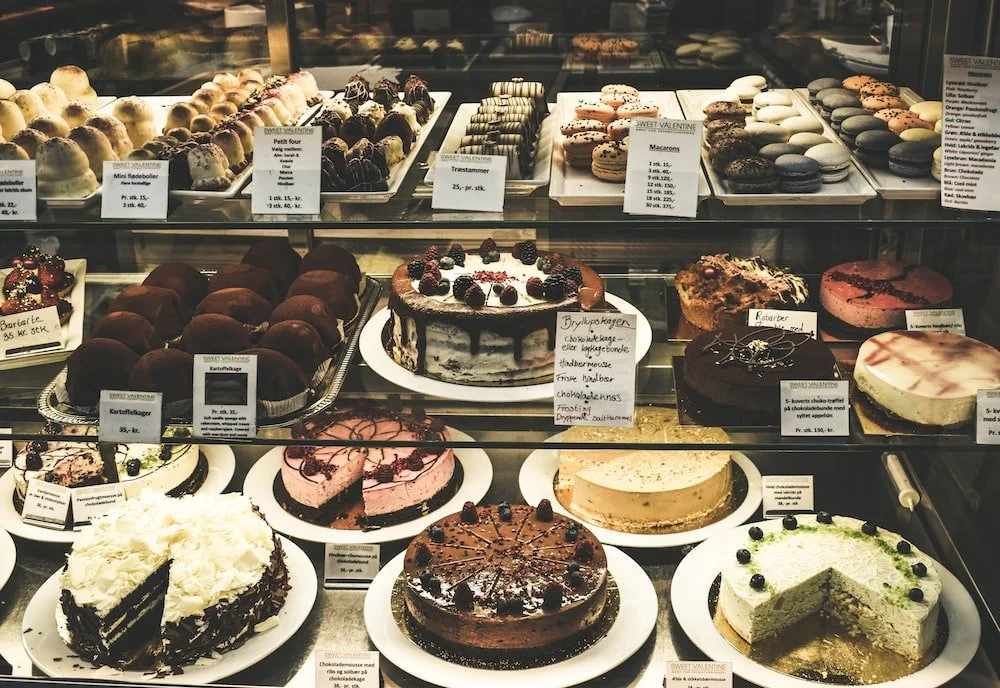
In summer 2012, Charlie Craig and Dave Mullins entered Masterpiece Cakeshop in Lakewood, Colorado, looking for a cake for their upcoming wedding.[1] There, they met the owner and baker, Jack Phillips, who told them that he didn’t make wedding cakes for same-sex weddings because of his religious beliefs. He explained that he would sell them other baked goods for other events, but not for a same-sex wedding. The couple filed a complaint against the bakery to the Colorado Civil Rights Commission for violating the Colorado Anti-Discrimination Act (CADA), a law that prohibits discrimination by interprises that provide goods to the public.[2][3] The Commission ordered the case to be heard by a state Administrative Law Judge. The judge ruled in favor of the couple, and the ruling was upheld by the Commission and the Colorado Court of Appeals.
When the Supreme Court of the United States accepted the case, Masterpiece Cakeshop v. Colorado Civil Rights Commission, 584 U.S. (2018) for an official hearing, many people expected the outcome to dictate the government’s stance on the debate between protecting same-sex marriages and protecting the rights of religious individuals.[4] In fact, Justice Kennedy stated that the case brought to question two important and oftentimes conflicting topics. He wrote, “the first is the authority of a State and its governmental entities to protect the rights and dignity of gay persons who are, or wish to be, married but who face discrimination when they seek goods or services. The second is the right of all persons to exercise fundamental freedoms under the First Amendment, as applied to the States through the Fourteenth Amendment. The freedoms asserted here are both the freedom of speech and the free exercise of religion.”
The court, avoiding the debate, ruled that the Commission did not apply the First Amendment in a just manner. During the initial hearings, members of the state Civil Rights Commission contended that religious beliefs can’t exist in the public – an assertion that is inconsistent with the First Amendment's protection of religion. Justice Kennedy cited “hostility” toward religion that discredited the ruling as a whole. In the end, the court reversed the decision of the Colorado Court of Appeals and ordered that “the outcomes of cases like this in other circumstances must await further elaboration in the courts.”
On December 5, the US Supreme Court began to revisit very similar topics that were on the table during the 2018 case. Although the case is slightly different, the same Colorado law is being looked at. This case, 303 Creative LLC v. Elenis, asks many of the same questions that were asked during Masterpiece Cakeshop v. Colorado Civil Rights Commission.
303 Creative LLC is a service that provides marketing and website design services to businesses and individuals.[5] The founder, Lorie Smith, is a devout Christian who does not support same-sex marriages. In 2016, she wanted to post a message on her company’s website informing customers that she wouldn’t provide website services for same-sex weddings because of her religious beliefs. Publishing such a message is illegal under CADA, so 303 Creative filed a pre-enforcement challenge arguing that CADA is unconstitutional.[6][7] The court opinion explains:
“Appellants alleged a variety of constitutional violations, including that CADA’s Accommodation Clause and Communication Clause violated the Free Speech and Free Exercise Clauses of the First Amendment, and that CADA’s Communication Clause violated the Due Process Clause of the Fourteenth Amendment because it was facially overbroad and vague.”
Both of these cases ask, “Does a business have a constitutional right to discriminate based on its owner’s beliefs?” [8] The second case, however, is different because it questions the constitutionality of a law that protects against discrimination – more specifically discrimination on the basis of sexual orientation.
Another question that this raises – one that has been raised time and time again – is a question regarding contradicting rights. In these two cases, both plaintiffs felt that their religious rights were being taken away. The way in which they want to exercise their religious beliefs, however, strips LGBTQ+ customers of their own protected rights. It boils down to the idea that the identity of one American is contradictory to the religious belief of another. So, should the government be able to protect the right to exercise a religious belief if that exertion violates the constitutional right of another? Furthermore, does the government have the legal and moral responsibility to prevent discrimination based on religion, and when – if ever – would that violate the first amendment right to freedom of religion?
When the Supreme Court heard Masterpiece Cakeshop v. Colorado Civil Rights Commission in 2018, they did not make a ruling that answered these questions. Because the Supreme Court accepted 303 Creative LLC v. Elenis – a case that looks at similar questions – it is possible that there will be a more definitive answer. Additionally, the Supreme Court has more conservative justices today than in 2018. All in all, with a larger majority and the court's acceptance of a case that is nearly identical to the one heard four years ago, it is likely that we will see a ruling that gives an answer to the questions at hand.
If the Supreme Court’s decision sets precedent, it will have a resonating effect across the country. There are currently many efforts to strip away rights from LGBTQ+ Americans. According to the Human Rights Campaign, there have been “more than 300 anti-LGBTQ+ bills introduced in states across the country.”[9] Twenty-three states have introduced these bills, and thirteen have signed them into law. Although this decision won’t hold binding legal precedent on many of these bills, it will signal what values define the current court and what values are being upheld in the American legal system today.
NOTES:
Masterpiece Cakeshop, LTD., Et Al. v. Colorado Civil Rights Commission Et Al. 584 U.S. 4 2018
“About Us | Colorado Civil Rights Division.” Accessed November 8, 2022.
One Colorado. “Discrimination.” Accessed November 8, 2022. https://one-colorado.org/lgbtq-resources/anti-discrimination-laws-colorado/.
“In Narrow Decision, Supreme Court Sides With Baker Who Turned Away Gay Couple.” Liptak, The New York Times, June 4, 2018, sec. U.S.
“303 Creative – 303 Creative.” Accessed November 8, 2022. https://303creative.com/.
303 Creative LLC v. Elenis, 19-1413, 2021 D.C. No. 1:16-CV-02372-MSK-CBS
“Supreme Court Report: 303 Creative LLC v. Elenis, 21-476,” Schweitzer
“Not a Masterpiece: The Supreme Court’s Decision in Masterpiece Cakeshop v. Colorado Civil Rights Commision,” Chemerinsky
“United Against Hate – Flighting Back on State Legislative Attacks on LGBTQ+ People,” Human Rights Campaign
BIBLIOGRAPHY:
Masterpiece Cakeshop v. Colorado Civil Rights Commission, 584 U.S. (2018), 59.
“303 Creative – 303 Creative.” Accessed November 8, 2022. https://303creative.com/.
“About Us | Colorado Civil Rights Division.” Accessed November 8, 2022. https://ccrd.colorado.gov/about-us.
Hasan, Zayn. “Supreme Court Report: 303 Creative LLC v. Elenis, 21-476.” National Association of Attorneys General, March 9, 2022. https://www.naag.org/attorney-general-journal/supreme-court-report-303-creative-llc-v-elenis-21-476/.
Human Rights Campaign. “The State Legislative Attack On LGBTQ+ People.” Accessed November 8, 2022. https://www.hrc.org/campaigns/the-state-legislative-attack-on-lgbtq-people.
Liptak, Adam. “In Narrow Decision, Supreme Court Sides With Baker Who Turned Away Gay Couple.” The New York Times, June 4, 2018, sec. U.S. https://www.nytimes.com/2018/06/04/us/politics/supreme-court-sides-with-baker-who-turned-away-gay-couple.html.
“Not a Masterpiece: The Supreme Court’s Decision in Masterpiece Cakeshop v. Colorado Civil Rights Commission.” Accessed November 8, 2022. https://www.americanbar.org/groups/crsj/publications/human_rights_magazine_home/the-ongoing-challenge-to-define-free-speech/not-a-masterpiece/.
One Colorado. “Discrimination.” Accessed November 8, 2022. https://one-colorado.org/lgbtq-resources/anti-discrimination-laws-colorado/.
Wolpert, Christopher M. “UNITED STATES COURT OF APPEALS July 26, 202,” n.d., 103.