

THE FORUM: NORTHWESTERN’S PREMIER LEGAL BLOG

Free Speech on Twitter
By: Noah Coyle
Edited By: angie chung and isabel gortner
January 31, 2022 marked the onset of Elon Musk's twitter craze. [1] Within three months’ time, Musk had accumulated 9.2 percent of Twitter's shares, making him the company’s largest shareholder. [2] In the interim, Musk publicly questioned Twitter’s dedication to free speech, pondered the future of social media with Twitter co-founder and former CEO Jack Dorsey, and met with Twitter’s board of directors chair and its CEO to discuss taking Twitter private or starting a rival social media service. [3] These activities culminated in Twitter inviting Musk to join the company's board on April 5, 2022, an offer Musk initially accepted but later reneged on. [4] [5] A short time later, Musk made an offer to take Twitter private. [6]
Twitter initially resisted Musk’s efforts, adopting the poison pill defense — in which a company allows shareholders to buy additional shares of a company’s stock at a discount to prevent a single shareholder from having the leverage to complete a hostile takeover — to ward off a potential acquisition. [7] [8] However, at the encouragement of its largest shareholders, Twitter ultimately accepted Musk’s offer to purchase the company for $44 billion. [9] [10] Then came Musk’s turn to have misgivings about the purchase of Twitter; he attempted to terminate the deal, justifying his change of heart by alleging that Twitter had violated their agreement by refusing to comply with his requests for spambot account data.[11] Twitter then sued Musk to force the closure of the deal. [12] After a protracted dispute, and two weeks before Musk and Twitter were set to meet in court, Musk changed his mind once again and agreed to close the deal on its original terms. [13]
Since purchasing Twitter, Elon Musk has presented himself as a champion of free speech and his purchase as being a matter of principle (for example, one of his first post-acquisition tweets declared that “the bird [ie.. the embodiment Twitter] is freed”). [14] Although Musk’s free speech advocacy echoes earlier statements from him — such as the criticisms of Twitter he made as he was accumulating Twitter stock — there are a number of factors that bring the sincerity of his stance into question. One factor is that the true reason Musk purchased Twitter is that he was forced to; Musk apparently ceased his attempted withdrawal from the Twitter deal only after his lawyers informed him that a court would likely side with Twitter and force the closure of the deal. [15] Another is that Musk recently had the @elonjet Twitter account, which tracked the location of his private jet, banned, despite previously pledging (in the name of free speech) not to do so; furthermore, Musk followed this action by banning the Twitter accounts of journalists who he claimed had violated his privacy. [16]
Is Elon Musk’s free speech advocacy merely a front? If so, it would certainly be in line with the vision of free speech that has been espoused by censorship-weary (and generally right-wing) segments of the Twitterverse and that Musk has apparently co-opted, a vision that bears little resemblance to the legal principle of free speech. Freedom of speech, as codified in the First Amendment, protects the speech of private actors from governmental interference. In contrast, Musk’s vision of free speech entails protecting individuals’ ability to transmit whatever speech they want from the censorship of private actors who own the means of transmission, namely social media companies. The First Amendment does not limit private actors’ ability to retaliate against speech; therefore, Musk’s vision encompasses an absolutism that has no constitutional basis, and can be interpreted as an excuse to empower inflammatory and discriminatory speech.
It is not unreasonable to be concerned about social media censorship given the centrality social-media-based discourse holds in today’s world, nor is it unreasonable to argue that opposing social media censorship is true to the spirit of the First Amendment if not the letter of it. Yet Musk’s own actions in regard to the @elonjet Twitter account and troublesome journalists demonstrate that free speech absolutism, which has no legal basis in the United States, is untenable. Furthermore, those who argue in favor of free speech absolutism — be they edgelords eager to spew hatred without facing consequences from private actors or a pandering, self-deluding billionaire — routinely do so in bad faith. Ultimately, any constructive conversation on free speech must be rooted in a thorough understanding of the legal origins of the concept and be free of ulterior motives. The free speech discourse on Elon Musk’s Twitter violates these two criteria: approach it with caution.
Notes:
Matrine Paris, Dana Hull, and Maxwell Adler, “Elon Musk's Takeover of Twitter: Everything You Need to Know,” Yahoo! Finance (Yahoo!, November 1, 2022), https://finance.yahoo.com/elon-musk-takeover-twitter-everything-193231867.html.
Mike Isaac and Lauren Hirsch, “Elon Musk Becomes Twitter's Largest Shareholder.,” The New York Times (The New York Times, April 4, 2022), https://www.nytimes.com/2022/04/04/technology/elon-musk-twitter.html.
Scott Nover, “An Annotated Timeline of Elon Musk Buying Twitter,” Quartz (Quartz, May 20, 2022), https://qz.com/2167563/an-annotated-history-of-elon-musk-buying-twitter.
Gareth Corfield, “Elon Musk to Join Twitter Board,” The Telegraph (Telegraph Media Group, April 5, 2022), https://www.telegraph.co.uk/business/2022/04/05/elon-musk-floats-idea-editing-tweets-stock-swoop/.
Shannon Bond, “Elon Musk Says He Will Not Join the Twitter Board, after All,” NPR (NPR, April 11, 2022), https://www.npr.org/2022/04/11/1091969075/elon-musk-will-not-join-twitter-board.
Scott Nover, “An Annotated Timeline.”
Scott Nover, “What Is Twitter's Poison Pill Defense against Elon Musk?,” Quartz (Quartz, April 18, 2022), https://qz.com/2155991/what-is-a-poison-pill-inside-twitters-plan-to-block-elon-musk.
Scott Nover, “An Annotated Timeline.”
Scott Nover, “An Annotated Timeline.”
Todd Spangler, “Elon Musk Clinches Deal to Buy Twitter for $44 Billion,” Variety (Variety, April 25, 2022), https://variety.com/2022/digital/news/elon-musk-buys-twitter-44-billion-1235239890/.
Clare Duffy, Brian Fung, and Rachel Metz, “Musk Tells Twitter He Wants out of Deal to Buy It. Twitter Says It Will Force Him to Close the Sale,” CNN (Cable News Network, July 9, 2022), https://www.cnn.com/2022/07/08/tech/elon-musk-twitter-deal-exit/index.html.
Richard Lawler, “Twitter Reportedly Hires the Firm That Invented the 'Poison Pill' to Sue Elon Musk,” The Verge (The Verge, July 10, 2022), https://www.theverge.com/2022/7/10/23202931/elon-musk-lawsuit-twitter-merger-delaware.
Cara Lombardo and Dana Cimilluca, “Elon Musk Proposes Closing Twitter Deal on Original Terms,” The Wall Street Journal (Dow Jones & Company, October 5, 2022), https://www.wsj.com/articles/elon-musk-proposes-closing-twitter-deal-on-original-terms-11664901454.
Elon Musk, “The Bird Is Freed,” Twitter (Twitter, October 28, 2022), https://twitter.com/elonmusk/status/1585841080431321088.
Debra Cassens Weiss, “Elon Musk's Bid to Escape Twitter Deal Could Face Skepticism in Court; 'Material Adverse Effect' at Issue,” ABA Journal (American Bar Association, July 13, 2022), https://www.abajournal.com/news/article/elon-musks-bid-to-escape-twitter-deal-over-fake-accounts-could-face-skepticism-in-delaware-court.
Oliver Darcy, “Elon Musk Bans Several Prominent Journalists from Twitter, Calling into Question His Commitment to Free Speech,” CNN (Cable News Network, December 16, 2022), https://www.cnn.com/2022/12/15/media/twitter-musk-journalists-hnk-intl/index.html.
BIBLIOGRAPHY:
Bond, Shannon. “Elon Musk Says He Will Not Join the Twitter Board, after All.” NPR. NPR, April 11, 2022. https://www.npr.org/2022/04/11/1091969075/elon-musk-will-not-join-twitter-board.
Corfield, Gareth. “Elon Musk to Join Twitter Board.” The Telegraph. Telegraph Media Group, April 5, 2022. https://www.telegraph.co.uk/business/2022/04/05/elon-musk-floats-idea-editing-tweets-stock-swoop/.
Darcy, Oliver. “Elon Musk Bans Several Prominent Journalists from Twitter, Calling into Question His Commitment to Free Speech.” CNN. Cable News Network, December 16, 2022. https://www.cnn.com/2022/12/15/media/twitter-musk-journalists-hnk-intl/index.html.
Duffy, Clare, Brian Fung, and Rachel Metz. “Musk Tells Twitter He Wants out of Deal to Buy It. Twitter Says It Will Force Him to Close the Sale.” CNN. Cable News Network, July 9, 2022. https://www.cnn.com/2022/07/08/tech/elon-musk-twitter-deal-exit/index.html.
Isaac, Mike, and Lauren Hirsch. “Elon Musk Becomes Twitter's Largest Shareholder.” The New York Times. The New York Times, April 4, 2022. https://www.nytimes.com/2022/04/04/technology/elon-musk-twitter.html.
Lawler, Richard. “Twitter Reportedly Hires the Firm That Invented the 'Poison Pill' to Sue Elon Musk.” The Verge. The Verge, July 10, 2022. https://www.theverge.com/2022/7/10/23202931/elon-musk-lawsuit-twitter-merger-delaware.
Lombardo, Cara, and Dana Cimilluca. “Elon Musk Proposes Closing Twitter Deal on Original Terms.” The Wall Street Journal. Dow Jones & Company, October 5, 2022. https://www.wsj.com/articles/elon-musk-proposes-closing-twitter-deal-on-original-terms-11664901454.
Musk, Elon. “The Bird Is Freed.” Twitter. Twitter, October 28, 2022. https://twitter.com/elonmusk/status/1585841080431321088.
Nover, Scott. “An Annotated Timeline of Elon Musk Buying Twitter.” Quartz. Quartz, May 20, 2022. https://qz.com/2167563/an-annotated-history-of-elon-musk-buying-twitter.
Nover, Scott. “What Is Twitter's Poison Pill Defense against Elon Musk?” Quartz. Quartz, April 18, 2022. https://qz.com/2155991/what-is-a-poison-pill-inside-twitters-plan-to-block-elon-musk.
Paris, Matrine, Dana Hull, and Maxwell Adler. “Elon Musk's Takeover of Twitter: Everything You Need to Know.” Yahoo! Finance. Yahoo!, November 1, 2022. https://finance.yahoo.com/elon-musk-takeover-twitter-everything-193231867.html.
Spangler, Todd. “Elon Musk Clinches Deal to Buy Twitter for $44 Billion.” Variety. Variety, April 25, 2022. https://variety.com/2022/digital/news/elon-musk-buys-twitter-44-billion-1235239890/.
Weiss, Debra Cassens. “Elon Musk's Bid to Escape Twitter Deal Could Face Skepticism in Court; 'Material Adverse Effect' at Issue.” ABA Journal. American Bar Association, July 13, 2022. https://www.abajournal.com/news/article/elon-musks-bid-to-escape-twitter-deal-over-fake-accounts-could-face-skepticism-in-delaware-court.
Abused and Abandoned: The Invisible Plight of Women in Prison
By: Samantha Powers
Edited By: Jonah elkowitz and maggie farina
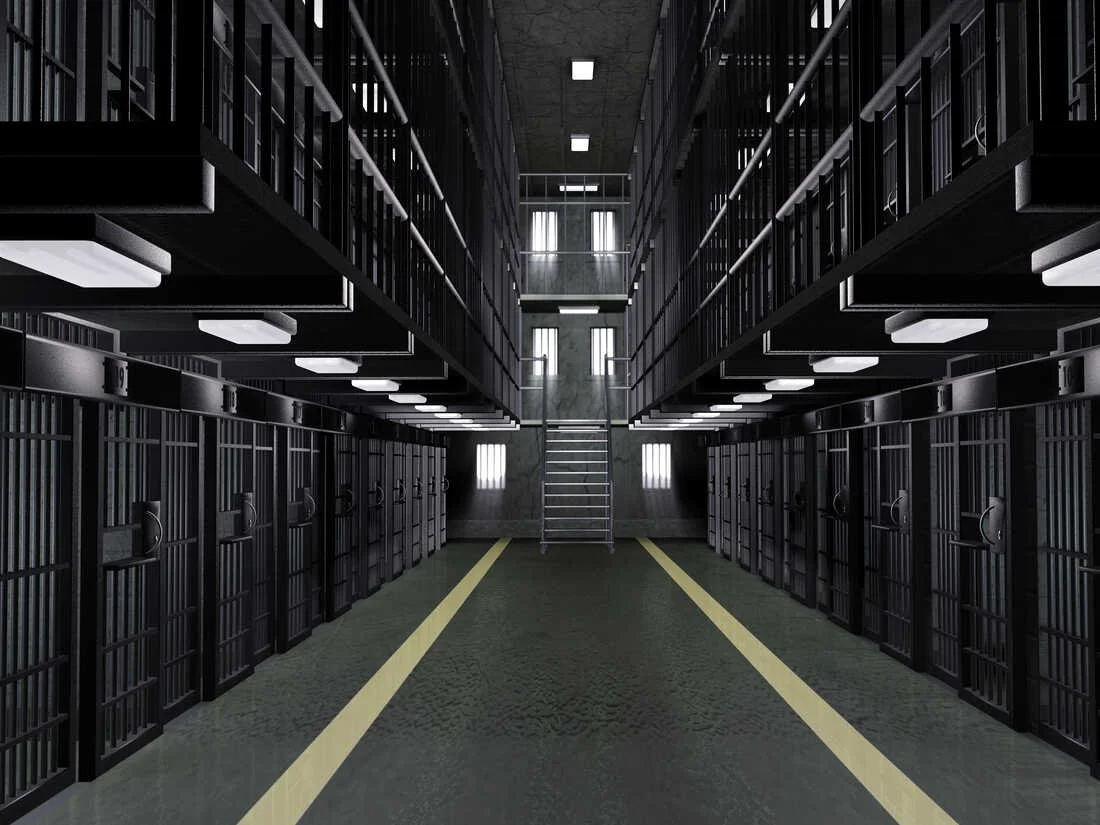
In 2003, Congress passed the “Prison Rape Elimination Act,” (PREA) a law meant to establish a “zero tolerance policy” for sexual abuse of incarcerated persons. [1] In practice, however, sexual abuse continues to be an epidemic throughout the federal prison system. Although only 6.9% of federal prisoners are female, they face disproportionate rates of sexual abuse in a system that strips them of their basic human rights. [2] These women are the victims of a federal machine of control, abuse, and silence.
Almost 20 years after PREA was passed, the Senate’s Permanent Subcommittee on Investigations released a scathing report entitled “Sexual Abuse of Female Inmates in Federal Prisons” exposing the ineffectiveness of the original legislation in positively influencing the Bureau of Federal Prisons, or BOP. The report revealed that over the last decade, BOP employees have sexually abused inmates in at least two-thirds of federal prisons that incarcerate women. [3] The ineffectiveness of federal prisons in implementing PREA is so widespread that those with the most power are often the culprits of the harshest abuse — at FCI Dublin, an officer formerly in charge of implementing PREA was convicted of sexually abusing female prisoners in December 2022. [3] There are many reasons for this widespread failure, including mismanagement by the BOP, a culture of silence among inmates, and a lack of accountability for officers, to name a few.
One pervasive issue with PREA is implementing it on a federal level. Prisoners who overcome the fear of retribution enough to report sexual abuse are often faced with an inefficient system of investigation designed to allow the abuse to continue. The Senate’s 2022 report found that the BOP’s Office of Internal Affairs has a backlog of 8,000 internal affairs cases, including at least hundreds of sexual abuse cases, which have not been investigated.
Within prisons, incarcerated victims of abuse must overcome a long series of hurdles in order to achieve redress. First, inmates must overcome informal sanctions for speaking out. Many stay silent for fear of facing continued abuse, being transferred farther away from family, or being placed in solitary confinement as a result of coming forward. [4] Furthermore, if a victim wants to pursue legal action, they often face formal obstacles as well. In 1996, Congress passed the Prison Litigation Reform Act, a law designed to limit “frivolous” lawsuits filed by prisoners, which are costly to the prison system as a whole. [5] If an inmate appeals through every step of the bureaucratic reporting process and their time limit runs out, they can no longer pursue legal action. These hurdles make it clear that the prison system is designed to force inmates into submission.
Another problem for the safety of inmates is a lack of accountability with officers who are accused of sexual abuse. Law 18 U.S.C. § 2243(b) makes it a felony for a BOP employee to engage in any sexual relationship with an inmate because the “inherently unequal” nature of the relationship between officer and inmate makes it impossible for the inmate to give consent. [6] Unfortunately, BOP employees continue to take advantage of this power dynamic and abuse inmates who have been stripped of their free will. In cases where inmates have the courage to report instances of abuse, investigation often comes down to a “he said, she said” battle — but with a twisted caveat; even when BOP officers confess to abusing an inmate, their testimony is considered inadmissible in circumstances where their job is on the line. Under the Supreme Court case Garrity v. New Jersey, officers can’t be prosecuted based on testimony obtained through the threat of loss of employment. This is considered to be coercion under the 5th amendment. [7] For example, the Senate report found that although officers at FCC Coleman testified on the record to sexually assaulting female inmates in graphic detail, the Office of the Inspector General at the Justice Department didn’t investigate. This demonstrates that in the case of sexual abuse investigations, even if the “he said” and the “she said” confirm an instance of abuse, officers still can’t be prosecuted.
Without advocates, support systems, or adequate mental health support, female inmates face an impossible battle to achieve justice. This isn’t an accident — the prison system is designed to strip inmates of their agency, their dignity, and their privacy. Both informally and formally, the federal prison system actively condones sexual abuse of inmates, because implicitly, it serves as another tool of control. Radical change to the culture and construction of the prison system is needed to remedy this national tragedy. Until then, inmates will continue to face abuse, and they will be powerless to stop it.
Notes:
Prison Rape Elimination Act, 34 U.S.C. Ch. 303 (2003), https://uscode.house.gov/view.xhtml?path=/prelim@title34/subtitle3/chapter303&edition=prelim.
“Inmate Gender,” Federal Bureau of Prisons, January 28, 2023, https://www.bop.gov/about/statistics/statistics_inmate_gender.jsp.
U.S. Senate Permanent Subcommittee on Investigations. “Sexual Abuse of Female Inmates in Federal Prisons.” Washington, DC: U.S. Senate, 2022, https://www.hsgac.senate.gov/wp-content/uploads/imo/media/doc/2022-12-13%20PSI%20Staff%20Report%20-%20Sexual%20Abuse%20of%20Female%20Inmates%20in%20Federal%20Prisons.pdf.
Human Rights Watch. “All Too Familiar: Sexual Abuse of Women in U.S. State Prisons.” Human Rights Watch, 1996, https://www.hrw.org/reports/1996/Us1.htm.
Prison Litigation Reform Act, S. 866 - 104th Congress (1995-1996), https://www.congress.gov/bill/104th-congress/senate-bill/866.
Sexual abuse of a minor, a ward, or an individual in Federal custody, 18 U.S.C. § 2243 (2000), https://uscode.house.gov/view.xhtml?req=granuleid:USC-1999-title18-section2243&num=0&edition=1999.
Garrity v. New Jersey, 385 U.S. 493 (1967)
BIBLIOGRAPHY:
Human Rights Watch. “All Too Familiar: Sexual Abuse of Women in U.S. State Prisons.” Human Rights Watch, 1996, https://www.hrw.org/reports/1996/Us1.htm.
“Inmate Gender,” Federal Bureau of Prisons, January 28, 2023, https://www.bop.gov/about/statistics/statistics_inmate_gender.jsp.
U.S. Senate Permanent Subcommittee on Investigations. “Sexual Abuse of Female Inmates in Federal Prisons.” Washington, DC: U.S. Senate, 2022, https://www.hsgac.senate.gov/wp-content/uploads/imo/media/doc/2022-12-13%20PSI%20Staff%20Report%20-%20Sexual%20Abuse%20of%20Female%20Inmates%20in%20Federal%20Prisons.pdf.

The United Nations and the Need for International Law in Cyberspace
By: Regan Cornelius
Edited By: clark mahoney and renan dennig
Before the global takeover of the internet, countries primarily had to worry about physical manifestations of terror threats and attacks by other states. Now, cyberspace, the technological domain of networks used to spread information, has given states and rogue groups new opportunities to disrupt both governmental organizations and the private sector. This became especially evident during the Covid-19 crisis and ongoing war in Ukraine. As President Biden declared in a statement on March 21, 2022 regarding the potential cyberattacks from Russia against the United States in retaliation for economic sanctions, “malicious cyber activity” is “one of the defining threats of our time.”[1] Similarly, Jürgen Stock, the INTERPOL Secretary General, stated that “cybercriminals are developing and boosting their attacks at an alarming pace,” shifting from targeting individuals and small groups to governments and critical health infrastructure during Covid-19, a pattern that has only hastened as the virus threat slows. [2]
Given these occurrences and warnings, it is unsurprising that work to advance international law regarding cyberspace has hastened. The UN General Assembly established a 25 member-state Group of Governmental Experts (GGE) back in 2004 to examine the dangers information and communications technology (ICT) growth had on military and security. [3] In 2019, the UN created the cybersecurity open-ended working group (OEWG) to include more member countries than the original small cadre. [4] The two groups worked in tandem to incorporate the GGEs older proposals into the OEWGs new resolutions.
In March of 2021, the OEWG assumed full responsibility over ICT research and proposals within the UN, and the GGE was dissolved. The culmination of both groups work was the OEWG Final Substantive Report that reached consensus within the UN General Assembly when all Member States agreed without a vote to adopt the draft resolution, reaffirming ICT’s implications for “peace and security, human rights, and sustainable developments.” [5] While the report had no radical or new proposals, it reaffirmed the GGE’s stance on the principles of international law and sovereignty applying to cyberspace, the first-time a truly global agreement has been reached on the issue. Most importantly, the report also reaffirmed that the Charter of the UN is applicable to cyberspace. [6]
However, the report leaves much to be desired. On top of not being legally binding, the United States and other liberal democracies agreed to water down the emphasis on human rights and the elimination of references to international humanitarian law, pushed for by Russia and China, in order to gain consensus. [7] Perhaps most upsetting for the United States was the inclusion of the phrase “international legally binding obligations,” which is worrisome as one of the countries with the most well-developed cyberspace and cyber warfare capabilities. [8] The phrase could easily be co-opted and used as an excuse to push United States involvement in other countries' cyber conflicts.
A further issue with the report is a failure to establish a new definition of sovereignty as it applies to cyberspace, yet the 2021 OEWG report specifies that measures should be taken “with full respect for the principle of State sovereignty.” [9] The generally accepted definition of sovereignty is “the supreme authority within a territory” that “confers rights upon states and imposes obligations on them,” and is one of the guiding principles behind international law and relations. [10] This definition and idea of “sovereign equality” has already been given exceptions, most notably in the invocation of The Responsibility to Protect to ensure the international community can intervene in human rights atrocities regardless of borders. [11] Cyberspace, due to its widespread nature and possibilities of attack from anywhere in the world, destroys this notion of sovereignty based on territory. One of the biggest debates between countries in reference to sovereignty is regarding due diligence, or the obligation of states to not allow cyberattacks to be launched from their territory by groups, whether state or non-state based. [12] The 2021 OEWG report requested, “on a voluntary basis, states should not conduct or knowingly support ICT activity contrary to their obligations under international law,” a half-hearted attempt at a due diligence reference that indicates it will not be included in any further, potentially binding, resolutions posed by the OEWG to the General Assembly. [13] Russia and its allies vehemently oppose due diligence in general, while the EU and its partners support the principle. While due diligence in cyberspace is difficult to enforce, as it is nearly impossible due to the web of proxy servers set to mask hackers’ locations and any sort of communication that a government knew the hacker was committing illegal acts on its territory, it is still an important obligation to include. Without its inclusion, there is the potential for greater retaliation from the offended state against the one where the attack originated, as well as granting cyber criminals a relative feeling of safety to unleash attacks if they are not in the territory of their targets. This then brings up the concept of accountability, which is not mentioned in the report much to Western countries consternation. [14]
The fourth and fifth sessions of the OEWG are set to meet in March and July of 2023, and with assistance and cooperation from other UN and private-sector groups, is striving for compromise amid the disagreements between Russia and the United States. [15] The end goal is a resolution passed by the UN General Assembly and permanent security council members, putting into place an international law and standard to regulate the internet and cyber-criminal activity between states without disrupting the free flow of information. However, before the details and content of such a resolution can be discussed, there must be a consensus surrounding the definition of sovereignty, due diligence, and how far legally binding obligations can and should stretch.
Notes:
The White House. “Statement by President Biden on our Nations Cybersecurity.” March 21, 2022. https://www.whitehouse.gov/briefing-room/statements-releases/2022/03/21/statement-by-president-biden-on-our-nations-cybersecurity/
“INTERPOL report shows alarming rate of cyberattacks during COVID-19.” INTERPOL. August 4, 2020. https://www.interpol.int/en/News-and-Events/News/2020/INTERPOL-report-shows-alarming-rate-of-cyberattacks-during-COVID-19
“UN OEWG and GGE.” Digwatch. Geneva Internet Platform. 2022. https://dig.watch/processes/un-gge.
“Open-ended Working Group.” United Nations. United Nations, 2021. https://www.un.org/disarmament/open-ended-working-group/.
United Nations General Assembly. Report of the Open-ended working group on developments in the field of information and telecommunication in the context of international security, UNGAOR, 25th Sess, Supp No 18, UN Doc A/8018 (2021). Paragraph 2.
United Nations, Charter of the United Nations, 24 October 1945, 1 UNTS XVI, available at: https://www.un.org/en/about-us/un-charter/full-text
Rodriguez, Katitza, and Baghdasaryan, Meri. “UN Committee to Begin Negotiating New Cybercrime Treaty amid Disagreement among States over Its Scope.” Electronic Frontier Foundation, July 20, 2022. https://www.eff.org/deeplinks/2022/02/un-committee-begin-negotiating-new-cybercrime-treaty-amid-disagreement-among.
Gold, Josh. “Unexpectedly, All UN Countries Agreed on a Cybersecurity Report. So What?” Council on Foreign Relations. Council on Foreign Relations, March 18, 2021. https://www.cfr.org/blog/unexpectedly-all-un-countries-agreed-cybersecurity-report-so-what.
Report of the Open-ended working group on developments in the field of information and telecommunication in the context of international security. Paragraph 36.
“Sovereignty.” Oxford Public International Law, April 2011. https://opil.ouplaw.com/display/10.1093/law:epil/9780199231690/law-9780199231690-e1472.
Remler, Philip. “Russia at the United Nations: Law, Sovereignty, and Legitimacy.” Carnegie Endowment for International Peace, January 22, 2020. https://carnegieendowment.org/2020/01/22/russia-at-united-nations-law-sovereignty-and-legitimacy-pub-80753.
“UN OEWG and GGE”
Report of the Open-ended working group on developments in the field of information and telecommunication in the context of international security. Paragraph 31.
Arindrajit, Poetranto, and Lau. “The UN Struggles to Make Progress on Securing Cyberspace.” Carnegie Endowment for International Peace, May 19, 2021. https://carnegieendowment.org/2021/05/19/un-struggles-to-make-progress-on-securing-cyberspace-pub-84491.
“UN OEWG and GGE”
BIBLIOGRAPHY:
Arindrajit, Poetranto, and Lau. “The UN Struggles to Make Progress on
Securing Cyberspace.” Carnegie Endowment for International Peace, May 19, 2021.
https://carnegieendowment.org/2021/05/19/un-struggles-to-make-progress-on-securing-
cyberspace-pub-84491.
Gold, Josh. “Unexpectedly, All UN Countries Agreed on a Cybersecurity Report. So What?”
Council on Foreign Relations. Council on Foreign Relations, March 18, 2021.
https://www.cfr.org/blog/unexpectedly-all-un-countries-agreed-cybersecurity-report-so-what.
“INTERPOL report shows alarming rate of cyberattacks during COVID-19.” INTERPOL, August 4, 2020. https://www.interpol.int/en/News-and-Events/News/2020/INTERPOL-report-shows-alarming-rate-of-cyberattacks-during-COVID-19
“Open-ended Working Group.” United Nations. United Nations, 2021. https://www.un.org/disarmament/open-ended-working-group/.
Remler, Philip. “Russia at the United Nations: Law, Sovereignty, and Legitimacy.” Carnegie
Endowment for International Peace, January 22, 2020.
https://carnegieendowment.org/2020/01/22/russia-at-united-nations-law-sovereignty-and-
legitimacy-pub-80753.
Rodriguez, Katitza, and Baghdasaryan, Meri. “UN Committee to Begin Negotiating New
Cybercrime Treaty amid Disagreement among States over Its Scope.” Electronic Frontier
Foundation, July 20, 2022. https://www.eff.org/deeplinks/2022/02/un-committee-begin-
negotiating-new-cybercrime-treaty-amid-disagreement-among.
“Sovereignty.” Oxford Public International Law, April 2011.
https://opil.ouplaw.com/display/10.1093/law:epil/9780199231690/law-9780199231690-e1472.
The White House, “Statement by President Biden on our Nations Cybersecurity.” March 21, 2022. https://www.whitehouse.gov/briefing-room/statements-releases/2022/03/21/statement-by-president-biden-on-our-nations-cybersecurity/
United Nations, Charter of the United Nations, 24 October 1945, 1 UNTS XVI, available at: https://www.un.org/en/about-us/un-charter/full-text
“UN OEWG and GGE.” Digwatch. Geneva Internet Platform, 2022. https://dig.watch/processes/un-gge.
United Nations General Assembly, Report of the Open-ended working group on developments in the field of information and telecommunication in the context of international security, UNGAOR, 25th Sess, Supp No 18, UN Doc A/8018 (2021).
Enforce the Twenty-Fourth!
By: Clary Doyle
Edited By: maggie farina and kailey morand
The idea that history repeats itself is regarded as an axiom. However, until most Americans are dressing up in Roman tunics and watching gladiator fights, I won’t claim that the cliche is true. Instead, citizens find themselves decked out in sports jerseys, watching the Super Bowl. The tradition is similar, but it doesn’t play out in exactly the same way. History does not go in circles—mankind isn’t walking in place. Rather, history spirals—it goes through a similar motion while forging a new path. The same phenomenon occurs when examining the Twenty-fourth Amendment of the American Constitution. The amendment states that it is illegal to make citizens pay to vote, but its ratification had a deeper connotation. It sought to fight prejudice surrounding the suffrage of minorities. Though decades have passed since its installment, Americans have not yet eradicated racist voting policies, and citizens continue to pay unfair fines in order to vote. Until the spiral stops, the Twenty-fourth Amendment will continue to be a relevant Constitutional right.
The creation of the Twenty-fourth Amendment is rooted in significant events that followed the Civil War. The ratification of the Fifteenth Amendment granted African Americans the right to vote. However, Southern white citizens and hate groups like the Klu Klux Klan detested the idea, as they feared a robust black population would have too much influence in elections. [1] To dampen African American power, invidious politicians responded by contriving petty laws that hindered a black person’s right to vote. [2] Just one of these many obstacles was the poll tax, a voting fee citizens had to pay before receiving a ballot. [3]
Poll taxes were not the only forms of voter suppression during that time. Some states had laws requiring African Americans to pass literacy tests—nearly impossible quizzes asking recondite questions. [4] In Louisiana’s 1964 literacy test, the heading delineates that unless one answers all thirty questions correctly in under ten minutes, they would fail. [5] The actual questions are intentionally deceitful and irrelevant to political knowledge.
Although literacy tests were clearly discriminatory, poll taxes proved to be worse. Making citizens pass a literacy test implies that voters must be educated. Requiring people to pay a fine insinuates that voters must be rich. Eight American states enforced poll taxes of a dollar or more.[6] Albeit the amount seems minuscule, the average black laborer in Atlanta, Georgia in 1897 earned only three dollars each week. [7] The proportionally large fine deprived thousands of black Americans of their Constitutional right. This disenfranchisement continued for years, and its effects were deleterious. For example, in Georgia, the poll tax decreased black voter turnout by fifty percent. [8] In this way, racist politicians ensured that the substantial black population in their regions would not oust them from office.
For many years, Americans criticized the poll tax and raised their concerns to all three branches of government. In the judicial branch, a court case to terminate the poll tax went to the Supreme Court, but lost when judges argued it took away from state rights. [9] In the legislative branch, laws were proposed to ban the tax, and, in response, Southern politicians filibustered. [10] Only in the executive branch did John F. Kennedy finally put an end to the poll tax by instating the Twenty-fourth Amendment in 1964, ending the US’s nearly one hundred year battle to dissolve poll taxes. [11]
Though gone in name, many Americans today wonder if the poll tax ever really went away. The symbolic act of disenfranchising minority groups by fining them still exists in many states. Though not explicitly called poll taxes, Florida requires citizens released from prison to pay all fines related to their sentence before they are eligible to vote. [12] In 2010, over 22,000 persons on probation in Florida owed, on average, $8,195 in court fines, medical debts, and legal fees. [13] Florida is not alone in this requirement. Many southern states, such as Alabama, Georgia, Arkansas, and Tennessee have similar laws. [14]
Nowhere does the Constitution delineate that citizens must pay for their amendment rights. If the same prisoner who wasn’t eligible to vote for failure to pay court fees wanted to protest peacefully, they would not be stopped. This highlights a key inconsistency in the modern day poll tax—if citizens are granted their First Amendment right, why are they denied their Twenty-fourth Amendment right?
Unfortunately, the parallels for these modern day poll taxes are rooted in racist beliefs. African Americans make up only 12 percent of the American adult population, but they constitute 33 percent of the prison populations. [15] Hispanic persons, too, are disproportionately affected. While only accounting for 16 percent of the national population, they represent 23 percent of incarcerated persons. [16] Thus, minorities and people of color face more barriers to voting than white citizens. Moreover, the lower average incomes of African Americans and Hispanic people contributes to their inability to pay such fines. [17]
Though the times have changed, the concept remains: poll taxes disenfranchise minorities, especially African-Americans. These injustices are not just mishaps of the past; they are thriving obstacles to suffrage today. The full potential of the Twenty-Fourth Amendment will not be realized until poll taxes of every form are expunged. If history moved in a circle, mankind would be cursed to relive the same inequities over and over. However, because history spirals, by fighting for justice, the pattern can be broken.
Notes:
Stoney, George C., “Suffrage in the South Part I: The Poll Tax,” Survey Graphic, Vol. 29, No. 1, p. 5 (Part 1) and No. 3, p. 163 (Part 2) (January 1, 1940), http://newdeal.feri.org/texts/246.htm.
Ibid.
Ibid.
“Lousiana’s 1964 Literacy Test.” Static Oprah. http://static.oprah.com/images/o2/201412/LA-literacy-test.pdf.
Ibid.
Stoney, George C., “Suffrage in the South Part I: The Poll Tax,” Survey Graphic, Vol. 29, No. 1, p. 5 (Part 1) and No. 3, p. 163 (Part 2) (January 1, 1940), http://newdeal.feri.org/texts/246.htm.
United States Bureau of Labor. "Condition of the Negro in Various Cities," in United States. Bureau of Labor. "May 1897 : Bulletin of the United States Bureau of Labor, No. 10, Volume II," Bulletin of the United States Bureau of Labor, Nos. 1 - 100 (May 1897): 25-137. https://fraser.stlouisfed.org/title/3943/item/477562/toc/498120.
Evans, Farrell. “How Jim Crow-Era Laws Suppressed the African American Vote for Generations.” History. 13 May. 2021. https://www.history.com/news/jim-crow-laws-black-vote.
“Twenty-fourth Amendment to the Constitution.” Totally History. Totally History, 2012. http://totallyhistory.com/24th-amendment-to-the-constitution/.
Ibid.
Ibid.
Ludwig, Mike. “Modern-day ‘poll taxes’ disenfranchise millions of low-income voters.” Salon. salon.com, LLC, 2019. https://www.salon.com/2019/08/03/modern-day-poll-taxes disenfranchise-millions-of-low-income-voters_partner/.
Ibid.
Ibid.
Gramlich, John. “The gap between the number of blacks and whites in prison is shrinking.” Pew Research Center. Pew Research Center, 30 April 2019. https://www.pewresearch.org/fact-tank/2019/04/30/shrinking-gap-between-number-of-blacks-and-whites-in-prison/.
Ibid.
Gold, Howard. “The racial wage gap is at the heart of America’s inequality.” Market Watch. MarketWatch, Inc., 15 July 2020. https://www.marketwatch.com/story/the-racial-wealth-gap-is-at-the-heart-of-americas-inequality-2020-07-15.
BIBLIOGRAPHY:
Evans, Farrell. “How Jim Crow-Era Laws Suppressed the African American Vote for Generations.” History. 13 May. 2021. https://www.history.com/news/jim-crow-laws- black-vote.
Gold, Howard. “The racial wage gap is at the heart of America’s inequality.” Market Watch. MarketWatch, Inc., 15 July 2020. https://www.marketwatch.com/story/the-racial-wealth- gap-is-at-the-heart-of-americas-inequality-2020-07-15.
Gramlich, John. “The gap between the number of blacks and whites in prison is shrinking.” Pew Research Center. Pew Research Center, 30 April 2019.https://www.pewresearch.org/fact-
tank/2019/04/30/shrinking-gap-between-number-of-blacks-and-whites-in-prison/.
“Lousiana’s 1964 Literacy Test.” Static Oprah. http://static.oprah.com/images/o2/201412/LA- literacy-test.pdf.
Ludwig, Mike. “Modern-day ‘poll taxes’ disenfranchise millions of low-income voters.” Salon. salon.com, LLC, 2019. https://www.salon.com/2019/08/03/modern-day-poll-taxes- disenfranchise-millions-of-low-income-voters_partner/.
Stoney, George C., “Suffrage in the South Part I: The Poll Tax,” Survey Graphic, Vol. 29, No. 1, p. 5 (Part 1) and No. 3, p. 163 (Part 2) (January 1, 1940), http://newdeal.feri.org/texts/ 246.htm.
“Twenty-fourth Amendment to the Constitution.” Totally History. Totally History, 2012. http:// totallyhistory.com/24th-amendment-to-the-constitution/.
United States Bureau of Labor. "Condition of the Negro in Various Cities," in United States. Bureau of Labor. "May 1897 : Bulletin of the United States Bureau of Labor, No. 10, Volume II," Bulletin of the United States Bureau of Labor, Nos. 1 - 100 (May 1897) : 25-137. https://fraser.stlouisfed.org/title/3943/item/477562/toc/498120.