

THE FORUM: NORTHWESTERN’S PREMIER LEGAL BLOG
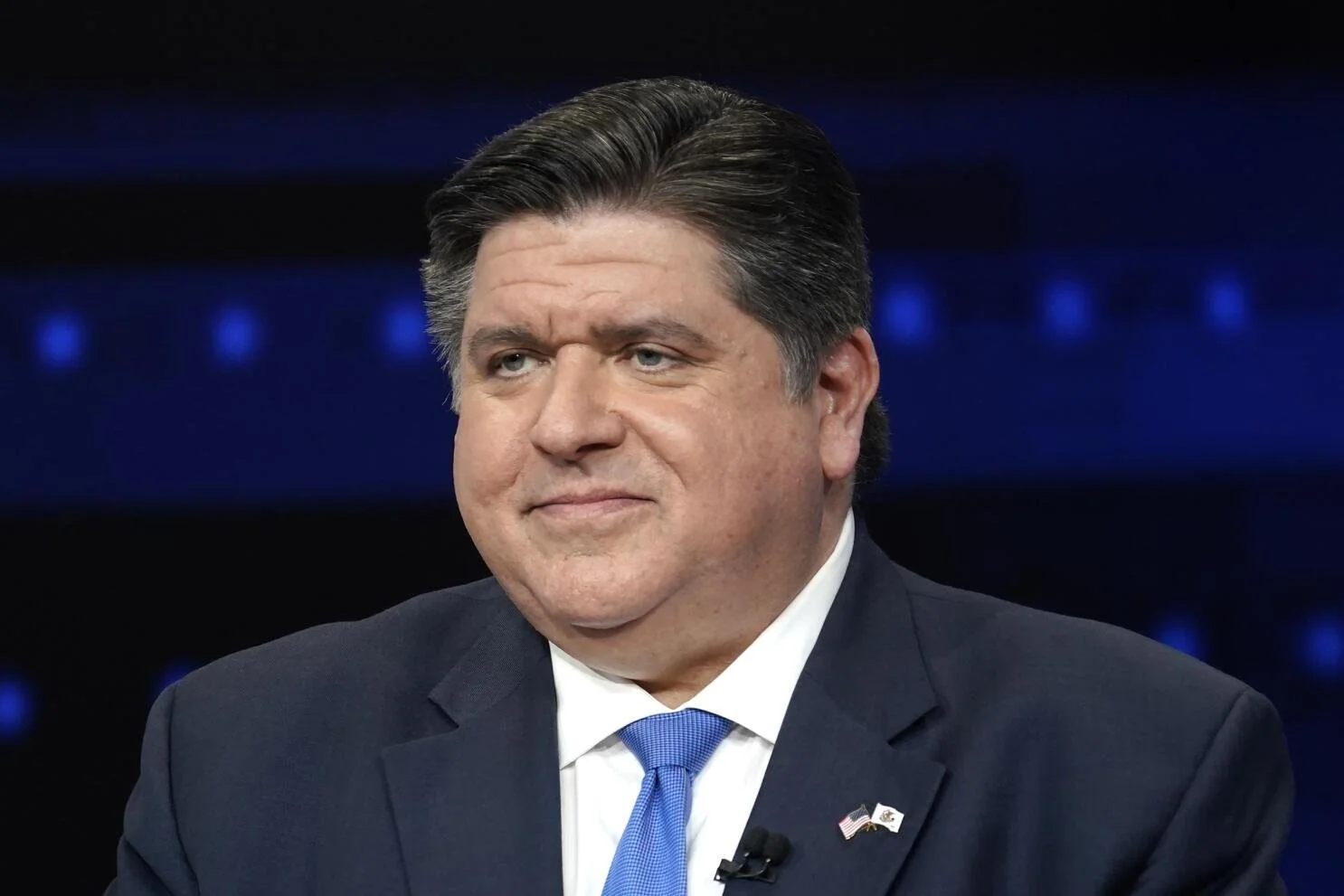
Governor Pritzker’s Fight Against ICE
Written By: Baylee Krulewitz
Edited by: Clark Mahoney and Eliana Aemro Selassie
On February 6th, the US Justice Department sued the State of Illinois and the City of Chicago on grounds of interference with the Trump administration’s recent immigration enforcement policies. Specifically, the Justice Department claimed that Chicago’s status as a sanctuary city is unlawful. In response, Illinois governor JB Pritzker has stood his ground, claiming that the laws in place in Illinois are there to protect against violent crime as best they can.
“Sanctuary city” is a term that can often be thrown around quite loosely, especially in times of heated debate over immigration policy. Part of the reason for this confusion is that its definition is fairly ambiguous. The status of sanctuary city is one that any place can apply to itself, without having to check any boxes or fulfill any requirements. Generally, though, a sanctuary city is one where the municipality neglects to use its resources to fund federal immigration practices or crackdowns.
So, what are these sanctuary laws that the Justice Department is so upset about? In Chicago, the city follows the Welcoming City Ordinance, which states that “the City will not ask about your immigration status, disclose that information to authorities, or, most importantly, deny you City services based on your immigration status.”[1] On the state level, Illinois operates under the powerful TRUST Act, which Republican Governor Bruce Rauner signed into law in 2017. The law declared that “law enforcement shall not stop, arrest, search, detain or continue to detain a person solely due to immigration status.”[2] The intention behind this act was to improve relations between immigrants of all citizen statuses and law enforcement officers, in hopes of getting the two to team up against violent crime. The act requires a warrant from a judge before allowing detainment by law enforcement, in an attempt to make the minimization of violence the top priority for police forces. In a press release from the governor’s office announcing the signing of the act, it was made very clear that the act is not meant to estrange Illinois law enforcement from federal law enforcement, saying, “The TRUST Act makes clear that Illinois will be a good partner with the federal government, and law enforcement will continue communicating with federal immigration and law enforcement officials.”[3] However, this principle has disintegrated in recent times.
In its lawsuit against the state of Illinois, the Justice Department asserts that the state violates the Supremacy Clause of the US Constitution, which states that federal law is the supreme law of the land. In other words, the lawsuit says that the TRUST Act is failing to do the very thing it set out to do: balance the well-being of Illinois residents with compliance with federal law. In response to the lawsuit, Gov. Pritzker provided a direct attack on President Trump, stating “Unlike Donald Trump, we follow the law in Illinois. Now, maybe they put up with this kind of garbage in Florida, which is the home state of the head of the DOJ, but in Illinois we have grit, we are tough, we are strong and Donald Trump has no idea what he is up against when he attacks Illinois.”[4] So, just a few action-packed weeks into Trump’s second presidency, Illinois and its administration are already at odds with the federal government.
So what now? US Immigration and Customs Enforcement has already begun Trump-ordered sweeps in Chicago, with over 100 people already having been detained since the new administration began.[5] Soon after the lawsuit was cast, the ACLU of Illinois issued a statement demonstrating support for the TRUST Act as well as Chicago’s Welcoming City Ordinance, highlighting the role of these legislative acts in limiting violent crime.[6] So, both sides of the fight over immigration policy in this country have gritted their teeth, indicating that this battle will be long, complex, and worrisome not just for the people of Illinois, but for Americans across the nation.
NOTES:
1. Anon. “Sanctuary Cities FAQs.” Chicago.gov. https://www.chicago.gov/content/dam/city/depts/mayor/Office%20of%20New%20Americans/PDFs/SanctuaryCitiesFAQs.pdf
2. Anon. 2017. “Gov. Rauner Signs TRUST Act.” Illinois.gov. August 28, 2017 https://www.illinois.gov/news/press-release.14747.html
3. Anon. 2017. “Gov. Rauner Signs TRUST Act.” Illinois.gov. August 28, 2017 https://www.illinois.gov/news/press-release.14747.html
4. Lisette Nuñez. 2025. “Illinois Governor JB Pritzker responds to 'garbage' DOJ lawsuit over sanctuary city policies. ABC7. February 7, 2025 https://abc7chicago.com/post/illinois-governor-jb-pritzker-responds-garbage-doj-lawsuit-sanctuary-city-policies/15877508/
5. Lisette Nuñez and Craig Wall. 2025. Mayor reaffirms Chicago's welcoming city status amid ICE raids; at least 100 arrested in area. ABC7. January 28, 2025. https://abc7chicago.com/post/ice-chicago-immigration-raids-today-arrests-continue-mayor-brandon-johnson-called-testify-sanctuary-city-policy/15843173/
6. Anon. 2025. ACLU of Illinois responds to Trump administration lawsuit challenging state and local policies prioritizing public safety over federal civil immigration enforcement. ACLU Illinois. February 6, 2025. https://www.aclu-il.org/en/press-releases/aclu-illinois-responds-trump-administration-lawsuit-challenging-state-and-local
BIBLIOGRAPHY:
“Sanctuary Cities FAQs.” Chicago.gov, https://www.chicago.gov/content/dam/city/depts/mayor/Office%20of%20New%20Americans/PDFs/SanctuaryCitiesFAQs.pdf
“Gov. Rauner Signs TRUST Act.” Illinois.gov, August 28, 2017, https://www.illinois.gov/news/press-release.14747.html
“Illinois Governor JB Pritzker responds to 'garbage' DOJ lawsuit over sanctuary city policies.” ABC7, February 7, 2025, https://abc7chicago.com/post/illinois-governor-jb-pritzker-responds-garbage-doj-lawsuit-sanctuary-city-policies/15877508/
“Mayor reaffirms Chicago's welcoming city status amid ICE raids; at least 100 arrested in area.” ABC7, January 28, 2025, https://abc7chicago.com/post/ice-chicago-immigration-raids-today-arrests-continue-mayor-brandon-johnson-called-testify-sanctuary-city-policy/15843173/
“ACLU of Illinois responds to Trump administration lawsuit challenging state and local policies prioritizing public safety over federal civil immigration enforcement.” ACLU Illinois, February 6, 2025, https://www.aclu-il.org/en/press-releases/aclu-illinois-responds-trump-administration-lawsuit-challenging-state-and-local

What to Make of Nayib Bukele’s Proposal to Outsource U.S. Incarceration
By: Alexandra Henriquez
Edited by: Anna Dellit and Alicia Gu
Following Trump’s re-election to the Oval Office, the United States (U.S.) Senate quickly confirmed former U.S. Senator of Florida, Marco Rubio, as the new Secretary of State. Within the first week of February, Rubio met with Salvadoran President Nayib Bukele in the country’s capital, San Salvador, to discuss regional security cooperation, economic partnerships, and efforts to curb migration through strengthened diplomatic relations. According to the Department of State’s Press Release on February 3, 2025, “Multiple agreements were struck to fight the waves of illegal mass migration.” [1] Bukele agreed to take back all Salvadoran MS-13 gang members who are in the United States unlawfully and to incarcerate criminal undocumented immigrants from any country. Additionally, he “offered to house in his jails dangerous American criminals, including U.S. citizens and legal residents.” President Trump told reporters, “I’m just saying if we had a legal right to do it, I would do it in a heartbeat.” [2] The offer raises essential questions about the legality and implications of outsourcing incarceration, as well as the rights of American citizens.
Sending U.S. citizens or legal residents to Salvadoran prisons mirrors the trend of prison privatization, the outsourcing of incarceration to external entities to ease overcrowded facilities and reduce government costs. These external entities prioritize cost-cutting over rehabilitation. [3] Bukele’s proposal could be seen as an international extension of this trend, where the United States effectively contracts out incarceration to a foreign government. Just like private prisons have been criticized for poor conditions, a deal with El Salvador could result in even less oversight and accountability for how prisoners are treated. The key difference between Bukele’s offer and the current privatization of U.S. prisons is that Bukele’s offer involves transferring incarcerated individuals to a foreign jurisdiction where U.S. legal standards and oversight would no longer apply. While private prisons within the U.S. operate under federal and state regulations, albeit with significant concerns regarding transparency and conditions, outsourcing incarceration to El Salvador could remove even these minimal safeguards. This raises serious questions about due process, prisoners’ rights, and the U.S. government’s responsibility to its citizens.
The Supreme Court has consistently ruled that a U.S. citizen cannot be legally deported. In Fung Ho v. White (1922), the court reaffirmed congressional power “to order at any time the deportation of aliens whose presence in the country it deems hurtful, and may do so by appropriate executive proceedings” when evaluating the Chinese Exclusion Act of 1892. [4] The court notes, however, that “jurisdiction in the executive to order deportation exists only if the person arrested is an alien. The claim of citizenship is thus a denial of an essential jurisdictional fact.” This ruling established that non-citizens who claim to be lawfully present in the U.S. have the right to a judicial hearing before deportation. The question then turns to whether or not there is an exception for sending U.S. citizens abroad for detention.
Guantánamo Bay is an infamous loophole where detainees are held outside of the U.S. The Congressional Research Service (CRS) report from November 2021 goes through Supreme Court precedent on due process for Guantanamo Bay detainees. While Guantanamo Bay is not technically U.S. territory, Rasul v. Bush (2004) held that the U.S. has jurisdiction over the area. Hence, detainees at Guantánamo Bay have the right to challenge their detention in U.S. courts, and Boumediene v. Bush (2008) found that the right to habeas corpus also applies. [5] Yet the ruling was limited to habeas corpus and did not decide whether detainees have broader due process rights under the Fifth Amendment (such as a right to a fair trial). The D.C. Circuit Court in Al Hela v. Biden (2023) aimed to address whether non-citizen detainees at Guantanamo Bay have due process rights under the U.S. Constitution. Still, the court avoided the question by applying judicial restraint, refusing “to decide whether a right applies when it finds that the right has not been violated.” [6]
Guantánamo has been heavily criticized for inhumane interrogation techniques. Similarly, Human Rights Watch has reported on the inhumane force used by El Salvadoran prisons. [7] In 2023, the U.S. Department of State released its Country Reports on Human Rights Practices for El Salvador wrote that although “reports of gang violence decreased significantly, allowing citizens to exercise their right to life, liberty, and security of person,” it has come at the cost of arbitrary and politically motivated arrests and deprivation of life, due process failures, and inhumane or torturous prison conditions. [8] As the Trump administration considers its stance on Bukele’s offer, it must first address critical questions of citizenship and deportation before then addressing issues of due process and fundamental human rights.
NOTES:
U.S. Department of State. “Secretary Rubio’s Meeting with Salvadoran President Nayib Bukele.” February 3, 2025. https://www.state.gov/secretary-rubios-meeting-with-salvadoran-president-nayib-bukele/
Chappell, Bill. “Would It Be Legal for Trump to Send U.S. Citizens to El Salvador’s Jails?” NPR. February 5, 2025. https://www.npr.org/2025/02/05/nx-s1-5287670/trump-el-salvador-americans-prison.
Badmus, Gabriella A. “Privatization and Flawed Punishment: An Economic Analysis and Critique of Private Prisons in the United States and United Kingdom.” Northwestern Journal of International Law and Business. Vol. 44, 129-148. 2024. https://scholarlycommons.law.northwestern.edu/njilb/vol44/iss1/3
Ng Fung Ho v. White. 259 U.S. 276. Supreme Court of the United States. 1922.
Congressional Research Service. “Due Process Rights for Guantanamo Detainees.” Legal Sidebar LSB10654. November 2, 2021. https://crsreports.congress.gov/product/pdf/LSB/LSB10654.
Proctor, Haley. “D.C. Circuit Review – Reviewed: Encore!” Yale Journal on Regulation. April 17, 2023. https://www.yalejreg.com/nc/d-c-circuit-review-reviewed-encore/.
Human Rights Watch. “El Salvador: Inhumane Prison Lockdown Treatment,” Human Rights Watch. April 29, 2020. https://www.hrw.org/news/2020/04/29/el-salvador-inhumane-prison-lockdown-treatment.
U.S. Department of State. El Salvador 2023 Human Rights Report. 1. https://www.state.gov/reports/2023-country-reports-on-human-rights-practices/el-salvador/.
BIBLIOGRAPHY:
Badmus, Gabriella A. “Privatization and Flawed Punishment: An Economic Analysis and Critique of Private Prisons in the United States and United Kingdom.” Northwestern Journal of International Law and Business, Vol. 44, 129-148. 2024.
Chappell, Bill. “Would It Be Legal for Trump to Send U.S. Citizens to El Salvador’s Jails?” NPR. February 5, 2025. https://www.npr.org/2025/02/05/nx-s1-5287670/trump-el-salvador-americans-prison.
Badmus, Gabriella A. “Privatization and Flawed Punishment: An Economic Analysis and Critique of Private Prisons in the United States and United Kingdom.” Northwestern Journal of International Law and Business. Vol. 44, 129-148 (2024). https://scholarlycommons.law.northwestern.edu/njilb/vol44/iss1/3
Congressional Research Service. “Due Process Rights for Guantanamo Detainees.” Legal Sidebar LSB10654. November 2, 2021. https://crsreports.congress.gov/product/pdf/LSB/LSB10654.
Ng Fung Ho v. White. 259 U.S. 276. Supreme Court of the United States. 1922.
Human Rights Watch, “El Salvador: Inhumane Prison Lockdown Treatment,” Human Rights Watch. April 29, 2020. https://www.hrw.org/news/2020/04/29/el-salvador-inhumane-prison-lockdown-treatment.
Proctor, Haley. “D.C. Circuit Review – Reviewed: Encore!” Yale Journal on Regulation. April 17, 2023. https://www.yalejreg.com/nc/d-c-circuit-review-reviewed-encore/.
U.S. Department of State, El Salvador 2023 Human Rights Report. https://www.state.gov/reports/2023-country-reports-on-human-rights-practices/el-salvador/.
U.S. Department of State. “Secretary Rubio’s Meeting with Salvadoran President Nayib Bukele.” February 3, 2025. https://www.state.gov/secretary-rubios-meeting-with-salvadoran-president-nayib-bukele/

The Effect of Supreme Court Decisions on Illinois Gun Policy
By: Yitong Zhang
Edited by: Isabella Canales and Anisha Iqbal
The US exhibits an unusually high rate of gun mortality, with over 46,000 firearm-related deaths reported in 2023.[1] Compared to other high-income countries, US citizens are 11.4 times more likely to die in a gun homicide.[2] In light of this “public health epidemic,” firearm legislation has become an increasingly contested topic in the United States.[3] Different groups, often divided on partisan lines, hold varying opinions on how best to promote public safety in the wake of increasing gun violence. In the legal realm, these arguments hinge on differing interpretations of the Second Amendment right to bear arms. The Supreme Court has increasingly weighed in, deciding several key cases regarding Second Amendment rights in the past 20 years. Focusing on recent Illinois laws as a case study, I explore how Supreme Court rulings affect the creation of local gun legislation, in many cases limiting the scope of what local legislatures can legally enact.
Legal Context: Second Amendment Supreme Court Cases
The Second Amendment of the United States Constitution establishes “the Right of the people to keep and bear Arms.”[4] Interpretations of this text have shifted greatly over time, especially as changes in modern technology bring up challenging questions about regulation and implementation. Lawmakers and judges must attempt to reconcile the historical context of the original text with the very different technological reality of today, following the guidance of the Supreme Court as the country’s highest court.
In District of Columbia v. Heller, decided in 2008, the Court established that the individual right to possess a firearm is protected by the Second Amendment.[5] The 2010 case McDonald v. City of Chicago later extended this protection of gun rights, applying it to the states through the incorporation doctrine of the 14th Amendment.[6]
The Court again deliberated the scope of the Second Amendment in Caetano v. Massachusetts. In accordance with the Heller ruling, which established that the Second Amendment “extends… to… arms… that were not in existence at the time of the founding,” stun guns and other modern weapons count as protected arms.[7] 6 years later, in New York State Rifle and Pistol Assoc. V. Bruen (2022), the Court ruled that any newly established firearm restrictions must be consistent with historical firearm laws, or else they constitute a breach of equal protection under the Second Amendment.[8]
Most recently, in United States v. Rahimi (2024) the Court upheld laws restricting gun ownership rights of people convicted of domestic violence, qualifying the Second Amendment as fundamental but “not unlimited.”[9] The written opinions revealed the confusion caused by the Bruen ruling, which established unclear guidelines that feel incongruous with the current times. In her concurring opinion, Justice Sotomayor notes that continuing to use historical principles from time periods that discounted women and people of color contradicts modern ideals of American democracy. Overall, the Supreme Court has inconsistently resolved the contradiction between historical and modern levels of scrutiny. While the Bruen ruling employed an originalist framework that examined the Second Amendment at the time it was ratified, Heller takes the opposite approach. Instead of restricting Second Amendment protections to situations referred to in the original context, it extended the scope to non-traditional weapons. The Court’s reasoning contains many discrepancies between cases decided less than a decade apart, leaving behind unclear guidelines for the future.
Karina’s Law
The Rahimi ruling established guidelines for the implementation of Karina’s Law, an Illinois law passed in January 2025. Named after Karina Gonzalez, who filed for an order of protection from her husband 48 hours before he shot and killed her and her daughter, it requires law enforcement to confiscate firearms from anyone with an order of protection against them, within a time frame of 96 hours.[10] State Senator Celina Villanueva, the sponsor of the bill, claims that it “closes a dangerous loophole” previously rendering it unclear who was responsible for firearm removal.[11]
While the bill garnered bipartisan support in the Illinois General Assembly, opponents stated concerns that it violates the right to due process, claiming that the preemptive removal of a gun assumes guilt before conviction. However, State Attorney Jamie Mosser expressed confidence that any legal challenge against the law would fail, as it only permits temporary firearm removals.[12]
Protect Illinois Communities Act
The 2023 Protect Illinois Communities Act, introduced by Governor Pritzker following the 2022 mass shooting in Highland Park, presented a much more controversial piece of legislation. Similar to local laws previously enacted in Chicago, it banned the sale of specific assault weapons and attachments.[13] It also increased regulation on existing assault weapons, requiring current owners to file an endorsement affidavit using their Firearm Owner’s Identification Card account. Section 2 of the law listed a number of exemptions, including several categories of federal employees in addition to various classifications of non-residents. The Act immediately faced lawsuits on both the local and federal levels.
In Illinois, the Circuit Court of Macon County entered a declaratory judgment for the bill, citing a prima facie violation of equal protection because the bill singled out categories of individuals exempt from the ban. The state appealed to the Illinois Supreme Court, which reversed and upheld the ban.
On the national level, federal District Court Judge Stephen Glynn issued a temporary injunction to halt the implementation of the bill, which was then put on hold by the 7th Circuit Court. A 3-judge appeals panel from the Circuit Court reviewed and upheld the ban, recognizing that restrictions imposed on other amendments have historically been sustained. The case was appealed to the Supreme Court, which denied certiorari and sent it back to the District Judge for trial. 18 months after the original proceedings, Judge Glynn imposed a permanent injunction on the bill, with a stay for 30 days to allow appeals. The Illinois Attorney General subsequently appealed the case to the 7th Circuit Court, which decided to allow enforcement of the law to continue while it deliberates on a final judgment.
As of now, the Protect Illinois Communities Act remains in effect, limiting the sale and possession of assault weapons in the state. While it has survived many legal challenges, its future stays uncertain. The 7th Circuit Court will likely uphold the ban a second time, but gun rights lobbyists would almost certainly appeal once again to the Supreme Court. If the Court decides to grant certiorari, it would definitively decide the fate of the bill, with wide-ranging implications for future gun legislation. The Court seems poised to look disfavorably upon the ban, as it has recently trended towards expanding the right of individual gun ownership within the country.
Conclusion
These two recent pieces of legislation demonstrate the current political climate concerning gun legislation. Even in Illinois, a very liberal state with much lower rates of gun ownership than the national average, laws restricting access to guns face great legal resistance.[14] Gun rights advocates have started to rely on a sympathetic Supreme Court, whose conservative majority has consistently expanded the reach of Second Amendment rights in the modern era. However, the Court has recognized certain restrictions on gun rights, leaving room for less ambitious government regulations to pass. The success of Karina’s Bill illustrates the potential for more narrowly tailored pieces of legislation, especially when they appeal to universal moral principles as opposed to ideological values.
NOTES:
1. Gramlich, John. “What the Data Says about Gun Deaths in the U.S.” Pew Research Center, Pew Research Center, 5 Mar. 2025, www.pewresearch.org/short-reads/2025/03/05/what-the-data-says-about-gun-deaths-in-the-us/.
2. Grinshteyn, Erin, and David Hemenway. “Violent Death Rates in the US Compared to Those of the Other High-Income Countries, 2015.” Preventive Medicine 123 (June 2019): 20–26. https://doi.org/10.1016/j.ypmed.2019.02.026.
3. “The Public Health Approach to Prevent Gun Violence.” Center for Gun Violence Solutions. Accessed February 9, 2025. https://publichealth.jhu.edu/center-for-gun-violence-solutions/research-reports/the-public-health-approach-to-prevent-gun-violence.
4. U.S. Const. amend. II
5. District of Columbia et al. v. Heller, 554 U.S. 570 (2008).
6. McDonald v. Chicago, 561 U.S. 742 (2010).
7. Caetano v. Massachusetts, 577 U. S. 411 (2016).
8. New York State Rifle & Pistol Association, Inc. v. Bruen, 597 U.S. 1 (2022).
9. Karina’s Law, H.B. 4144, 103rd Illinois General Assembly.
10. “Villanueva Passes Karina’s Law to Protect Domestic Violence Survivors.” ISDC, January 6, 2025. https://www.illinoissenatedemocrats.com/caucus-news/64-senator-celina-villanueva-news/6001-villanueva-passes-karinas-law-to-protect-domestic-violence-survivors.
11. Szalinski, Ben. “Illinois Lawmakers Advance ‘Karina’s Bill’ to Remove Guns from Domestic Violence Situations.” ABC7 Chicago, January 9, 2025. https://abc7chicago.com/post/illinois-gun-laws-lawmakers-advance-karinas-bill-remove-guns-domestic-violence-situations/15774601/.
12. Protect Illinois Communities Act, Public Act 102-1116 (2023).
13. McCracken, Heather. Gun ownership in America | rand. Accessed February 10, 2025. https://www.rand.org/research/gun-policy/gun-ownership.html.
BIBLIOGRAPHY:
District of Columbia et al. v. Heller, 554 U.S. 570 “Federal Appeals Panel Upholds Illinois Assault Weapons Ban.” CBS News. Accessed February 9, 2025. https://www.cbsnews.com/chicago/news/federal-appeals-panel-upholds-illinois-assault-weapons-ban/.
Feurer, Todd, and Darius Johnson. “Federal Judge Rules Illinois Assault Weapons Ban Unconstitutional.” CBS News, November 8, 2024. https://www.cbsnews.com/chicago/news/illinois-assault-weapons-ban-ruled-unconstitutional/.
Gramlich, John. “What the Data Says about Gun Deaths in the U.S.” Pew Research Center, Pew Research Center, 5 Mar. 2025, www.pewresearch.org/short-reads/2025/03/05/what-the-data-says-about-gun-deaths-in-the-us/.
Grinshteyn, Erin, and David Hemenway. “Violent Death Rates in the US Compared to Those of the Other High-Income Countries, 2015.” Preventive Medicine 123 (June 2019): 20–26. https://doi.org/10.1016/j.ypmed.2019.02.026.
Gun policy in America: An overview | rand. Accessed February 10, 2025. https://www.rand.org/research/gun-policy/key-findings/gun-policy-in-america.html.
Karina’s Law, H.B. 4144, 103rd Illinois General AssemblyMcCracken, Heather. Gun ownership in America | rand. Accessed February 10, 2025. https://www.rand.org/research/gun-policy/gun-ownership.html.
McDonald v. Chicago, 561 U.S. 742 . 2009
New York State Rifle & Pistol Association Inc. v. Bruen, 597 U.S. 1
Protect Illinois Communities Act, Public Act 102-1116 (2023)
“The Public Health Approach to Prevent Gun Violence.” Center for Gun Violence Solutions. Accessed February 9, 2025. https://publichealth.jhu.edu/center-for-gun-violence-solutions/research-reports/the-public-health-approach-to-prevent-gun-violence.
Szalinski, Ben. “Illinois Lawmakers Advance ‘Karina’s Bill’ to Remove Guns from Domestic Violence Situations.” ABC7 Chicago, January 9, 2025. https://abc7chicago.com/post/illinois-gun-laws-lawmakers-advance-karinas-bill-remove-guns-domestic-violence-situations/15774601/.
United States v. Rahimi, 602 U.S.
“Villanueva Passes Karina’s Law to Protect Domestic Violence Survivors.” ISDC, January 6, 2025. https://www.illinoissenatedemocrats.com/caucus-news/64-senator-celina-villanueva-news/6001-villanueva-passes-karinas-law-to-protect-domestic-violence-survivors.

Executive Order 13823 and the Guantanamo Dilemma: Immigration Detention at the Edge of the Law
By: Lana Alnajm
Edited by: Valerie Chu and Claire Quan
For years, Guantanamo Bay has been at the center of America’s most divisive detention policies, emblematic of debates over national security and the legal limits of executive power.
Now, its purpose may be evolving once again. Last Wednesday, President Trump announced a highly contentious executive order that tasks the Pentagon and Department of Homeland Security with preparing Guantanamo for its new mission: to house “the worst criminal illegal aliens threatening the American people.” [1] In this decision, Trump builds on the controversial and security-focused Executive Order 13823.
Executive Order 13823, signed by President Trump back in his previous term, doubled down on the idea that individuals deemed a “threat” to national security can be held indefinitely without due process of law—no courtroom “drama” required. [2] With this directive, the administration cemented its commitment to using Guantanamo as the detention destination, defying both domestic and international outcries for closure. Though framed in the name of "national security," many critics have argued that this is a playbook for skirting the fine print of human rights and due process. [3] Empirical data from the Congressional Research Service highlights that of the 780 detainees ever held at Guantanamo, only a handful have faced formal charges or trials, illustrating the lack of due process. [4]
The recent extension of Executive Order 13823 has sparked a myriad of legal questions. They range from concerns about due process and international law to the broader jurisdictional issues related to Guantanamo Bay itself. Nestled outside the U.S. mainland, Guantanamo exists in a legal no-man’s-land, where detainees are often stripped of the rights and protections they would typically receive under U.S. law. [5] This legal gray area raises concerns that holding migrants there serves as a loophole to bypass standard immigration procedures and constitutional safeguards. [6] ACLU lawsuits filed in 2025 against the administration indicate that detainees have been denied legal counsel and meaningful asylum hearings, reinforcing fears of due process violations. [7] Additionally, past cases, such as Boumediene v. Bush (2008), set a precedent that even non-citizens detained at Guantanamo have a right to challenge their detention. However, legal analysts argue that the current repurposing of Guantanamo attempts to circumvent this ruling by classifying detainees under different legal frameworks. For some, it represents a strategic circumvention of legal norms, while for others it signals a deeper erosion of the principles of justice and due process that should govern the nation’s treatment of all individuals.
Another point of contention is the potential for blatant violations of international human rights agreements, such as the Universal Declaration of Human Rights. This agreement, and others similar in scope, require that individuals are not subject to inhumane treatment, a criticism that has surfaced numerous times in the past regarding Guantanamo’s condition. [8] Reports from human rights organizations, such as Amnesty International and the UN Human Rights Council, have detailed instances of mistreatment, ranging from forced feedings to prolonged solitary confinement. [9] The history of such abuses at Guantanamo raises legitimate concerns about whether migrant detainees would face similar conditions, despite international law explicitly prohibiting cruel, inhumane, and degrading treatment.
Furthermore, a subtle and significant concern among legal scholars is the potential erosion of the distinction between immigration enforcement and national security policy. Repurposing Guantanamo—which has long been synonymous with terrorism and counterterrorism efforts—as a holding site for migrants risks setting a precedent in which the legal boundary between security threats and immigration infractions becomes blurred. [10] Historical parallels can be drawn from the post-9/11 expansion of national security policies into areas traditionally governed by immigration law, such as the PATRIOT Act's impact on immigration detention. [11]
The broader implications of this can mean turning routine immigration issues into issues of national security, fundamentally altering the very framework through which immigration is governed.
The question of indefinite detention also looms large. Historically, Guantanamo has been a site for holding individuals without trial for extended periods, under the justification of national security. Applying this model to migrants could raise legal challenges, particularly as it might contravene both U.S. and international law, which generally opposes indefinite detention without due process or trial. [12] Data from the CRS report indicates that several detainees have been held for over a decade without charges, a precedent that could be dangerously extended to asylum seekers. [13] Given the ongoing backlogs and due process violations plaguing U.S. immigration detention facilities, critics fear that Guantanamo’s isolation will only deepen the challenges of oversight and accountability, further obscuring the system’s failures from scrutiny.
Among these, the due process issue stands out as the most relevant and pressing. With Guantanamo’s detainees potentially lacking key legal protections, critics see this as a direct affront to constitutional rights—an open invitation for legal battles to unfold. The irony isn’t lost on those who hold the U.S. legal system in high regard: a nation built on upholding civil liberties might find itself caught in the very web of injustice it seeks to avoid. Critics contend that such a move would undermine the very fundamental threads of justice that bind the nation and its law together.
So, as Guantanamo Bay becomes the new frontier in immigration detention and policy, must we believe the government is safeguarding national security, or are we just creating a legal Bermuda Triangle where due process and human rights get lost in the shuffle, but this time, cannot slip by unnoticed?
NOTES:
Sacha Pfeiffer, “Trump Says the U.S. Will Send the ‘Worst Criminal Illegal Aliens’ to Guantánamo Bay,” NPR, January 30, 2025, https://www.npr.org/2025/01/30/g-s1-45454/trump-says-u-s-will-send-worst-criminal-illegal-aliens-to-guantanamo-bay.
Executive Order 13823, Protecting America Through Lawful Detention of Terrorists, 3 C.F.R. 254 (2018).
Michael Kunzelman, “ACLU Sues for Access to Migrants Flown to Guantanamo This Month,” AP News, February 13, 2025, https://apnews.com/article/guantanamo-aclu-trump-migrants-ad918a8440826cf645ce7778b3ccc6c6.
Congressional Research Service, "Guantanamo Detainees: Constitutional Rights and Legal Issues," CRS Report for Congress, 2018, https://crsreports.congress.gov/product/pdf/LSB/LSB10654.
Congressional Research Service, "Guantanamo Detainees: Constitutional Rights and Legal Issues," CRS Report for Congress, 2018, https://crsreports.congress.gov/product/pdf/LSB/LSB10654.
Jonathan Blazer and Katie Hoeppner, “Five Things to Know About the Right to Seek Asylum,” American Civil Liberties Union, August 10, 2023, https://www.aclu.org/news/immigrants-rights/five-things-to-know-about-the-right-to-seek-asylum.
Michael Kunzelman, “ACLU Sues for Access to Migrants Flown to Guantanamo This Month,” AP News, February 13, 2025.
United Nations, “The Foundation of International Human Rights Law,” n.d., https://www.un.org/en/about-us/udhr/foundation-of-international-human-rights-law.
United Nations Office of the High Commissioner for Human Rights, "United States: Prolonged Solitary Confinement Amounts to Psychological Torture," February 19, 2020, https://www.ohchr.org/en/press-releases/2020/02/united-states-prolonged-solitary-confinement-amounts-psychological-torture.
Council on Foreign Relations, "Guantanamo Bay: Twenty Years of Counterterrorism and Controversy," January 11, 2022, https://www.cfr.org/article/guantanamo-bay-twenty-years-counterterrorism-and-controversy.
Migration Policy Institute, "Two Decades After 9/11: Immigration and National Security," September 8, 2021, https://www.migrationpolicy.org/article/two-decades-after-sept-11-immigration-national-security
“The Immigration Consequences of Relocating Guantanamo Detainees,” Yale Law & Policy Review, n.d., https://yalelawandpolicy.org/immigration-consequences-relocating-guantanamo-detainees.
Congressional Research Service, "Guantanamo Detainees: Constitutional Rights and Legal Issues," CRS Report for Congress, 2018, https://crsreports.congress.gov/product/pdf/LSB/LSB10654.
BIBLIOGRAPHY:
Blazer, Jonathan, and Katie Hoeppner. “Five Things to Know About the Right to Seek Asylum.” American Civil Liberties Union, August 10, 2023. https://www.aclu.org/news/immigrants-rights/five-things-to-know-about-the-right-to-seek-asylum.
Council on Foreign Relations. "Guantanamo Bay: Twenty Years of Counterterrorism and Controversy." January 11, 2022. https://www.cfr.org/article/guantanamo-bay-twenty-years-counterterrorism-and-controversy.
Congressional Research Service. "Guantanamo Detainees: Constitutional Rights and Legal Issues." CRS Report for Congress, 2018. https://crsreports.congress.gov/product/pdf/LSB/LSB10654.
Executive Order 13823, Protecting America Through Lawful Detention of Terrorists, 3 C.F.R. 254 (2018).
Kunzelman, Michael. “ACLU Sues for Access to Migrants Flown to Guantanamo This Month.” AP News, February 13, 2025. https://apnews.com/article/guantanamo-aclu-trump-migrants-ad918a8440826cf645ce7778b3ccc6c6.
Migration Policy Institute. "Two Decades After 9/11: Immigration and National Security." September 8, 2021. https://www.migrationpolicy.org/article/two-decades-after-sept-11-immigration-national-security.
Pfeiffer, Sacha. “Trump Says the U.S. Will Send the ‘Worst Criminal Illegal Aliens’ to Guantánamo Bay.” NPR, January 30, 2025. https://www.npr.org/2025/01/30/g-s1-45454/trump-says-u-s-will-send-worst-criminal-illegal-aliens-to-guantanamo-bay.
“The Immigration Consequences of Relocating Guantanamo Detainees.” Yale Law & Policy Review. N.d. https://yalelawandpolicy.org/immigration-consequences-relocating-guantanamo-detainees.
United Nations. “The Foundation of International Human Rights Law.” N.d. https://www.un.org/en/about-us/udhr/foundation-of-international-human-rights-law.
United Nations Office of the High Commissioner for Human Rights. “United States: Prolonged Solitary Confinement Amounts to Psychological Torture.” February 19, 2020. https://www.ohchr.org/en/press-releases/2020/02/united-states-prolonged-solitary-confinement-amounts-psychological-torture.