

THE FORUM: NORTHWESTERN’S PREMIER LEGAL BLOG

Confidence in the Judiciary: What to Expect from France's Newly Proposed Bill
Chioma Menankiti
By: Chioma Menankiti
Edited By: Claire Lu and Tess Ballis
At a time when state survival depends heavily on confidence in institutions,[1] the French Minister of Justice, Eric Dupond-Moretti, has proposed a bill that reforms several aspects of French judiciary practice so as to increase public confidence in the country’s judiciary. The bill, termed ‘Bill for Confidence in the Judiciary,’ was presented to the French parliament in April this year by the Minister who claimed to have been inspired by a study conducted by SciencesPo Cevipof on public confidence in French Institutions.[2] The study showed that over 50% of the French public do not have confidence in the French justice system.[3] Participants expressed that their lack of confidence was founded on inadequate resources for judges to perform their responsibilities, a lack of independence of judges from political influences, and a bad-functioning judiciary system in the country.[4] In a bid to address this issue, Mr. Dupond-Moretti proposes some reforms to strengthen judicial guarantees, improve trial and sentence execution provisions and increase confidence in legal professionals.[5] Some of the pertinent provisions of this bill are discussed in this article.
The first article of the bill provides for trials to be filmed and publicized, a practice which, except in some specific cases, is currently prohibited.[6] By allowing for this new possibility, the Minister aims to improve the knowledge the public has of the functioning of the country’s judiciary. The bill provides for the protection of minors, the authorization of parties, the right of retraction and the publication only after a verdict is reached. France, however, is not the first country to adopt televised proceedings as part of its judicial practice. In the US, popular cases like the O.J. Simpson trials were televised, and countries such as the United Kingdom[7] and Australia[8] have authorized video recordings of court proceedings on some occasions. Filmed proceedings can be advantageous for educating the public on the judicial process and for inciting judges to be more impartial due to the public pressure on them. Moreover, as judges in France do not publish information on their verdicts,[9] televised proceedings could be revolutionary in educating law students. Despite these clear benefits, televised proceedings have been strongly criticized for inciting public hostility towards defendants[10] and for shifting focus from the pursuit of justice to the pursuit of fame.[11] Therefore, it is possible that this provision which seeks to improve public confidence in the judiciary may result in just the opposite.
The second article shortens preliminary investigations to two years, allowing for an increase by a year for matters of delinquency, organized crime and terrorism due to their relative complexity.[12] The bill expresses that this article is driven by respect for the rights of victims and suspects as the former, for example, could suffer emotionally while awaiting justice for the wrongs committed against them. Although people often complain about the tardiness of preliminary investigations,[13] a research conducted by the Mattei Commission found that in 2020, over 70% of investigative procedures were concluded within six months of their initiation and almost 93% of all procedures last less than two years.[14] This suggests that the second article of the bill would only bring minor modifications to the current system in the conduct of preliminary investigations. It thus appears that the importance of this article lies in its reassurance to the public that justice will not be delayed. Moreover, the provision is important as it commits France to the goal of the ECHR that everyone is entitled to a fair and public hearing within a reasonable time.[15]
The third article of interest, Article 9, seeks to improve the current provision relating to the execution of sentences.[16] The article will terminate the application of the current penalty reduction system, which awards convicts automatic sentence reduction credits, and impose a new system scheduled to take effect on January 1st, 2023. The current penalty reduction system has been in use since 2004 but was criticized by the supporters of the proposed bill for being incomprehensible to citizens.[17] The bill proposes a new system where the judge can grant a sentence reduction to a convict who has shown sufficient proof of good or rehabilitative behavior. This radical change to the current system has faced condemnation for its “risk of lengthening short sentences and complicating reintegration”,[18] thus contradicting article 14 of the proposed bill whose purpose is to facilitate the reintegration of convicts into society by improving their social and labour rights.
In a similar light, article 11 of the bill establishes a prison employment contract system where convicts would be connected with a company, service or association responsible for the activities carried out by the convicts.[19] If passed, this provision will replace the current prison labor system, where prisoners, if they wish, can sign an act of engagement with the prison administration and complete tasks with different departments within the prison premises for a minimum wage of €1.62 ($1.97).[20] While this new system may award prisoners useful skills and work experience to aid their reinsertion into the society, evidence from the U.S. has shown that using cheap prison labor for work with private companies has produced some negative consequences. In the U.S., this system provides incentives for private companies employing cheap prison labor to lobby for policies that increase incarceration rates so as to maximize their profits.[21] With this outcome, there is a possibility that the practice, which in American correctional facilities has been termed “modern-day slavery,”[22] will produce similar results in France. Nonetheless, a lot remains unclear concerning this provision, such as the detainees’ remuneration and whether the employment will be compulsory or optional. This information is crucial in assessing the full impact this new system could have on public confidence in the French judiciary.
Although the bill for the Confidence of the judiciary addresses several aspects of the French judiciary, it fails to address more pressing issues like the link between the public prosecutor and the Minister of Justice. In France, public prosecutors are under the authority of and therefore accountable to the Minister of Justice. This close relationship between the judiciary and executive increases the risk of judiciary actions being influenced by the executive, especially in high profile cases involving politicians.[23] This conflict of interest is reflected in the prosecutor’s responsibilities, which include both supervising police investigations and representing the public during prosecutions- a judiciary function, and developing and implementing criminal justice policies- an executive function.[24] This arrangement even led the European Court of Human Rights to decide in Moulin v France n° 37104/06, that the public prosecutor was too attached to the executive to oversee Habeas Corpus rights in France.[25] Thus, in order to increase public confidence in the judiciary, this link must be eliminated.
Once can be positive that the proposed bill will bring about important revolutionary changes to several aspects of the French judiciary that would potentially result in a more efficient, trustworthy judicial system in the country. The provisions of the bill target key areas of judicial practice that inform the public and contribute to legal education, improve prisoners’ employability, and ensure that justice is rendered timely amongst others. These are all characteristics of a good-functioning judiciary system and put France on the right track towards addressing the worries the public expressed with the current judicial system (see Paragraph 1). With the bill past its first hearing, eyes are on the Minister of Justice to see whether his bill, if passed, will indeed increase public confidence in the French judiciary.
Notes:
Miguel João, José Ramos, Sara Domingos, and Rui Cardoso. “The Independence Of The Judiciary In The Democratic Balance Of The 21st Century,” 2018.
Delphine Gotchaux et Mathilde Lemaire. “Réforme de la justice : trois questions sur le projet de loi présenté par Éric Dupond-Moretti en conseil des ministres,” Franceinfo, April 14, 2021. https://www.francetvinfo.fr/societe/justice/reforme-de-la-justice-trois-questions-sur-projet-de-loi-presente-par-eric-dupond-moretti-en-conseil-des-ministres_4370919.html
Claire Gatinois, and Jean-Baptiste Jacquin. “Eric Dupond-Moretti : « Les procès en laxisme sont intentés par les populistes extrémistes ».” Le Monde, April 14, 2021. https://www.lemonde.fr/societe/article/2021/04/14/eric-dupond-moretti-les-proces-en-laxisme-sont-intentes-par-les-populistes-extremistes_6076695_3224.html.
Sciences Po Cevipof. “En Quoi les Français ont-ils Confiance Aujourd’hui?- Vague 12” Opinion Way, February, 2021 https://www.opinion-way.com/fr/sondage-d-opinion/sondages-publies/opinionway-pour-le-cevipof-barometre-de-la-confiance-en-politique-vague-12-fevrier-2021/viewdocument/2516.html
"45% des Français n’ont pas confiance en la justice.” Atlantico. March 28, 2017, https://atlantico.fr/article/pepite/45-des-francais-n-ont-pas-confiance-en-la-justice.
Assemblée Nationale. “Projet de loi no 4091 pour la confiance dans l’institution judiciaire.” https://www.assemblee-nationale.fr/dyn/15/textes/l15b4091_projet-loi.
Gov.uk. “Cameras to Broadcast from the Crown Court for First Time.” 16 January, 2020 https://www.gov.uk/government/news/cameras-to-broadcast-from-the-crown-court-for-first-time.
High Court of Australia. “Audio-Visual Recordings of Full Court Hearings in Canberra,” https://www.hcourt.gov.au/cases/recent-av-recordings.
“How to Do French Legal Research | Law Library of Congress.” May 3, 2012. https://www.loc.gov/law/help/legal-research-guide/france.php
“Arguments For and Against Allowing Television Cameras into the courtroom,” https://www.unl.edu/eskridge/cj211cameras.html
Georgia Harley. “How Long Is Too Long? When Justice Delayed Is Justice Denied.” World Bank Blogs, March 25 2015. https://blogs.worldbank.org/europeandcentralasia/how-long-too-long-when-justice-delayed-justice-denied
Assemblée Nationale. “Projet de loi no 4091 pour la confiance dans l’institution judiciaire.” https://www.assemblee-nationale.fr/dyn/15/textes/l15b4091_projet-loi.
Adelaide Jacquin, and Emmanuel Daoud. “Projet de loi pour la confiance dans la justice: aspects de procédure pénale”, Dalloz Actualité, 28 April, 2021. https://www.dalloz-actualite.fr/flash/projet-de-loi-pour-confiance-dans-justice-aspects-de-procedure-penale.
Commission Relative aux Droits de la Défense dans l’Enquête Pénale et au Secret Professionnel de l’Avocat. “Le Renforcement de l’Équilibre des Enquêtes Préliminaires et du Secret Professionnel de l’Avocat” https://www.dalloz-actualite.fr/sites/dalloz-actualite.fr/files/resources/2021/02/rapport_-_commission_mattei.pdf.
Georgia Harley. “How Long Is Too Long? When Justice Delayed Is Justice Denied.” World Bank Blogs, March 25 2015. https://blogs.worldbank.org/europeandcentralasia/how-long-too-long-when-justice-delayed-justice-denied
Assemblée Nationale. “Projet de loi no 4091 pour la confiance dans l’institution judiciaire.” https://www.assemblee-nationale.fr/dyn/15/textes/l15b4091_projet-loi.
Ibid.
Adelaide Jacquin, and Emmanuel Daoud. “Projet de loi pour la confiance dans la justice: aspects de procédure pénale”, Dalloz Actualité, 28 April, 2021. https://www.dalloz-actualite.fr/flash/projet-de-loi-pour-confiance-dans-justice-aspects-de-procedure-penale.
Assemblée Nationale. “Projet de loi no 4091 pour la confiance dans l’institution judiciaire.” https://www.assemblee-nationale.fr/dyn/15/textes/l15b4091_projet-loi.
“Travail en prison.” October, 2021 https://www.service-public.fr/particuliers/vosdroits/F14153
Cindy Wu, and Prue Brady. “Private Companies Producing with US Prison Labor in 2020: Prison Labor in the US, Part II”, Corporate Accountability Lab, August 5, 2020. https://corpaccountabilitylab.org/calblog/2020/8/5/private-companies-producing-with-us-prison-labor-in-2020-prison-labor-in-the-us-part-ii.
Alexia Fernández Campbell. “The Federal Government Markets Prison Labor to Businesses as the ‘Best-Kept Secret.’” Vox, August 24, 2018. https://www.vox.com/2018/8/24/17768438/national-prison-strike-factory-labor.
Jacqueline Hodgson, and Laurène Soubise. “Prosecution in France” Oxford University Press, 2017. https://papers.ssrn.com/sol3/papers.cfm?abstract_id=2980309.
Ibid.
Nicole Atwill. “European Court of Human Rights; France: Applicant’s Police Custody Rights Violated as Public Prosecutor Not Competent Legal Authority Under Article 5 § 3” Law Library of Congress. December 13, 2010. //www.loc.gov/law/foreign-news/article/european-court-of-human-rights-france-applicants-police-custody-rights-violated-as-public-prosecutor-not-competent-legal-authority-under-article-5-3/
Bibliography:
“Arguments For and Against Allowing Television Cameras into the courtroom,” https://www.unl.edu/eskridge/cj211cameras.htl
“How to Do French Legal Research | Law Library of Congress.” May 3, 2012. https://www.loc.gov/law/help/legal-research-guide/france.php
“Travail en prison.” October, 2021 https://www.service-public.fr/particuliers/vosdroits/F14153
Adelaide, Jacquin and Emmanuel Daoud. “Projet de loi pour la confiance dans la justice : aspects de procédure pénale”, Dalloz Actualité, 28 April, 2021. https://www.dalloz-actualite.fr/flash/projet-de-loi-pour-confiance-dans-justice-aspects-de-procedure-penale.
Assemblée Nationale. “Projet de loi no 4091 pour la confiance dans l’institution judiciaire.” https://www.assemblee-nationale.fr/dyn/15/textes/l15b4091_projet-loi.
Atlantico.fr. "45% des Français n’ont pas confiance en la justice.” March 28, 2017, https://atlantico.fr/article/pepite/45-des-francais-n-ont-pas-confiance-en-la-justice.
Atwill, Nicole. “European Court of Human Rights; France: Applicant’s Police Custody Rights Violated as Public Prosecutor Not Competent Legal Authority Under Article 5 § 3” Law Library of Congress. December 13, 2010. www.loc.gov/law/foreign-news/article/european-court-of-human-rights-france-applicants-police-custody-rights-violated-as-public-prosecutor-not-competent-legal-authority-under-article-5-3/
Campbell, Alexia Fernández. “The Federal Government Markets Prison Labor to Businesses as the ‘Best-Kept Secret.’” Vox, August 24, 2018. https://www.vox.com/2018/8/24/17768438/national-prison-strike-factory-labor.
Commission Relative aux Droits de la Défense dans l’Enquête Pénale et au Secret Professionnel de l’Avocat. “Le Renforcement de l’Équilibre des Enquêtes Préliminaires et du Secret Professionnel de l’Avocat” https://www.dalloz-actualite.fr/sites/dalloz-actualite.fr/files/resources/2021/02/rapport_-_commission_mattei.pdf.
Delphine, Gotchaux et Mathilde, Lemaire. “Réforme de la justice : trois questions sur le projet de loi présenté par Éric Dupond-Moretti en conseil des ministres,” Franceinfo, April 14, 2021. https://www.francetvinfo.fr/societe/justice/reforme-de-la-justice-trois-questions-sur-projet-de-loi-presente-par-eric-dupond-moretti-en-conseil-des-ministres_4370919.html
Gatinois, Claire, and Jacquin, Jean-Baptiste. “Eric Dupond-Moretti : « Les procès en laxisme sont intentés par les populistes extrémistes ».” Le Monde.fr, April 14, 2021. https://www.lemonde.fr/societe/article/2021/04/14/eric-dupond-moretti-les-proces-en-laxisme-sont-intentes-par-les-populistes-extremistes_6076695_3224.html.
tps://www.gov.uk/government/news/cameras-to-broadcast-from-the-crown-court-for-first-time.
Harley, Georgia. “How Long Is Too Long? When Justice Delayed Is Justice Denied.” World Bank Blogs, March 25 2015. https://blogs.worldbank.org/europeandcentralasia/how-long-too-long-when-justice-delayed-justice-denied
High Court of Australia. “Audio-Visual Recordings of Full Court Hearings in Canberra,” https://www.hcourt.gov.au/cases/recent-av-recordings.
Jacqueline, Hodgson and Laurène, Soubise. “Prosecution in France” Oxford University Press, 2017. https://papers.ssrn.com/sol3/papers.cfm?abstract_id=2980309.
Miguel, João, José Ramos, Sara Domingos, and Rui Cardoso. “The Independence Of The Judiciary In The Democratic Balance Of The 21st Century,” 2018.
Reginia, Judge. “Cut! Arguments Against Televising Trials,” North East Journal of Legal Studies, 2014.
Sciences Po Cevipof. “En Quoi les Français ont-ils Confiance Aujourd’hui?- Vague 12” Opinion Way, February, 2021 https://www.opinion-way.com/fr/sondage-d-opinion/sondages-publies/opinionway-pour-le-cevipof-barometre-de-la-confiance-en-politique-vague-12-fevrier-2021/viewdocument/2516.htm
Vie publique.fr. “Projet de loi pour la confiance dans l’institution judiciaire.” https://www.vie-publique.fr/loi/279445-loi-confiance-dans-linstitution-judiciaire-reforme-dupond-moretti.
Wu, Cindy and Brady, Prue. “Private Companies Producing with US Prison Labor in 2020: Prison Labor in the US, Part II”, Corporate Accountability Lab, August 5, 2020. https://corpaccountabilitylab.org/calblog/2020/8/5/private-companies-producing-with-us-prison-labor-in-2020-prison-labor-in-the-us-part-ii.

The Potentiality for Privacy Rights, Once and For All
Julia Filimowicz
By: Julia Filimowicz
Edited By: Anna Westfall and Luke Vredenburg
Imagine that amid a national security investigation, national intelligence agencies in conjunction with the government unilaterally take your private information to catch a suspect. This information is then shown to the government behind the closed doors of the Foreign Intelligence Surveillance Court (FISC) and never disclosed to you. Due to Section 702 of the Foreign Intelligence Surveillance Act of 2008 (FISA), warrantless seizure of Americans’ private information has become the norm in the era of the Internet and digitalization. This key provision, which amended the initial FISA passed in 1978, restricts intelligence agencies’ ability to collect foreign intelligence on non-Americans located outside of the United States, as Americans are protected by the 4th Amendment’s prohibition on unreasonable search and seizure.[1] Nonetheless, the law still enables agencies to sweep Americans’ communications while searching through foreign intelligence. The section gives the intelligence community the authority to target anybody who possesses “foreign intelligence information,” including journalists reporting on foreign governments, entrepreneurs expanding their businesses overseas, or even Americans calling loved ones abroad.[2] Since 2013, this “backdoor search loophole” and the unobtrusive secrecy of FISC has been contested by the American Civil Liberties Union (ACLU) in conjunction with other famous privacy advocates such as the Knight Amendment Foundation and Yale Law School’s Media Freedom and Information Access Clinic in the case ACLU v. the United States.
Established in 1978, the FISC originally sought to review applications by the FBI to eavesdrop on targets suspected of being agents of a foreign power.[3] After September 1, 2001, Congress broadened the court’s power to consider broad surveillance programs, enabling FISC to issue secret search warrants for national security purposes.[4] Since then, only the ACLU has been remotely successful in determining what occurs behind closed doors of the FISC.
It is justifiable for the FISC to keep pushing away the ACLU’s investigation, as the plethora of issues that arise concerning the court’s procedures all pertain to the distortion in checks and balances between government branches.
First, a significant proportion of judges currently on the FISA court were both previously employed in the executive branch and appointed by Republican presidents.[5] Since presidents appoint judges based on who they believe are willing to aid in pursuing their agenda, they have significant control over the ideology of the court. This is what law professors dub as the “loyalty effect”, where factors including ideology and personal relationship with the appointing president are taken into account [6]. A study carried by Supreme Court experts proved that members of the court make decisions favorable to the president who appointed them than subsequent presidents, even if they are from the same political party.[7] Therefore, skewing such an influential court that rules over national security interests is problematic, as debates concerning the safety of Americans are one-sided, leaving space for bias.
Second, the judges only hear the government’s requests and most targets will never know they were targeted or discussed in the courtroom. The formation of an exclusive executive branch-FISC conglomerate is corrosive to democracy, as American citizens have no say in the selection of agents that impact national security. This criticism is not to devalue the trust and responsibility entitled to the government to protect the American people. However, if it entails the warrantless search of private information of its citizens, the people have the right to know.
Third, the passage of the USA Freedom Act in 2015 required that the government review any significant opinions for public release. This means that only executive branch officials, not the courts, determine what gets released to the public. This is a clear breach in the constitutional guarantee of a separation of powers between the branches of government. Furthermore, what is the purpose of praising the constitutional principles of American democracy of life, liberty, equality, and justice if the legal system contradicts them? A system that enables the obtainment of the private information of all Americans without their knowledge self-evidently violates such values.
Beginning in June 2013, the ACLU’s first motion requested that FISC publish its opinion on the meaning, scope, and constitutionality of Section 215 of the Patriot Act, which authorized the bulk collection of Americans’ call records to the National Security Agency (NSA).[8] The motion was a result of whistleblower Edward Snowden disclosing a secret FISC order issued under Section 215 to compel Verizon to provide the NSA call records for every phone call placed on its network for three months.[9] It turned out that the order for the Verizon calls belonged to a much larger surveillance program that secretly existed for a decade and covered all major telephone companies.[10] Essentially, the phone records of all Americans were in the possession of the NSA for their convenience rather than out of national security interests. Consequently, the ACLU broadened its scope in its second motion in November 2013. The motion sought opinions to dissect the legal basis for the record collection of the internet usage history, location information, and other data records collected from Americans under FISA.[11] The final motion issued in October 2016 —which is, controversially, being contested—petitioned for the disclosure of all FISC opinions containing “novel or significant interpretations” of law issued between 9/11 and the passage of the USA Freedom Act in June 2015.[12] In 2020, both the Foreign Intelligence Surveillance Court of Review (FISCR) and FISC held that they lack the jurisdiction to even consider the First Amendment public access motions which the ACLU filed. This brings attention to the most recent string of events in April 2021, during which the ACLU filed a petition for writ of certiorari in the Supreme Court, asking the court to recognize the First Amendment right of public access to the FISC’s opinions with the redactions necessary to prevent genuine harm to national security.[13]
When the case gained public attention once again in early November, the Biden administration pressured the Supreme Court into rejecting the appeal to hear post 9/11 FISC hearings. The administration claimed that not even the Supreme Court has the authority to review the case under federal law and that most of the material sought in the case had already been made public through requests under the Freedom of Information Act (FOIA).[14] However, this is a paradoxical claim, as the very first of the nine exemption categories in FOIA justifying the government withholding information is “classified information for national defense or foreign policy,” which grants the government the same loophole as in Section 702.[15] Furthermore, the administration claimed that there are other ways the ACLU could try to make information available.[16] The administration failed to realize, however, that no governing entity has the power to release such information from the FISC court besides the President, under executive privilege.
An unusual allyship between the conservative Justice Neil Gorsuch and liberal Justice Sonia Sotomayor countered the administration’s arguments, claiming that they would have heard the case, as it “presents questions about the right of public access to ... judicial proceedings of grave national importance.”[17] Although it is self-evident that the ACLU will pursue this case until the victory of a baseline-privacy ruling is achieved, a key player is being kept dormant by higher powers. The first judge on the Supreme Court with a history of precedent-setting rulings on cyber law issues, Justice Sotomayor is notorious for her monumental concurring opinion in Jones v. the United States, in which she reconstructs privacy in the sense of intimacy rather than secrecy. Nevertheless, if the ACLU manages to work around the Biden administration and Supreme Court, Justice Sotomayor’s cyber-legal expertise will force lawmakers to finally establish baseline privacy legislation that various civil rights and media groups have advocated for over the past twenty years.
Therefore, the FISC and Biden administration should expect the ACLU to persevere in their fight for the privacy rights of Americans, especially if it reaches the case docket of Justice Sotomayor. Given that there is not much precedent regarding the intersection of privacy and cybersecurity, Sotomayor’s pivotal concurring opinion in United States v. Jones may serve as the foundation for future policy and Supreme Court decisions.[18] In Jones, Sotomayor reconstructs privacy through her proposed privacy-as-intimacy test. She concurs that the invasion of privacy is unacceptable when it grants the government your intimate information-political, religious, sexual habits, and so on- without your consent. It should not be assumed that when one fails to conduct their affairs in secret, it enables the government to access all of their information.
The test outlines how a court should carry out an enforcement activity’s Fourth Amendment status. First, the court considers the comprehensiveness of the government activity in question. Then, it goes on to consider its precision and/or the extent to which it threatens to gather intimate information about the target’s life. Finally, the court considers whether the activity has been performed surreptitiously in addition to its corresponding lack of oversight by coordinate branches and consequent risk for abuse.[19] This test proves far more significant than the privacy-as-secrecy conception in Katz v. United States, which grants Fourth Amendment protection to all areas where a person has a “reasonable expectation of privacy”.[20] Privacy as intimacy better pertains to the Fourth Amendment jurisprudence in Oliver v. United States, which upholds the protection that is afforded to the curtilage of a home as most electronic interactions occur within the home.[21]
Sotomayor’s privacy-as-intimacy test would serve as an extremely vital tool for the current case, as the abuses the government committed to gathering our private information concerns the issue of intimacy rather than secrecy. Given that the ACLU specifically requests for the redacted versions of significant FISC court opinions, it is imperative that Americans understand why their information is needed for national security investigations. Hence, if the ACLU manages to reach the Supreme Court, reintroducing this phenomenon may pave the way for baseline privacy laws that, for once, eliminate the numerous loopholes that grant the government leeway in accessing personal information. However, a significant obstacle is posed for the near future, as a Justice’s concurring opinion can not be used as a binding precedent. The ACLU will have to diligently lobby influential lawmakers and privacy experts to persuade the standstill Court and executive administration to finally grant the American people the right to privacy.
NOTES:
Rainey Reitman, Andrew Crocker, and David Ruiz, “Decoding 702: What Is Section 702?,” Electronic Frontier Foundation, accessed November 5, 2021, https://www.eff.org/702-spying.
Rainey Reitman et al., “Upstream vs. PRISM,” Electronic Frontier Foundation, October 19, 2017, https://www.eff.org/pages/upstream-prism.
“Supreme Court Rejects Appeal over Secretive Court's Work,” AP NEWS (Associated Press, November 1, 2021), https://apnews.com/article/us-supreme-court-technology-government-surveillance-executive-branch-sonia-sotomayor-21333b8e6dd17072678b72ed2654d7da.
“The Foreign Intelligence Surveillance Court and Its Judges ,” Judge Information Center (Transactional Records Access Clearinghouse (TRAC) , August 9, 2013), https://trac.syr.edu/tracreports/judge/327/.
Charlie Savage, “Roberts's Picks Reshaping Secret Surveillance Court” (The New York Times, July 26, 2013), https://www.nytimes.com/2013/07/26/us/politics/robertss-picks-reshaping-secret-surveillance-court.html.
Robert Barnes, “Justices Tend to Agree with Presidents That Pick Them - but Stray Later,” The Washington Post (WP Company, December 20, 2015), https://www.washingtonpost.com/politics/courts_law/supreme-court-justices-are-loyal-to-their-presidents--they-stray-later/2015/12/20/0016886a-a5a1-11e5-9c4e-be37f66848bb_story.html.
Ibid.
“ACLU v. United States – First Amendment Right of Access to Secret Surveillance Court Decisions,” American Civil Liberties Union, June 3, 2021, https://www.aclu.org/cases/aclu-v-united-states-first-amendment-right-access-secret-surveillance-court-decisions.
Ibid.
Ibid.
Ibid.
Ibid.
Ibid.
“Supreme Court Rejects Appeal over Secretive Court's Work,” AP NEWS (Associated Press, November 1, 2021), https://apnews.com/article/us-supreme-court-technology-government-surveillance-executive-branch-sonia-sotomayor-21333b8e6dd17072678b72ed2654d7da.
“The Freedom of Information Act,” U.S. Department of State, accessed November 5, 2021, https://foia.state.gov/learn/foia.aspx.
Lawrence Hurley, “U.S. Supreme Court Declines to Weigh Public Access to Surveillance Court Rulings,” Reuters (Thomson Reuters, November 1, 2021), https://www.reuters.com/world/us/us-supreme-court-declines-weigh-public-access-surveillance-court-rulings-2021-11-01/.
“Supreme Court Rejects Appeal over Secretive Court's Work,” AP NEWS (Associated Press, November 1, 2021), https://apnews.com/article/us-supreme-court-technology-government-surveillance-executive-branch-sonia-sotomayor-21333b8e6dd17072678b72ed2654d7da.
Orin Kerr, “Justice Sotomayor on Her Privacy Opinion: ‘Remember, I Was Only One of Nine.",” The Washington Post (WP Company, October 24, 2021), https://www.washingtonpost.com/news/volokh-conspiracy/wp/2014/01/27/justice-sotomayor-on-her-privacy-opinion-remember-i-was-only-one-of-nine/.
“10-1259 United States v. Jones” (Supreme Court, January 23, 2012), https://www.supremecourt.gov/opinions/11pdf/10-1259.pdf.
Michael B Kelley, “The Best Hope Left for Americans' Privacy Is This 2012 Supreme Court Opinion” (Business Insider, August 10, 2013), https://www.businessinsider.com/the-best-hope-left-for-american-privacy-2013-8.
“Oliver v. United States,” Oyez, November 9, 1983, https://www.oyez.org/cases/1983/82-15.
Bibliography:
Reitman, Rainey, Andrew Crocker, and David Ruiz. “Decoding 702: What Is Section 702?” Electronic Frontier Foundation. Accessed November 5, 2021. https://www.eff.org/702-spying.
Reitman, Rainey, Andrew Crocker, David Ruiz, and India McKinney. “Upstream vs. PRISM.” Electronic Frontier Foundation, October 19, 2017. https://www.eff.org/pages/upstream-prism.
“Supreme Court Rejects Appeal over Secretive Court's Work.” AP NEWS. Associated Press, November 1, 2021. https://apnews.com/article/us-supreme-court-technology-government-surveillance-executive-branch-sonia-sotomayor-21333b8e6dd17072678b72ed2654d7da.
“The Foreign Intelligence Surveillance Court and Its Judges .” Judge Information Center. Transactional Records Access Clearinghouse (TRAC) , August 9, 2013. https://trac.syr.edu/tracreports/judge/327/.
Savage, Charlie. “Roberts's Picks Reshaping Secret Surveillance Court.” The New York Times, July 26, 2013. https://www.nytimes.com/2013/07/26/us/politics/robertss-picks-reshaping-secret-surveillance-court.html.
Barnes, Robert. “Justices Tend to Agree with Presidents That Pick Them - but Stray Later.” The Washington Post. WP Company, December 20, 2015. https://www.washingtonpost.com/politics/courts_law/supreme-court-justices-are-loyal-to-their-presidents--they-stray-later/2015/12/20/0016886a-a5a1-11e5-9c4e-be37f66848bb_story.html.
“ACLU v. United States – First Amendment Right of Access to Secret Surveillance Court Decisions.” American Civil Liberties Union, June 3, 2021. https://www.aclu.org/cases/aclu-v-united-states-first-amendment-right-access-secret-surveillance-court-decisions.
“The Freedom of Information Act.” U.S. Department of State. Accessed November 5, 2021. https://foia.state.gov/learn/foia.aspx.
Hurley, Lawrence. “U.S. Supreme Court Declines to Weigh Public Access to Surveillance Court Rulings.” Reuters. Thomson Reuters, November 1, 2021. https://www.reuters.com/world/us/us-supreme-court-declines-weigh-public-access-surveillance-court-rulings-2021-11-01/.
Kerr, Orin. “Justice Sotomayor on Her Privacy Opinion: ‘Remember, I Was Only One of Nine.".” The Washington Post. WP Company, October 24, 2021. https://www.washingtonpost.com/news/volokh-conspiracy/wp/2014/01/27/justice-sotomayor-on-her-privacy-opinion-remember-i-was-only-one-of-nine/.
“10-1259 United States v. Jones.” Supreme Court, January 23, 2012. https://www.supremecourt.gov/opinions/11pdf/10-1259.pdf.
Kelley, Michael B. “The Best Hope Left for Americans' Privacy Is This 2012 Supreme Court Opinion.” Business Insider, August 10, 2013. https://www.businessinsider.com/the-best-hope-left-for-american-privacy-2013-8.
“Oliver v. United States.” Oyez, November 9, 1983. https://www.oyez.org/cases/1983/82-15.
Abortion Access in the U.S. and South Africa: A Comparative Analysis
Danielle Spitz
By: Danielle Spitz
Edited By: Hannah Cheves and Tess Ballis
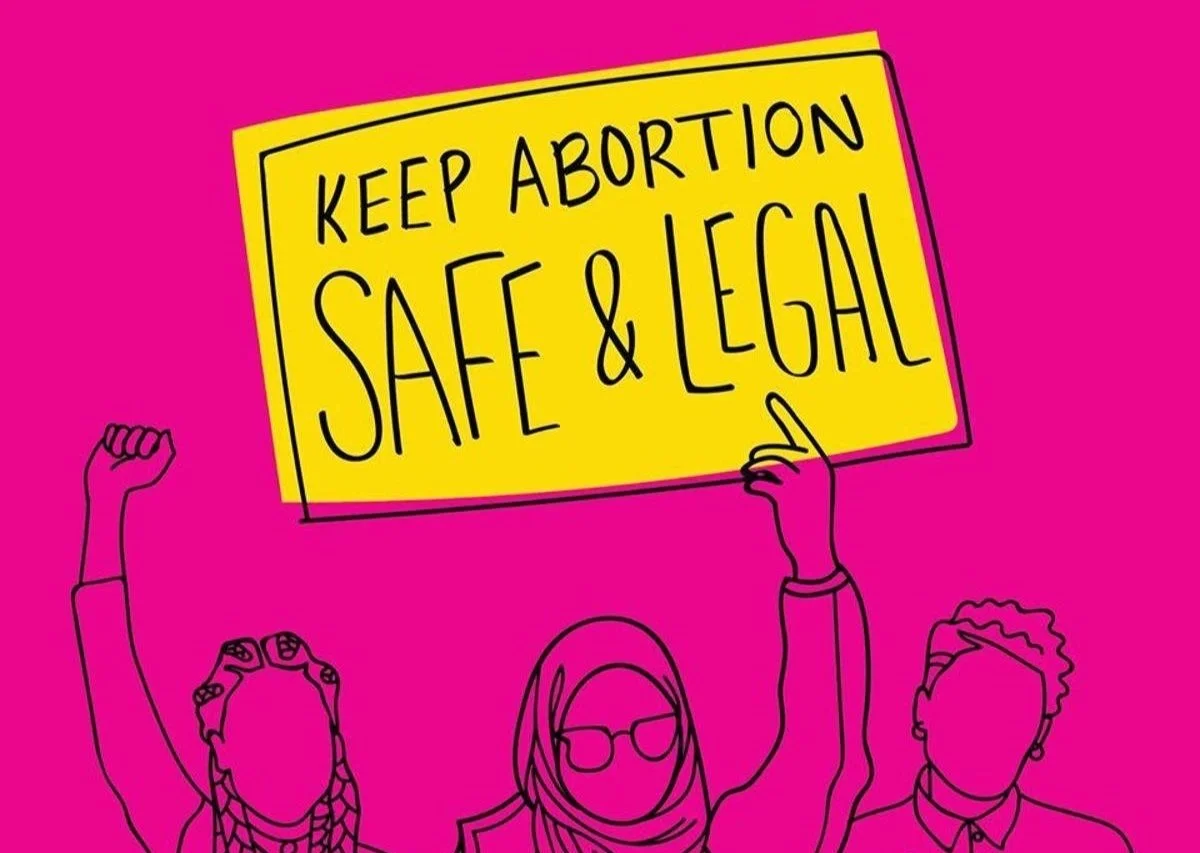
In the U.S., the Due Process Clause of the Fourteenth Amendment constitutionally prohibits states from depriving “any person of life, liberty, or property, without due process of law” in the U.S.[1] The Court turned to this amendment in its decision on Roe v. Wade to decide that the right to privacy is “founded in the Fourteenth Amendment’s concept of personal liberty” and “is broad enough to encompass a woman’s decision whether or not to terminate her pregnancy.”[2] As a result, Roe v. Wade set the precedent that the U.S. Constitution protects a woman’s right to choose to have an abortion. This right to privacy and its relation to abortion rights, however, is not absolute.
The Court decided that while “the right to personal privacy includes the abortion decision,” this right is also “not unqualified and must be considered against important state interests in regulation.”[3] According to the Court, the state’s interests in matters of abortion concern the health and safety of the woman receiving an abortion. To address this issue, the Court also ruled that the “‘compelling’ point, in light of present medical knowledge, is at approximately the end of the first trimester.”[4] After this point in the pregnancy, the Court wrote, “a State may regulate the abortion procedure to the extent that the regulation reasonably relates to the preservation and protection of maternal health.”[5] Although the Court in 1973 set a concrete timeline for when a woman’s abortion becomes compelling enough for state intervention, it was much less clear on other key points regarding the issue of abortion.
The Court in Roe did not attempt to settle the dispute over when life begins, welcoming ensuing litigation that would challenge the limits of the right to privacy. A central anti-abortion argument is that life begins at conception, meaning the health and safety of a fetus is just as compelling to warrant state intrusion as that of the woman receiving an abortion.[6] Believing that life begins at conception also introduces the argument that the fetus’ fundamental right to life is protected by the Due Process Clause.[7] Following Roe, states concerned with protecting the life of the unborn sought to restrict abortion access through different provisions including mandatory waiting periods, parental consent, and spousal notice.[8] These regulations tested the balance between a woman’s right to privacy to choose whether or not to have an abortion and the unqualified nature of that right.
The 1992 case Planned Parenthood v. Casey attempted to reconcile this balance by introducing the undue burden standard. Although the Court upheld the 1973 decision that the right to privacy encompasses the right to choose to have an abortion, it also amended the reasoning used to substantiate this decision. In the 1992 opinion written by Justices O’Connor, Kennedy, and Souter, the Court rejected “the trimester framework” adopted in Roe “as a rigid prohibition on all previability regulation aimed at the protection of fetal life.”[9] Arguing that the trimester framework “undervalues the State’s interest in potential life,”[10] a broader standard of fetal viability was adopted. Having recognized the state’s interest in potential life and the regulations that states imposed to protect it, the Court also wrote that “only where state regulation imposes an undue burden on a woman’s ability to make this decision does the power of the State reach into the heart of the liberty protected by the Due Process Clause.”[11] Although this undue burden standard protected a woman’s right to privacy to a certain extent, it also further legitimized the anti-abortion argument that the fetus’ fundamental right to life must be recognized in addition to a woman’s fundamental right to privacy. As a result, 31 states currently have some laws restricting access to abortion, the severity of which varies by state.[12]
Unlike the U.S. Constitution, the South Africa Constitution explicitly guarantees the right to privacy.[13] Due to other rights listed in the South Africa Bill of Rights, however, the right to privacy is not considered the most relevant fundamental right when it comes to the legality of abortions in the country. The right to privacy, as provided by the South Africa Constitution, protects against unsolicited home searches and seizures of individuals’ possessions.[14] This differs from the U.S. right to privacy determined in Roe, which protects against government intervention in personal and intimate decision-making, such as choosing whether or not to have an abortion.
Just as the South Africa Constitution explicitly provides the right to privacy, it also explicitly addresses matters of reproduction. The Constitution guarantees the right to freedom and security of the person. Specifically, “everyone has the right to bodily and psychological integrity, which includes the right to make decisions concerning reproduction” and to “security in and control over their body.”[15] Furthermore, “everyone has the right to have access to health care services, including reproductive health care.”[16] Other constitutional rights relevant to abortion access include the right to human dignity[17] and the right to life.[18] The right to equality is also significant, as it protects against discrimination on the grounds of gender, sex, pregnancy, and marital status among other identity markers.[19]
Seven months after South Africa transitioned from an apartheid government and adopted its new constitution in 1996, the federal government also passed the Choice on Termination of Pregnancy Act. The Act repealed the provisions of the Abortion and Sterilization Act of 1975, which restricted access to legal abortions only when a pregnancy could threaten a woman’s life, could cause harm to the child, or was the result of rape or incest.[20] The law also required approval from two physicians and for the procedure to be performed by a third physician.[21] This 1975 law was an attempt from the apartheid government to “reconcile concerns about high levels of illegal and unsafe abortion” with the government’s interest “in preferentially increasing birth rates among white women while lowering them among black women.”[22] Alternatively, the 1996 Act sought to establish more equitable abortion laws for all South African women by establishing abortion as a “legally codified and constitutionally underpinned right.”[23] The right to choose, therefore, is one afforded by the South Africa Constitution, which helped enable the passage of the 1996 Act.
The preamble of the 1996 Act alludes directly to rights provided by the Constitution that made the passage of the Act possible, demonstrating the Constitution’s role in resolving the controversial question of the legality of abortions. The Act opens with recognizing that the “Constitution protects the right of persons to make decisions concerning reproduction and to security in and control over their bodies.”[24] The preamble also addresses the constitutional right to have access to health care, which includes reproductive health care and “safe conditions under which the right of choice can be exercised without fear or harm.”[25] These rights, according to the language of the Act, are essential to a democracy that values human dignity and equality.[26] However, these rights are also qualified under South African law just as the right to privacy is not absolute in the U.S.
Similar to the rule of viability adopted in Planned Parenthood v. Casey, the 1996 Act includes certain regulations on the timing of legal abortions. A woman may receive an abortion in South Africa upon request during the first 13 weeks of her pregnancy. Abortions between weeks 13 and 20 of the pregnancy are then available, with a physician’s approval, if the pregnancy jeopardizes the health of the woman or fetus, was a result of rape or incest, or could compromise the woman’s social or economic status.[27] The 1996 Act and its included qualifications have welcomed certain challenges to the legality of abortions.
The 1998 case Christian Lawyers’ Association v. Minister of Health brought to the Transvaal Provincial Division of the High Court of South Africa was the primary constitutional challenge to the 1996 law. The plaintiff argued that the Choice on Termination of Pregnancy Act violated the constitutional right to life of the fetus. The Court dismissed the case, deciding that constitutional rights do not apply to the unborn.[28] Furthermore, the Court ruled that a woman’s right to have an abortion is protected by several constitutional provisions, including the right to life.[29] Although the plaintiff’s case crumbled when matched with the Constitution’s explicit provisions protecting matters or reproduction, several issues still exist regarding the implementation of the 1996 Act.
Despite the codified legality of abortion in South Africa, access to abortion is not always guaranteed for South African women. Past week 13 of pregnancy, “the country reports a widespread obstruction to access posed by the abuse of the so called right to ‘conscientious objection.’”[30] Although the Act includes a provision that makes it a crime for anyone to prevent a legal abortion or obstruct access to an abortion facility,[31] a number of practitioners still refuse to perform the procedure on the grounds of conflicting moral or religious beliefs and exercise their right to conscientious objection.[32] Research indicates that as a result of the practitioners’ abuse of conscientious objection, up to 50% of abortions in South Africa take place outside of designated health facilities.[33] Grave inconsistencies exist, therefore, between the promises made in the Choice on Termination of Pregnancy Act and the promises abandoned in the Act’s implementation.
As evidenced by the countries’ differing constitutions, the U.S. and South Africa rely on different rights to address the issue of the legality of abortion. Whereas the South Africa Constitution includes specific and explicit provisions protecting a woman’s reproductive choices, the U.S. right to privacy is much more abstract. South African courts have addressed this difference directly, most notably in the Christian Lawyers’ Association’s second attempt to challenge the Choice on Termination of Pregnancy Act in 2004. In the High Court’s decision, which again dismissed the plaintiff’s case, Justice Mojapelo wrote it was “not necessary to resort to those general guarantees” of privacy provided by the U.S. Supreme Court because the South Africa Constitution “specifically guarantees the woman’s right ‘to bodily and psychological integrity.’”[34] These specific guarantees also made it possible for South Africa to enact federal legislation that does not exist in the U.S.
Due to the passage of the Choice on Termination of Pregnancy Act, the legality of abortions is regulated on the federal level in South Africa. By contrast, the issue is regulated on the state level in the U.S. Localized regulations compounded with the undue burden standard established by Planned Parenthood v. Casey have paved the way for states to adopt restrictions such as 20 week abortion bans, mandatory waiting periods, and parental consent, all of which can severely restrict a woman’s access to abortion services.[35] Although federal legislation in South Africa has established a uniform policy throughout the nation, practitioners' refusals to perform abortions have created a distinct gap between the 1996 Act’s alleged guarantees and its real impact on women’s access to abortion. Therefore, despite differences between the two countries’ constitutions and legislative acts, similarities exist in their executions.
The problems resulting from the enforcement of abortion laws in both countries are strikingly similar. Both the restrictions included in the Choice on Termination of Pregnancy Act and certain state restrictions in the U.S. can make it very difficult for a woman to receive an abortion. Moreover, the restrictions in both countries disproportionately affect women in poverty. This is most evident in the far distances that poor women must travel to receive a legal abortion. Research conducted by The Washington Post shows that women below the poverty line account for about half of the abortions in the U.S., and yet they are more likely than other women to have to drive more than one hour to reach the nearest abortion provider.[36] Additionally, these women who have to travel greater distances “are also subject to state laws that require at least two days to get a procedure,”[37] meaning two trips, and all of the costs required for two trips, are often necessary. Similarly in South Africa, the refusal of practitioners and facilities to provide abortion services on the grounds of conscientious objection disproportionately affects poor women who cannot afford to travel long distances to receive an abortion.[38] Research from the South Africa Department of Health found that only 264 of the 505 health facilities designated to provide abortion services actually provide first and second semester abortions.[39] Therefore, differences in codified law between the two nations appear to have little impact on the actual implementation of abortion laws, as both nations face very similar issues regarding access to abortion services.
Unequal access to abortion services in South Africa sheds light on the significance of a law’s enforcement and not just the content of the law itself. Upon first glance, abortion access in South Africa does not appear to be a controversial issue due to explicit constitutional provisions protecting reproductive decision-making and a federal legislative act that legalizes abortion services. However, in practice and due to faults in the law’s implementation, promises of equal access to abortion have not been fully realized throughout South Africa. There are plenty of lessons to be learned for the implementation of similar laws in the U.S. First and foremost, a constitutional amendment explicitly guaranteeing a woman’s right to choose to have an abortion would be necessary to enable federal legislation. Furthermore, as demonstrated by the uneven enforcement of federal legislation in South Africa, a comprehensive education both for women to understand their rights and for health care workers to acknowledge those rights is crucial. To ensure accessibility for all, regardless of socioeconomic status, a government body to monitor the implementation of a federal legislative act could also see to it that abortion facilities and services were widespread and equitable. The issue of abortion access in South Africa, therefore, is a necessary reminder that a law is only as powerful as its enforcement.
notes:
US Constitution, Amendment XIV.
Roe v. Wade 410 US 113 (1973).
Roe v. Wade 410 US 113 (1973).
Roe v. Wade 410 US 113 (1973).
Roe v. Wade 410 US 113 (1973).
Molly Jong-Fast, “Life Begins at Conception (Except When That’s Inconvenient for Republicans),” New York Times, June 8, 2019, https://www.nytimes.com/2019/06/08/opinion/sunday/abortion-life-conception.html.
BBC Ethics Guide, 2014: http://www.bbc.co.uk/ethics/abortion/legal/usa.shtml.
Planned Parenthood of Southeastern Pennsylvania v. Casey. (n.d.). Oyez. Retrieved November 24, 2020, from https://www.oyez.org/cases/1991/91-744.
Planned Parenthood v. Casey 505 U.S. 833 (1992).
Planned Parenthood v. Casey 505 U.S. 833 (1992).
Planned Parenthood v. Casey 505 U.S. 833 (1992).
Planned Parenthood Action Fund, “Is Abortion Legal in My State”: https://www.plannedparenthoodaction.org/abortion-access-tool/US.
South Africa Constitution, Section 14.
South Africa Constitution, Section 14.
South Africa Constitution, Section 12(2).
South Africa Constitution, Section 27(1a).
South Africa Constitution, Section 10.
South Africa Constitution, Section 11.
South Africa Constitution, Section 9 .
Sally Guttmacher, Farzana Kapadia, Jim Te Water Naude and Helen de Pinho, “Abortion Reform in South Africa: A Case Study in the 1996 Choice on Termination of Pregnancy Act,” Guttmacher Institute 24, issue 4, Dec. 2, 1998, https://www.guttmacher.org/journals/ipsrh/1998/12/abortion-reform-south-africa-case-study-1996-choice-termination-pregnancy-act#:~:text=Under%20the%201975%20Abortion%20and,other%20unlawful%20intercourse%2C%20such%20as.
Mary Favier, Jamie Greenberg, and Marion Stevens, “Safe abortion in South Africa: ‘We have wonderful laws but we don’t have people to implement those laws,’” International Journal of Gynecology & Obstetrics 143, issue S4, Oct. 30, 2018, https://obgyn.onlinelibrary.wiley.com/doi/full/10.1002/ijgo.12676.
Favier, Greenberg, and Stevens, “Safe abortion in South Africa.”
Favier, Greenberg, and Stevens, “Safe abortion in South Africa.” .
Choice on Termination of Pregnancy Act, 1996.
Choice on Termination of Pregnancy Act, 1996.
Choice on Termination of Pregnancy Act, 1996.
Choice on Termination of Pregnancy Act, 1996.
Christian Lawyers’ Association v. Minister of Health 11 SA 1434 (1998).
Christian Lawyers’ Association v. Minister of Health 11 SA 1434 (1998).
Satang Nabaneh Marion Stevens and Lucia Berro Pizzarossa, “Let’s call ‘conscientious objection’ by its name: Obstruction of access to care and abortion in South Africa,” Oxford Human Rights Hub, Oct. 24, 2018, http://ohrh.law.ox.ac.uk/lets-call-conscientious-objection-by-its-name-obstruction-of-access-to-care-and-abortion-in-south-africa/.
Choice on Termination of Pregnancy Act, 1996.
Stevens and Pizzarossa, “Conscientious objection.”
Stevens and Pizzarossa, “Conscientious objection.”
Christian Lawyers’ Association v. Minister of Health 10 SA 7728 (2004).
Planned Parenthood Action Fund, “Is Abortion Legal in My State.”
Dan Keating, Tim Meko, and Danielle Rindler, “Abortion access is more difficult for women in poverty,” Washington Post, July 10, 2019, https://www.washingtonpost.com/national/2019/07/10/abortion-access-is-more-difficult-women-poverty/?arc404=true.
Keating, Meko, and Rindler, “Abortion access.”
Sally Guttmacher, Farzana Kapadia, Jim Te Water Naude and Helen de Pinho, “Abortion reform.”
Stevens and Pizzarossa, “Conscientious objection.”.
Bibliography
BBC Ethics Guide (2014): Laws restricting abortion. http://www.bbc.co.uk/ethics/abortion/legal/usa.shtml.
Christian Lawyers’ Association v. Minister of Health 11 SA 1434 (1998).
Favier, M., Greenberg, J. and Stevens, M. “Safe abortion in South Africa: ‘We have wonderful laws but we don’t have people to implement those laws.’” International Journal of Gynecology & Obstetrics 143, issue S4 (Oct. 30, 2018): 38-44. https://obgyn.onlinelibrary.wiley.com/doi/full/10.1002/ijgo.12676.
Guttmacher, S., Kapadia, F., Te Water Naude, J. and de Pinho, H. “Abortion Reform in South Africa: A Case Study in the 1996 Choice on Termination of Pregnancy Act.”
Guttmacher Institute 24, issue 4 (Dec. 2, 1998): 191. https://www.guttmacher.org/journals/ipsrh/1998/12/abortion-reform-south-africa-case-study-1996-choice-termination-pregnancy-act#:~:text=Under%20the%201975%20Abortion%20and,other%20unlawful%20intercourse%2C%20such%20as.
Jong-Fast, M. “Life Begins at Conception (Except When That’s Inconvenient for Republicans).” New York Times, June 8, 2019. https://www.nytimes.com/2019/06/08/opinion/sunday/abortion-life-conception.html.
Keating, D., Meko, T. and Rindler, D. “Abortion access is more difficult for women in poverty.” Washington Post, July 10, 2019. https://www.washingtonpost.com/national/2019/07/10/abortion-access-is-more-difficult-women-poverty/?arc404=true.
Nabaneh, S., Stevens, M. and Berro Pizzarossa, L. “Let’s call ‘conscientious objection’ by its name: Obstruction of access to care and abortion in South Africa.” Oxford Human Rights Hub, Oct. 24, 2018. http://ohrh.law.ox.ac.uk/lets-call-conscientious-objection-by-its-name-obstruction-of-access-to-care-and-abortion-in-south-africa/.
Planned Parenthood Action Fund (2020): Is Abortion Legal in My State. https://www.plannedparenthoodaction.org/abortion-access-tool/US.
Planned Parenthood of Southeastern Pennsylvania v. Casey. (n.d.). Oyez. Retrieved November 24, 2020, from https://www.oyez.org/cases/1991/91-744.
Planned Parenthood v. Casey 505 U.S. 833 (1992)
Ravitz, J. “The surprising history of abortion in the United States.” CNN, June 27, 2016. https://www.cnn.com/2016/06/23/health/abortion-history-in-united-states/index.html.
Roe v. Wade 410 US 113 (973).
South Africa Constitution.
South Africa Choice on Termination of Pregnancy Act, 1996.
US Constitution, Amendment XIV.

A Denial of Justice
Ashley Ravid
By: Ashley Ravid
Edited By: Tess Ballis and Claire Lu
Diplomatic immunity can be a force for good, but it can also be used to subvert justice. A plethora of crimes committed by diplomats—ranging from parking tickets and speeding to sexual assault, pedophilia, and even murder—are swept under the rug by their home countries. Diplomats are almost always unable to be prosecuted thanks to international protections guaranteed by the Vienna Convention on Diplomatic Relations (1961).[1][2] There is often nothing that can be done to bring these subject diplomats to due process of the law unless the home country of a diplomat agrees to revoke diplomatic immunity or the accused surrenders to the jurisdiction of the court. However, in cases where an envoy commits a crime unrelated to their official role, their home nation should revoke diplomatic immunity to maintain democracy and fairness; one’s job should never be a shield against justice.
This abuse of power is sometimes detrimental to international relations. One example of this abuse was when a Malaysian diplomat in New Zealand robbed and assaulted a young woman. After widespread outcry in New Zealand followed the ambassador’s return to his home country, the Malaysian government offered to try him there or waive his diplomatic immunity. He eventually was sentenced and sent to prison in New Zealand, though mild tension between the two governments over his extradition underscored this process.[3][4] Diplomatic immunity can also inflame already-strained relationships between nations, such as when a Russian diplomat and his wife were arrested in the Netherlands for drunk driving and child abuse.[5] The action was partly seen as retaliation to the detainment of Greenpeace activists sailing under a Dutch flag arrested in Russia. Russian authorities alleged that the Netherlands had violated the diplomat’s immunity, further exacerbating the tension between the two nations.[6]
Diplomats often act as proxy pieces of the nations they represent, and the power differential between nations is an essential piece of the discussion as to when and why diplomatic immunity is sometimes revoked. A case study of vehicular manslaughter incidents involving diplomats either in or from the United States bares the problem of diplomatic immunity essentially begetting government-sanctioned crime. A consulate employee paralyzed a young Russian man in a car accident.[7] A popular Romanian musician was struck and killed by a car.[8] A different driver killed one and injured eight in a crash in Kenya.[9] What do these incidents have in common? All three responsible parties were American envoys who Asclaimed diplomatic immunity and were quickly sheltered from facing charges thanks to protection by the U.S.. The victims of these crimes were left without sufficient restitution, and a lingering resentment against the country they felt denied it to them: the U.S.. Aleksandr Kashin, the young Russian national paralyzed by American Consul General Douglas Kent, described his experience attempting to secure justice for himself: “The United States government treated me not like a human, but like a dog they hit on the street, and they don't have to take care of as anything."[10] The widow of the Kenyan man killed in another crash involving a State Department official faced similar difficulty in receiving restitution for the death of her husband who was the sole provider for the family of six. According to reports, U.S. officials were concerned about the possible impact that the incident would have on relations with Kenya. The official was quickly evacuated from the country out of fear of retaliation, leaving no financial assistance for the victims or their families.[9] In contrast, heavy controversy over diplomatic immunity followed the 1997 death of an American teenager when he was hit by drunk driver Gueorgui Makharadze. Makharadze, an official of the Republic of Georgia, had a history of driving offenses but was released after claiming diplomatic immunity. Georgia—to the praise of U.S. officials—eventually waived this protection, and Makharadze was sentenced to prison in the United States.[11]
The disparity in these cases suggests that those diplomatic officials who come from countries with hegemonic political power need not fear that their diplomatic immunity will be waived. In 2014, the case of an Indian consular official accused of breaking the law in the United States became controversial when the U.S. detained the employee under fraud charges. Officials in India retaliated by removing safety barriers around the U.S. embassy and closing a local club for expats. The issue was only resolved when the U.S. agreed to allow the official to claim diplomatic immunity and return home.[12] Cases like this seem to undermine the principle of diplomatic immunity entirely; why was India different from Georgia? Why in one case was an official returned to U.S. custody, and in the other sent home with an apology? Perhaps it is because India has a population of over 1 billion people; perhaps it is because they are in possession of nuclear warheads. Either way, it seems clear that the system of diplomatic immunity is tied to the preservation of certain international relationships rather than a commitment to justice and the prevention of retaliation.
Who can afford to anger whom and get away with it? In 2014, a Venezuelan diplomat arrested in Aruba after the United States called for his detainment was released after Venezuela threatened to suspend commercial travel to Aruba, which would decimate the small island’s economy. This incident, however, is not representative of the typical outcome when the United States goes up against other nations in matters of waiving diplomatic immunity to smooth relations; usually it’s the U.S. coming out victorious in these situations.[7][8] It is difficult to ascertain exactly how many diplomats get away with their crimes versus being prosecuted for them. The mere existence of this discrepancy, however, illustrates the necessity of a global reconsideration as to what or who, exactly, diplomatic immunity is protecting. The United States’ position as a world power allows it to protect diplomats without considering the threat of sanctions or strained relations the way that smaller nations must. These abuses of power can harm international relations, but they are also worthy of re-examination simply because they are a perversion of the foundational principles of justice that the Constitution supposedly guarantees.
An ongoing controversy surrounds diplomatic immunity in the UK and highlights the need for the US to examine its use of the privilege: the death of Harry Dunn, a young British motorcyclist killed by American Anne Sacoolas in a 2019 car accident. Sacoolas, the wife of a CIA operative, admitted to driving on the wrong side of the road.[13] After the accident which killed Dunn, she claimed diplomatic immunity and fled back to the United States, which refused to extradite her to face sentencing in England; this was referred to by the British government as “a denial of justice.”[14] Complications in the case arose when Sacoolas herself was revealed to be employed by an American intelligence agency, which complicated (and possibly nullified) the legality of her claiming spousal diplomatic immunity in the first place; this revelation has not changed the United States’ steadfast refusal to extradite Sacoolas.[15] The case generated immediate buzz and eventually led to the reworking of diplomatic immunity laws between the U.S. and England in order to exclude protection for diplomats’ families, though both Dunn’s family and supporters continue to fight to bring justice for Harry.[16] Most recently, the Dunns have begun civil proceedings against Sacoolas in her home state of Virginia; the fact that they have had to literally cross an ocean in order to seek restitution against their son’s killer, however, points to the essential problem with diplomatic immunity.[17]
This is not to say that diplomatic immunity as a whole should be revoked for all envoys; it was established in order to protect individuals who would otherwise be the target of many forces involved in the push-and-pull of international politics. Trying to rework the legislation that grants these protections in the first place would likely lead to innumerable complications and unfortunate precedents; this means that the best solution to the abuse of diplomatic immunity is for envoys’ home countries to waive this protection and allow them to face justice. The practice of nations regularly waiving diplomatic immunity for crimes unrelated to their envoys’ direct duties (as in the aforementioned case of the Malaysian diplomat in New Zealand) must become both normalized and regular, regardless of where the crime was committed and who the victim was. If such a thing were considered standard procedure and countries regularly extradited their own diplomats for such crimes, perhaps diplomatic immunity could be unlinked from both controversy and international hegemony.
It isn’t enough for the United States to simply close the loophole of spousal diplomatic immunity that led to Sacoolas being able to flee her crime in the first place.[18] A guidance brief on diplomatic immunity provided by the State Department itself states the point perfectly: “Diplomatic immunity is not intended to serve as a license for persons to flout the law and purposely avoid liability for their actions. The purpose of these privileges and immunities is not to benefit individuals but to ensure the efficient and effective performance of their official missions on behalf of their governments.”[19] If the United States wishes to maintain its position as a nation that stands for justice for all, Anne Sacoolas should be extradited to the United Kingdom to be prosecuted for the death of Harry Dunn. Her being married to an intelligence agent, or even working as an informant herself, has no relation to the fact that she hit and killed a 19-year-old with her car. Harry Dunn, like many other victims of diplomatic envoys, deserves justice.
Dunn, like many others, is a victim of a system which is set up with the best of intentions and which cannot be easily dismantled without inviting further complication. The need for the diplomatic immunity system has not abated, yet the plethora of controversies and crimes it has caused raises the need for greater accountability by diplomats’ home countries. Because diplomatic immunity as a whole must be preserved, the international community must call on lawbreaking diplomats’ home countries—regardless of how powerful they are—to subject these individuals to due process for their crimes.
Notes:
“Diplomatic Immunity.” Encyclopædia Britannica. Encyclopædia Britannica, inc. Accessed March 9, 2021. https://www.britannica.com/topic/diplomatic-immunity.
“Sudan Diplomat in New York and Other Cases of Diplomatic Immunity.” BBC News. BBC, January 11, 2017. https://www.bbc.com/news/magazine-38576257.
“Malaysian Official on Sex Charge Uses Diplomatic Immunity to Leave NZ.” The Guardian. Guardian News and Media, July 1, 2014. https://www.theguardian.com/world/2014/jul/01/malaysian-official-sexual-assault-charge-diplomatic-immunity-leave-new-zealand.
“Malaysian Envoy Gets Nine Months Detention for Indecent Assault.” The Telegraph. Telegraph Media Group, February 4, 2016. https://www.telegraph.co.uk/news/worldnews/asia/malaysia/12139460/Malaysian-envoy-gets-nine-months-detention-for-indecent-assault.html.
“‘Borodin Was Gevaar Voor Kinderen.’” NOS. Accessed March 9, 2021. https://nos.nl/artikel/560093-borodin-was-gevaar-voor-kinderen.html.
“Dutch Take Legal Action over Greenpeace Ship in Russia.” BBC News. BBC, October 4, 2013. https://www.bbc.com/news/world-europe-24395769.
Juan Forero and Dan Molinski. “Netherlands Says Venezuelan Detained in Aruba Has Immunity.” The Wall Street Journal. Dow Jones & Company, July 28, 2014. https://www.wsj.com/articles/netherlands-rules-venezuelan-detained-in-aruba-has-diplomatic-immunity-1406505987.
José de Córdoba. “U.S. Plans Sanctions on Some Venezuelan Officials.” The Wall Street Journal. Dow Jones & Company, July 30, 2014. https://www.wsj.com/articles/u-s-plans-sanctions-on-some-venezuelan-officials-1406697081.
Glenda Cooper. “Ex-Diplomat Sought for Lawsuit.” The Washington Post. WP Company, August 10, 2001. https://www.washingtonpost.com/archive/politics/2001/08/10/ex-diplomat-sought-for-lawsuit/116d1ba2-3560-4cd0-8382-2f1e7be0ebf7/.
Katie Paul, Pamela Denise Long, and Monica Osborne. “A Thorn in Bush's Side.” Newsweek, March 13, 2010. https://www.newsweek.com/thorn-bushs-side-85793.
Jason Straziuso. “U.S. Diplomat Kills Man in Car Crash, Leaves Kenya.” USA Today. Gannett Satellite Information Network, August 2, 2013. https://www.usatoday.com/story/news/world/2013/08/02/diplomat-kenya-car-crash/2612229/.
Tom Jackman. “Russian Hurt In Crash Sues U.S. Diplomat.” The Washington Post. WP Company, September 15, 2002. https://www.washingtonpost.com/archive/local/2002/09/15/russian-hurt-in-crash-sues-us-diplomat/c845de31-cf4d-49ca-b048-5c9152505519/.
“Ex-Diplomat Gets 7 Years for Death of Teen in Crash.” Los Angeles Times. Los Angeles Times, December 20, 1997. https://www.latimes.com/archives/la-xpm-1997-dec-20-mn-531-story.html.
Jason Burke and Dan Roberts. “Indian Diplomat Devyani Khobragade Leaves U.S. under Immunity.” The Guardian. Guardian News and Media, January 10, 2014. https://www.theguardian.com/world/2014/jan/10/devyani-khobragade-to-leave-us-under-diplomatic-immunity.
“Harry Dunn Death: Anne Sacoolas Lawyers Say She 'Drove on Wrong Side of Road'.” BBC News. BBC, September 10, 2020. https://www.bbc.com/news/uk-england-northamptonshire-54112841.
“Harry Dunn Crash: Suspect Anne Sacoolas 'Wanted Internationally'.” BBC News. BBC, May 11, 2020. https://www.bbc.com/news/uk-england-northamptonshire-52619998.
Jonny Hallam. “Case against American Woman Accused of Killing a UK Teenager Can Go Ahead in the US, Judge Rules.” CNN. Cable News Network, February 17, 2021. https://www.cnn.com/2021/02/17/us/harry-dunn-anne-sacoolas-damages-intl/index.html#:~:text=Case%20against%20American%20woman%20accused,in%20the%20US%2C%20judge%20rules&text=Harry%20Dunn%20was%20killed%20in,Sacoolas%20in%20England%20in%202019.
Jen Kirby. “The Death of a British Teen Has Put a Strain on the US-UK Relationship.” Vox. Vox, October 16, 2019. https://www.vox.com/2019/10/16/20917164/harry-dunn-white-house-trump.
Bill Chappell. “U.S. Court Sides With Family Of Man Killed In Crash Involving Diplomat's Wife.” NPR. NPR, February 16, 2021. https://www.npr.org/2021/02/16/968433574/u-s-court-sides-with-harry-dunns-family-keeps-wrongful-death-lawsuit-in-virginia.
Patrick Wintour. “Harry Dunn Death: Family Begins Court Case against Foreign Office.” The Guardian. Guardian News and Media, November 11, 2020. https://www.theguardian.com/politics/2020/nov/11/harry-dunn-death-anne-sacoolas-family-begins-court-case-against-foreign-office.
“Diplomatic and Consular Immunity: Guidance for Law Enforcement and Judicial Authorities.” UNITED STATES DEPARTMENT OF STATE OFFICE OF FOREIGN MISSIONS, 2018. https://www.state.gov/wp-content/uploads/2019/07/2018-DipConImm_v5_Web.pdf.
Bibliography:
Burke, Jason, and Dan Roberts. “Indian Diplomat Devyani Khobragade Leaves U.S. under Immunity.” The Guardian. Guardian News and Media, January 10, 2014. https://www.theguardian.com/world/2014/jan/10/devyani-khobragade-to-leave-us-under-diplomatic-immunity.
Chappell, Bill. “U.S. Court Sides With Family Of Man Killed In Crash Involving Diplomat's Wife.” NPR. NPR, February 16, 2021. https://www.npr.org/2021/02/16/968433574/u-s-court-sides-with-harry-dunns-family-keeps-wrongful-death-lawsuit-in-virginia.
Cooper, Glenda. “Ex-Diplomat Sought for Lawsuit.” The Washington Post. WP Company, August 10, 2001. https://www.washingtonpost.com/archive/politics/2001/08/10/ex-diplomat-sought-for-lawsuit/116d1ba2-3560-4cd0-8382-2f1e7be0ebf7/.
de Córdoba, José. “U.S. Plans Sanctions on Some Venezuelan Officials.” The Wall Street Journal. Dow Jones & Company, July 30, 2014. https://www.wsj.com/articles/u-s-plans-sanctions-on-some-venezuelan-officials-1406697081.
“Diplomatic and Consular Immunity: Guidance for Law Enforcement and Judicial Authorities.” UNITED STATES DEPARTMENT OF STATE OFFICE OF FOREIGN MISSIONS, 2018. https://www.state.gov/wp-content/uploads/2019/07/2018-DipConImm_v5_Web.pdf.
“Diplomatic Immunity.” Encyclopædia Britannica. Encyclopædia Britannica, inc. Accessed March 9, 2021. https://www.britannica.com/topic/diplomatic-immunity.
“Dutch Take Legal Action over Greenpeace Ship in Russia.” BBC News. BBC, October 4, 2013. https://www.bbc.com/news/world-europe-24395769.
“Ex-Diplomat Gets 7 Years for Death of Teen in Crash.” Los Angeles Times. Los Angeles Times, December 20, 1997. https://www.latimes.com/archives/la-xpm-1997-dec-20-mn-531-story.html.
Forero, Juan, and Dan Molinski. “Netherlands Says Venezuelan Detained in Aruba Has Immunity.” The Wall Street Journal. Dow Jones & Company, July 28, 2014. https://www.wsj.com/articles/netherlands-rules-venezuelan-detained-in-aruba-has-diplomatic-immunity-1406505987.
Hallam, Jonny. “Case against American Woman Accused of Killing a UK Teenager Can Go Ahead in the US, Judge Rules.” CNN. Cable News Network, February 17, 2021. https://www.cnn.com/2021/02/17/us/harry-dunn-anne-sacoolas-damages-intl/index.html#:~:text=Case%20against%20American%20woman%20accused,in%20the%20US%2C%20judge%20rules&text=Harry%20Dunn%20was%20killed%20in,Sacoolas%20in%20England%20in%202019.
“Harry Dunn Crash: Suspect Anne Sacoolas 'Wanted Internationally'.” BBC News. BBC, May 11, 2020. https://www.bbc.com/news/uk-england-northamptonshire-52619998.
“Harry Dunn Death: Anne Sacoolas Lawyers Say She 'Drove on Wrong Side of Road'.” BBC News. BBC, September 10, 2020. https://www.bbc.com/news/uk-england-northamptonshire-54112841.
Jackman, Tom. “Russian Hurt In Crash Sues U.S. Diplomat.” The Washington Post. WP Company, September 15, 2002. https://www.washingtonpost.com/archive/local/2002/09/15/russian-hurt-in-crash-sues-us-diplomat/c845de31-cf4d-49ca-b048-5c9152505519/.
Kirby, Jen. “The Death of a British Teen Has Put a Strain on the US-UK Relationship.” Vox. Vox, October 16, 2019. https://www.vox.com/2019/10/16/20917164/harry-dunn-white-house-trump.
“Malaysian Envoy Gets Nine Months Detention for Indecent Assault.” The Telegraph. Telegraph Media Group, February 4, 2016. https://www.telegraph.co.uk/news/worldnews/asia/malaysia/12139460/Malaysian-envoy-gets-nine-months-detention-for-indecent-assault.html.
“Malaysian Official on Sex Charge Uses Diplomatic Immunity to Leave NZ.” The Guardian. Guardian News and Media, July 1, 2014. https://www.theguardian.com/world/2014/jul/01/malaysian-official-sexual-assault-charge-diplomatic-immunity-leave-new-zealand.
Paul, Katie, Pamela Denise Long, and Monica Osborne. “A Thorn in Bush's Side.” Newsweek, March 13, 2010. https://www.newsweek.com/thorn-bushs-side-85793.
Straziuso, Jason. “U.S. Diplomat Kills Man in Car Crash, Leaves Kenya.” USA Today. Gannett Satellite Information Network, August 2, 2013. https://www.usatoday.com/story/news/world/2013/08/02/diplomat-kenya-car-crash/2612229/.
“Sudan Diplomat in New York and Other Cases of Diplomatic Immunity.” BBC News. BBC, January 11, 2017. https://www.bbc.com/news/magazine-38576257.
Wintour, Patrick. “Harry Dunn Death: Family Begins Court Case against Foreign Office.” The Guardian. Guardian News and Media, November 11, 2020. https://www.theguardian.com/politics/2020/nov/11/harry-dunn-death-anne-sacoolas-family-begins-court-case-against-foreign-office.
“‘Borodin Was Gevaar Voor Kinderen.’” NOS. Accessed March 9, 2021. https://nos.nl/artikel/560093-borodin-was-gevaar-voor-kinderen.html.