

THE FORUM: NORTHWESTERN’S PREMIER LEGAL BLOG
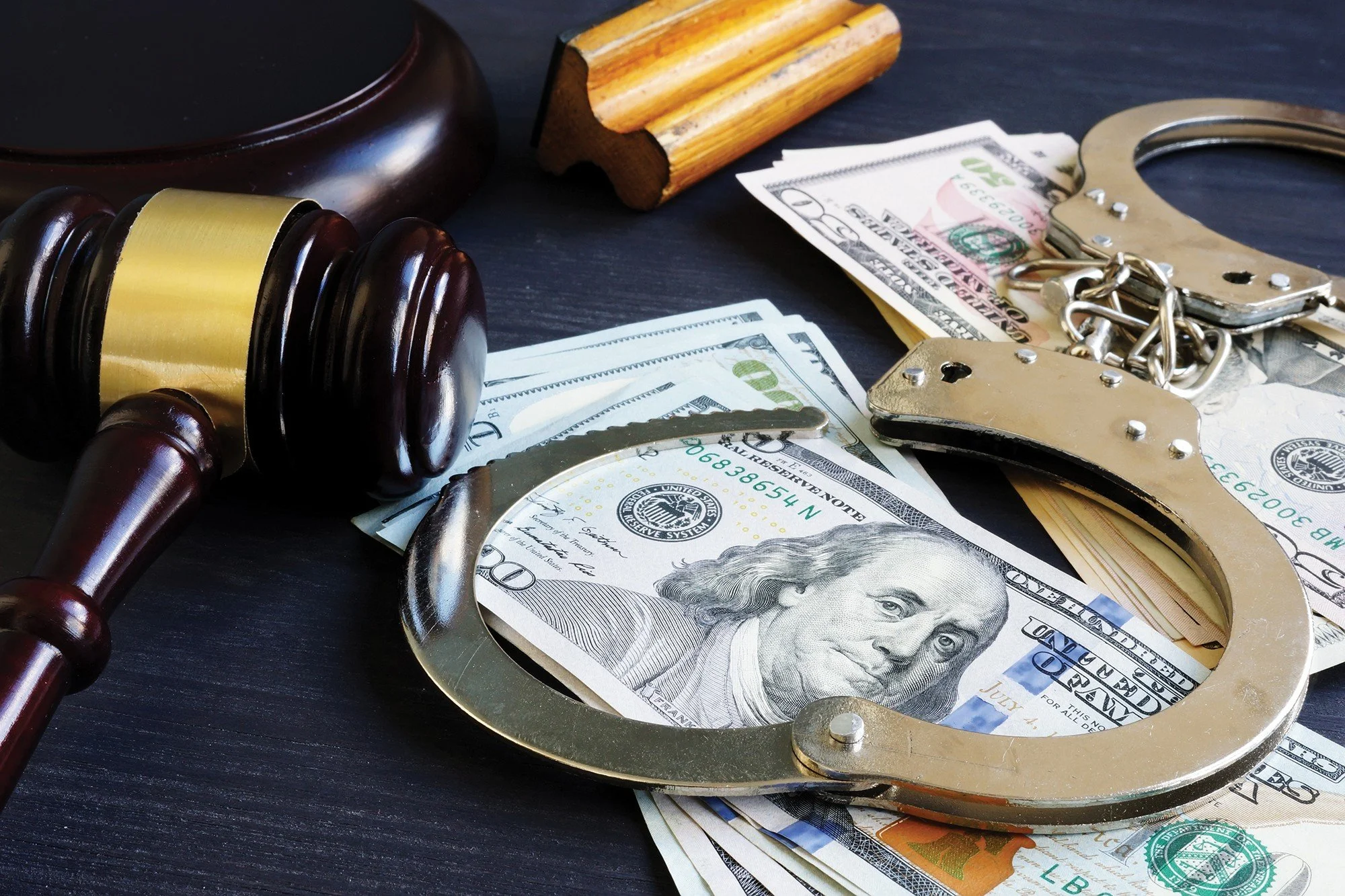
An Overview of the Constitutionality of Illinois’ Elimination of Cash Bail
By: Sarah Wejman
Edited By: claire quan and emily yang
In December of 2022, Illinois was on track to become the first state to eliminate cash bail for defendants awaiting criminal trials with the Pretrial Fairness Act. Under this law, presumption of release was made the default. Part of the larger Illinois Safety, Accountability, Fairness and Equity-Today (SAFE-T) Act, additional issues addressed in the bill included limiting “when defendants can be deemed flight risks…and preventing police from arresting non-violent trespassers.” [1]
However, the progress of this legislation was impeded after a Kankakee County judge ruled that the Pretrial Fairness Act was unconstitutional. After dozens of state attorneys had filed lawsuits in efforts to prevent the elimination of cash bail, Circuit Judge Thomas Cunnington found that the act violated the separation of powers principle. In a 36-page opinion, Judge Cunnington stated that the Illinois Supreme Court affirmed judges’ “independent, inherent authority to deny or revoke bail to ‘preserve the orderly process of criminal procedure.’” [2] He further stated that the more appropriate way to go about changing the bail in the pretrial release process would be to allow the electorate of Illinois to vote to amend the state's constitution. [3] In the 65 counties from which attorneys represented in this case, cash bail was to remain.
However, the case was appealed, and as a result of policy inconsistencies among counties due to the pending decision, the Illinois Supreme Court issued a stay on the Pretrial Fairness Act on December 31, citing an effort to “maintain consistent pretrial procedures throughout Illinois.” [4] The remainder of the bill took into effect the following day.
The proposal and near passing of removing cash bail in Illinois was quite controversial. Proponents of the bill, having long awaited it, were extremely disappointed; they argued that the use of cash bail disproportionately favors the wealthy, forcing those who are not as financially well off to be imprisoned. According to the U.S. Commission on Civil Rights, over 60% of defendants are imprisoned before their trial because they are unable to afford bail. [5] Cook County Public Defender Sharone Mitchell expressed that “[t]he use of money as a determining factor in whether somebody is going to be in or out of jail before trial is really just an abhorrent practice.” [6]
For many individuals who are unable to afford the bail, prison time can be a majorly disruptive force. One individual, Lavette Mayes, a 52 year old mother of two from the South Side of Chicago, told ABC News the burdens she endured: “I lost my business. I lost housing. I lost transportation, my vehicles. I lost everything just in the 571 days that I was incarcerated [awaiting trial].” [7] She was arrested after engaging in a physical fight with her mother-in-law during a divorce, which resulted in a trip to the hospital for both of them. Despite having no previous record, her bail was set at $25,000. Consequently, she spent over a year in prison before being able to afford bail with the help of her family and a charity organization. Ultimately, she was released and put on home monitoring. [8] Previously, she had a clean record, and expressed her disbelief as to why she was assigned such a costly bail.
However, there were many who supported cash bail to start with and were adamant that it remain in place. Given concerns over Chicago’s crime rates, opponents of the bill feared it would release dangerous criminals back onto the street and fuel illegal drug use. Orland Park Mayor Keith Pekau stated, “[w]hen I said that this is the most dangerous law I've ever seen, I believe that.” [9]
Despite these concerns, the act proposed exceptions that would keep violent criminals in jail until trial. These would include cases where there was “force against another person”, such as murder, criminal sexual assault, robbery, burglary, home invasion, and vehicular invasion. [10]
Additionally, studies indicate that, in counties and cities with bail reform, there was no correlated rise in violent crime. A report conducted by the Major Cities Chiefs Association found that “out of the 66 largest police jurisdictions, 63 saw an increase in at least one category of violent crimes in 2020,” but the majority of these still had cash bail. [11]
One advocate against abolishing cash bail, Illinois State Senator John Curran (R-Downers Grove) was in concurrence with the opposition on the issue that wealth shouldn’t determine whether one should be released from prison while awaiting trial. However, he states that judges still need, “broad discretion in making determinations on public safety with regards to who is detained and who isn’t.” [12] Despite this being an important role that the judge should have, it can still be fulfilled without cash bail because the right for judges to imprison somebody who is deemed dangerous to the public would not be revoked.
Although eliminating cash bail can initially seem dangerous, the evidence thus far shows that the increase in crime is unrelated to whether cash bail is present; rather, most major cities have an increase in crime due to other reasons such as the pandemic and an increasing distrust in police. Furthermore, judges are still given the power to imprison those who are a threat to society or individuals before their trial. Despite the legislation being a violation of separation of powers, there is still opportunity for bail reform. Instead of worsening poverty by putting nonviolent offenders in prison before their trial and posting infeasible bails, Illinois should add the issue of cash bail to their ballot and let the people vote to amend the state’s constitution.
Notes:
Miller, Andrew. “Controversial SAFE-T Act Takes Effect in Illinois Minus Key Provision Stayed by Judge.” Fox News, January 1, 2023. https://www.foxnews.com/us/controversial-safe-t-act-takes-effect-illinois-minus-key-pro vision-stayed-judge.
Rowe v. Raoul, No. 22-CH-16 (2022).
Gorner, Jeremy, and Madeline Buckley. “Kankakee County Judge Finds That Elimination of Cash Bail Provision in SAFE-T Act Is Unconstitutional.” Chicago Tribune, December 28, 2022. https://www.chicagotribune.com/politics/ct-illinois-bail-lawsuit-ruling-20221229-hxjlwtg elnft5ew2lpcsma7wzy-story.html.
Miller, “Controversial SAFE-T Act”
The United States Commission on Civil Rights’ Office of Civil Rights Evaluation. “The Civil Rights Implications of Cash Bail,” January 20, 2022.
Miller, “Controversial SAFE-T Act”
Moeder, Nicole, Devin Dwyer, and Isabella Meneses. “Illinois Set to Become 1st State to Eliminate Cash Bail.” ABC News, December 19, 2022. https://abcnews.go.com/Politics/illinois-set-become-1st-state-eliminate-cash-bail/story?id =95421342.
Moeder, “Illinois Set to Become”
Moeder, “Illinois Set to Become”
Miller, “Controversial SAFE-T Act”
Masterson, Matt. “Cash Bail Is Ending (or Partially Staying?) in Illinois. Here’s What You Need to Know.” WTTW News, December 28, 2022. https://news.wttw.com/2022/12/28/cash-bail-ending-or-partially-staying-illinois-here-s-w hat-you-need-know.
Lybrand, Holmes, and Tara Subramaniam. “Fact-Checking Claims Bail Reform Is Driving Increase in Violent Crime.” CNN, July 7, 2021. https://www.cnn.com/2021/07/07/politics/bail-reform-violent-crime-fact-check/index.htm l.
Paddock, Blair. “Lawmakers Discuss Pros, Cons of Ending Cash Bail.” WTTW News, January 19, 2021. https://news.wttw.com/2021/01/19/lawmakers-discuss-pros-cons-ending-cash-bail.
BIBLIOGRAPHY:
Gorner, Jeremy, and Madeline Buckley. “Kankakee County Judge Finds That Elimination of Cash Bail Provision in SAFE-T Act Is Unconstitutional.” Chicago Tribune, December 28, 2022.
https://www.chicagotribune.com/politics/ct-illinois-bail-lawsuit-ruling-20221229-hxjlwtg elnft5ew2lpcsma7wzy-story.html.
Lybrand, Holmes, and Tara Subramaniam. “Fact-Checking Claims Bail Reform Is Driving Increase in Violent Crime.” CNN, July 7, 2021.
https://www.cnn.com/2021/07/07/politics/bail-reform-violent-crime-fact-check/index.htm l.
Masterson, Matt. “Cash Bail Is Ending (or Partially Staying?) in Illinois. Here’s What You Need to Know.” WTTW News, December 28, 2022.
https://news.wttw.com/2022/12/28/cash-bail-ending-or-partially-staying-illinois-here-s-w hat-you-need-know.
Miller, Andrew. “Controversial SAFE-T Act Takes Effect in Illinois Minus Key Provision Stayed by Judge.” Fox News, January 1, 2023.
https://www.foxnews.com/us/controversial-safe-t-act-takes-effect-illinois-minus-key-pro vision-stayed-judge.
Moeder, Nicole, Devin Dwyer, and Isabella Meneses. “Illinois Set to Become 1st State to Eliminate Cash Bail.” ABC News, December 19, 2022.
https://abcnews.go.com/Politics/illinois-set-become-1st-state-eliminate-cash-bail/story?id =95421342.
Paddock, Blair. “Lawmakers Discuss Pros, Cons of Ending Cash Bail.” WTTW News, January 19, 2021. https://news.wttw.com/2021/01/19/lawmakers-discuss-pros-cons-ending-cash-bail.
Rowe v. Raoul, No. 22-CH-16 (2022).
The United States Commission on Civil Rights’ Office of Civil Rights Evaluation. “The Civil Rights Implications of Cash Bail,” January 20, 2022.
https://www.usccr.gov/files/2022-01/USCCR-Bail-Reform-Report-01-20-22.pdf.
The Legal Repercussions Surrounding the Ohio Train Derailment
By: Sarah Wejman
Edited By: shiny han and anna westfall
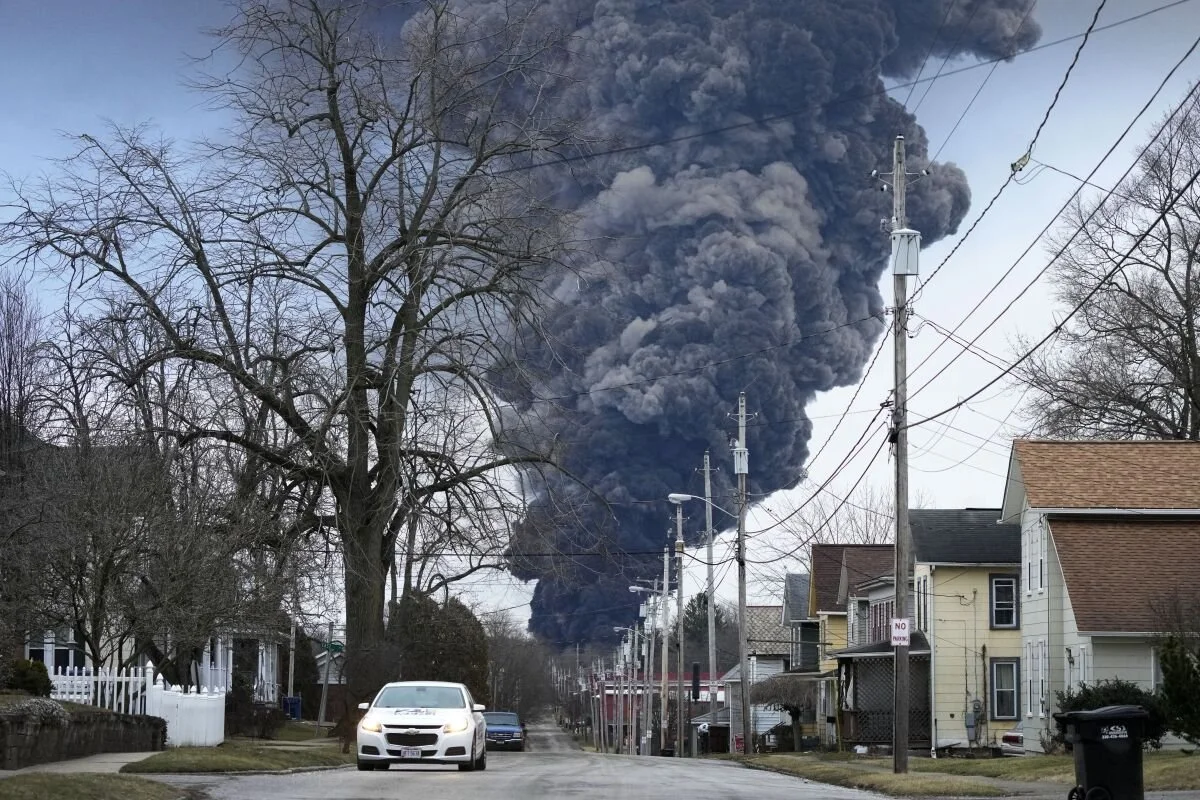
On February 3, the nation was shocked by pictures of a dark black cloud looming over an unsuspecting American town. The Norfolk Southern rail line had a thirty-eight-car freight train traveling through East Palestine, Ohio when it derailed. Eleven of these cars contained hazardous chemicals, which caused spillages into waterways or on the ground. Five of those had a particularly potent chemical named vinyl chloride. [1] Vinyl chloride is a manufactured substance that is a colorless gas at room temperature and is very flammable. [2] In the US, vinyl chloride is used to make polyvinyl chloride (PVC), which is used to make plastic and vinyl products like pipes, wire, cable coatings, and packaging materials. Authorities, including Ohio governor Mike DeWine, determined that it would be best to purposefully detonate the chemical releases of vinyl chloride for safety and environmental precautions, which caused the eerie, dark sky.
Although the Environmental Protection Agency (EPA) claims that there aren’t many immediate effects of the derailment because they found the water and air to be safe as of now, scientists do not understand the effects of vinyl chloride fully. Since 1976, the EPA has regulated vinyl chloride because it has implications of being a causal agent to angiosarcoma and other serious carcinogenic and non-carcinogenic disorders. [3]
The EPA has declared that it is safe for residents to move back into their homes; however, people are suffering from the resulting pollution and economic downturn it has caused. There have been six class action lawsuits thus far that have been filed against Norfolk Southern, with the premise of claims being due to a few main reasons: a loss of income after evacuations, exposure to cancer-causing chemicals, and feeling unsafe in their homes. [4] Rick Feezle, a member of one of the class action lawsuits, has experienced a raspy voice and chest pain as a result of the incident, while his wife has had sore throats and headaches. Feezle, an owner of two local businesses, remarked, “Nobody can tell us what we should do other than ‘It’s safe, go head on back in there.’And the fish are dying and animals are dying and I can hardly talk and my chest hurts.” [5] Another lawsuit emphasized the shocking volume of vinyl chloride released, stating that Norfolk, “discharged more cancer-causing vinyl chloride into the environment in the course of a week than all industrial emitters combined did in the course of a year.” [6] Rene Rocha, an attorney at Morgan & Morgan Lawyers, has met with plaintiffs in lawsuits and notes that residents within a several miles radius have suffered from ongoing health conditions after the derailment. He mentions that “when you talk to them, they run out of breath or start coughing.”
Norfolk Southern announced in a statement on February 14th that they would be making a $1 million charitable fund to support the community by working with local and state officials to distribute the donations properly. They will additionally provide $1.2 million in financial assistance to about 900 families impacted, as well as local businesses in need. [7] Recently, Norfolk President and CEO Alan Shaw released the following statement:
“We are cleaning up the site in an environmentally responsible way, reimbursing residents affected by the derailment, and working with members of the community to identify what is needed to help East Palestine recover and thrive."
Although it is certainly helpful that Norfolk is stepping in financially, the incident as a whole prompts the bigger question about the United States’ protocols with such hazardous chemicals and whether we should even be using them in the first place. Cutting back on emissions or trying to be more environmentally conscious will practically do nothing if one accident of this magnitude happens every year, as the progress made will simply be ruined. Although the headlines of the derailment have dissipated and the event is “old news,” those impacted will likely be continually affected in some way for the rest of their lives, such as chronic medical conditions and resulting financial hardships. We must use this incident as a lesson and a call to action to improve our practices with harmful chemicals and evaluate the risk versus reward of using them from an environmental standpoint.
Notes:
Jones, Benji. “Yes, the Ohio Train Wreck Is an Environmental Disaster. No, It’s Not Chernobyl.” Vox, February 18, 2023. https://www.vox.com/science/2023/2/18/23603471/east-palestine-ohio-derailment-water-contamination-health.
Agency for Toxic Substances and Disease Registry. “PUBLIC HEALTH STATEMENT Vinyl Chloride,” July 2006. https://www.atsdr.cdc.gov/ToxProfiles/tp20-c1-b.pdf.
US Environmental Protection Agency. “Vinyl Chloride: National Emission Standards for Hazardous Air Pollutants (NESHAP).” www.epa.gov, July 1, 2015. https://www.epa.gov/stationary-sources-air-pollution/vinyl-chloride-national-emission-standards-hazardous-air.
Feezle et al. v. Norfolk Southern Corporation, 4:23-cv-00242 U.S (2023)
Bendix, Aria, and Uwa Ede-Osifo. “As Residents near Ohio Train Derailment Begin to File Lawsuits, Some Report Coughs or Chest Pain.” NBC News, February 18, 2023. https://www.nbcnews.com/news/us-news/lawsuits-filed-ohio-train-derailment-rcna71192.
Canterbury et al. v. Norfolk Southern Corporation, 4:23-cv-00298 U.S (2023)–
Norfolk Southern Corporation. “Norfolk Southern Establishes $1 Million Fund to Support East Palestine Community.” Cision, February 14, 2023. https://www.prnewswire.com/news-releases/norfolk-southern-establishes-1-million-fund-to-support-east-palestine-community-301746912.html.
BIBLIOGRAPHY:
Agency for Toxic Substances and Disease Registry. “PUBLIC HEALTH STATEMENT Vinyl Chloride,” July 2006. https://www.atsdr.cdc.gov/ToxProfiles/tp20-c1-b.pdf.
Bendix, Aria, and Uwa Ede-Osifo. “As Residents near Ohio Train Derailment Begin to File Lawsuits, Some Report Coughs or Chest Pain.” NBC News, February 18, 2023. https://www.nbcnews.com/news/us-news/lawsuits-filed-ohio-train-derailment-rcna71192.
Canterbury et al. v. Norfolk Southern Corporation, 4:23-cv-00298 U.S (2023)
Feezle et al. v. Norfolk Southern Corporation, 4:23-cv-00242 U.S (2023)
Jones, Benji. “Yes, the Ohio Train Wreck Is an Environmental Disaster. No, It’s Not Chernobyl.” Vox, February 18, 2023. https://www.vox.com/science/2023/2/18/23603471/east-palestine-ohio-derailment-water-contamination-health.
Norfolk Southern Corporation. “Norfolk Southern Establishes $1 Million Fund to Support East Palestine Community.” Cision, February 14, 2023. https://www.prnewswire.com/news-releases/norfolk-southern-establishes-1-million-fund-to-support-east-palestine-community-301746912.html.
US Environmental Protection Agency. “Vinyl Chloride: National Emission Standards for Hazardous Air Pollutants (NESHAP).” www.epa.gov, July 1, 2015. https://www.epa.gov/stationary-sources-air-pollution/vinyl-chloride-national-emission-standards-hazardous-air.

Artificial Intelligence can Make Art, But Who is the Real Artist?
By: Jonah Elkowitz
Edited By: luke vredenburg and claire quan
“Draw a dog in a courtroom. Show me a cow on the moon.” We have all seen these prompts across the internet, showcasing how artificial intelligence can create an image of our choosing. DALL-E, Midjourney and Stable Diffusion are among the many AI tools capable of this, referencing digitized art records to create custom images and taking the tech world by storm.
While many AI-related tools have emerged for gathering information and processing data, such as Open.AI, this program produces a bespoke visual for the user. This begs the question — who is the artist? One might say the algorithm or the artist who created the original work, but the answer is more complicated.
Several lawsuits have been filed around the globe by prominent art databases and individual artists alike, claiming that they, not the AI, are the owners of the works.[1] One case, filed by Getty Images in the High Court of Justice in London, accuses Stability AI of utilizing copyrighted content to create their images, claiming “stability AI unlawfully copied and processed millions of images protected by copyright and the associated metadata owned or represented by Getty Images absent a license.”[2] . In another case, the Saveri Law firm filed suit on January 13th in the US District Court for the Northern District of California.[3] The case alleges that AI art software infringes on the rights of “thousands of artists and creators” and creates a financial burden for them to bear.[4] This case will decide the legality of content use and affect the incomes and royalties of artists worldwide. If the court rules in AI’s favor, artists may be left in the dust when it comes to receiving compensation for use of their work.
Artists, databases, and independent creators alike are arguing that software companies are stealing original artwork from their creators. Drawing upon U.S. law, they contest that the usage of their images indiscriminately violated intellectual property laws that are established to protect artists and their work.[5] Companies such as Stability AI haven’t addressed the issue of intellectual property. Moreover, they do not discuss the basis for their artificial intelligence tools but claim their software is open source.[6]
Artificial intelligence relies on art collections to base its creations.[7] The creators of such algorithms sample thousands of paintings, photographs, and drawings from history. The ultimate goal is for the algorithm to master a specific aesthetic, then recreate it as often as possible, in as many ways as possible. [8]
So, who is the artist? The courts have yet to answer, but AI software is objectively plagiarizing artists' work to create a work of its own. Though the product isn't identical to that of its original creator, some aspects of it are taken, manipulated, and repurposed. The lack of legal precedent makes the answer ambiguous. However, according to the U.S. Copyright Office, “copyright infringement occurs when a copyrighted work is reproduced, distributed, performed, publicly displayed, or made into a derivative work without the permission of the copyright owner.”[9] Using this definition, some form of credit or compensation should be given by AI platforms to creators for infringing on their copyrights, though time will tell if this comes to fruition.
Notes:
O'Brien, Matt. “AI Tools Can Create New Images, but Who Is the Real Artist?” AP NEWS. Associated Press, January 19, 2023. https://apnews.com/article/artificial-intelligence-images-rights-1c6d9e0e260e2d135a3e3bf98d5493df.
“Getty Images Statement.” Newsroom, January 17, 2023. https://newsroom.gettyimages.com/en/getty-images/getty-images-statement.
Andersen et al v. Stability AI Ltd. et al (2023)
“Ai Art Generator Copyright Litigation - Joseph Saveri Law Firm.” AI Art Generator Copyright Litigation - Joseph Saveri Law Firm. Accessed February 1, 2023. https://www.saverilawfirm.com/our-cases/ai-artgenerators-copyright-litigation.
“Getty Images Statement.” Newsroom, January 17, 2023.
“Stability Ai.” Stability AI. Accessed April 2, 2023. https://stability.ai/.
“Ai Is Blurring the Definition of Artist.” American Scientist, June 14, 2019. https://www.americanscientist.org/article/ai-is-blurring-the-definition-of-artist.
“Ai Is Blurring the Definition of Artist.” American Scientist, June 14, 2019.
“Definitions.” Definitions (FAQ) | U.S. Copyright Office. Accessed February 1, 2023. https://www.copyright.gov/help/faq/faq-definitions.html.
BIBLIOGRAPHY:
“Ai Art Generator Copyright Litigation - Joseph Saveri Law Firm.” AI Art Generator Copyright Litigation - Joseph Saveri Law Firm. Accessed February 1, 2023. https://www.saverilawfirm.com/our-cases/ai-artgenerators-copyright-litigation.
“Ai Is Blurring the Definition of Artist.” American Scientist, June 14, 2019. https://www.americanscientist.org/article/ai-is-blurring-the-definition-of-artist.
Andersen et al v. Stability AI Ltd. et al (US District Court for the Northern District of California January 13, 2023).
“Definitions.” Definitions (FAQ) | U.S. Copyright Office. Accessed February 1, 2023. https://www.copyright.gov/help/faq/faq-definitions.html.
“Getty Images Statement.” Newsroom, January 17, 2023. https://newsroom.gettyimages.com/en/getty-images/getty-images-statement.
O'Brien, Matt. “AI Tools Can Create New Images, but Who Is the Real Artist?” AP NEWS. Associated Press, January 19, 2023. https://apnews.com/article/artificial-intelligence-images-rights-1c6d9e0e260e2d135a3e3bf98d5493df.
“Stability Ai.” Stability AI. Accessed April 2, 2023. https://stability.ai/.

A Comprehensive Overview of AI Usage and Ethics in Legal Professions
By: Darya Tadlaoui
Edited By: anna westfall and emily yang
The past fifty or so years – and particularly the last decade – have cultivated previously unimaginable expansion of artificial intelligence (AI) technology into virtually every sector of the economy. Machines that previously were equipped solely to computerize the standardized tasks required of factory jobs have now been programmed with tools to deduce the meaning of and intention behind particular instructions. [1] With such drastic advancements in the field, numerous jobs that were once impossible to replicate have now been rendered obsolete.
Discourse surrounding AI within legal occupations predicts varying degrees of possibility for total incorporation into the field. Some experts believe that law necessitates a human aspect that cannot be imitated by technology; others condemn current niche technology for perpetuating racialized stereotypes; others remain excitedly under the impression that there is profitable potential to be found in making particular advancements. Understanding the implications of employing AI in legal work is crucial to evaluating its value to attorneys, judges, and clients alike.
Historic and present-day uses
On a basic level, AI has been well established in the field of law for the past decade. [2] Since the ruling in Da Silva Moore v. Publicis Groupe, 287 F.R.D. 182 (S.D.N.Y. 2012) preserved the use of predictive coding to find electronically-stored information for discovery purposes, conducting research and screening documents and contracts with AI has become a conventional method utilized by most lawyers and their paralegals. [3] The task of performing keyword searches has been shortened by programs that can identify various files relevant to a certain word when given just one. [4] Moreover, software companies such as Casetext and ROSS Intelligence are developing advances in natural language processing (NLP) technology systems that can understand and interpret text in a quasi-human way, surpassing mere keyword searches to materialize exceedingly relevant information. [5]
Apart from the more simplistic processes of completing research and scanning documents, AI has been and is currently exercised in two main areas: contract analytics and litigation prediction. [6] In the former subsection, rudimentary NLP technology funded by companies like Kira Systems has made it possible to keep track of a multitude of contracts and their specifications, which is of particular use to corporate firms; this could look like compiling renewal dates and simplifying (or even igniting) the process of negotiating existing terms. [7] The latter involves predicting outcomes of pending cases based upon inputs of relevant precedent, serving not only to aid attorneys in planning litigation strategies but also to clarify decisions litigation investors should make regarding which cases to back. [8]
Drawbacks of access to predictive AI
Nevertheless, developed predictive technology, when used in individual rather than corporate cases, is doomed to reflect a flawed carceral system. Algorithms that utilize past administrative data to inform their decisions are only as fair and just as that data. This issue has become glaringly obvious in the increased use of Northpointe’s Correctional Offender Management Profiling for Alternative Sanctions (COMPAS) system by courtrooms, a program designed to predict the likelihood that a particular offender will become a recidivist. In fact, a two-year study conducted by ProPublica found major flaws in its code, such that only 20% of the people the system predicted to commit violent crimes actually went on to do so, pointing to an overly liberal methodology. [9] Further, the tool’s racial profiling became abundantly clear – the formula wrongly labeled Black defendants as future criminals almost twice as often as it did white defendants, and amongst all Black defendants regardless of criminal history, age, and gender, there was a 77% likelihood the system pegged them at higher risk of committing a violent crime in the future. [10]
The biased code has had such an effect on case outcomes that several defendants have sued miscellaneous involved parties over Wisconsin’s use of COMPAS in reaching a final decree, with varying rates of success. In Loomis v. Wisconsin, 137 S.Ct. 2290 (2017), Loomis claimed that factoring COMPAS’s predictions into a guilty verdict was a violation of his due process rights. [11] Loomis was denied post-conviction relief on the grounds that judges are made aware of COMPAS’s shortcomings before reaching a decision and ultimately impose a sentence based on their total knowledge of the defendant. [12] On the other hand, In Henderson v. Steinsberg et al., No. 21-1586 (7th Cir. 2021), Henderson sued both Northpointe’s leaders and the Wisconsin Parole Board after he was denied parole after a 40-year sentence, claiming all involved actors knew of COMPAS’s racial bias and that the parole board still chose to use it instead of financing an improvement. [13] Though the case was dismissed, the Judge was aligned with Henderson’s grievances, contending that Henderson’s appeal on the basis of equal rights should be distinguished from the precedent set by Loomis’s appeal on the basis of due process. [14]
Apart from COMPAS, other legal-oriented AI have proved to play a significant role in bolstering racially charged decisions in the criminal justice system. United States v. Curry, 965 F.3d 313 (4th Cir. 2020) saw an abuse of police power made possible by an algorithm detecting hotspots of criminal activity; Curry was stopped and arrested for possession of a firearm in one such hotspot and appealed, stating he was subject to unlawful search and seizure. [15] The 4th circuit agreed, with Judge Gregory claiming the exchange represented a “high-tech version of racial profiling.” [16] Thus, drawbacks in the usage of AI for legal purposes are evident. Not only do these “judge bots” perpetuate inequality, but they also have the potential to advance it even further as prejudiced outcomes seem to be the result of “objective” computer analysis and not the system this analysis mirrors. [17]
Potential for making the law more efficient and accessible
Of course, there is no denying that the AI technology utilized by legal professionals today has made particular tasks easier for attorneys and consequently more affordable for clients. According to researchers Dana Remus and Frank Levy, if a firm were to adopt all existing legal technology immediately, their working hours would decrease by about 13%. [18] Even a more realistic adoption rate, they say, would result in a 2.5% annual decrease over five years. [19] Presently, even basic document review at large firms has become so automated that the task only takes up about 4% of a given lawyer’s time. [20] With emerging NLP technology, this trend could be applied to more arduous tasks and streamline efficiency further. For example, ROSS, the world’s first AI “lawyer,” saves attorneys an estimated 20 to 30 hours per case simply by understanding the intent behind their questions and drafting memos detailing appropriate responses. [21]
This is good news for clients: less time spent on a particular case means fewer billable hours. There’s a good chance that, should NLP-powered AI continue to evolve, those who previously could not afford legal representation will be able to utilize lawyer-AI duos at a fraction of the cost, thus creating less barriers to entry and more job opportunities for lawyers currently out of work. [22] The creator of ROSS has even pledged to offer the technology to deserving lawyers at no cost to stimulate the formation of new attorney-client relationships. [23]
The future landscape of law in an ever-advancing technological age
The unique capabilities of legal AI to simultaneously empower and victimize marginalized groups have rendered its usage an ethical dilemma to the many individuals poised at the intersection of law and technology. However, it should come as a relief that many legal scholars think we have at least a decade or two to iron out the kinks and debate the utility of our current technology while more complex legal AI is developed. [24] Though our current algorithms are capable of assessing language and conflicts in principle, they cannot yet assume a professional role based on moral judgment. And, frankly, we do not know that they ever will; the human element of law is something that might prove not to be iterable. [25] Rather, the future law firm could look something like what Michael Mills, a lawyer and legal technology start-up strategist, outlines : the partner will remain fixed as the leader of a team, “and more than one of the players will be a machine.” [26]
Notes:
Lohr, Steve. “A.I. Is Doing Legal Work. But It Won't Replace Lawyers, Yet.” The New York Times. The New York Times, March 19, 2017. https://www.nytimes.com/2017/03/19/technology/lawyers-artificial-intelligence.html?mcubz=0&_r=0.
Donahue, Lauri. “A Primer on Using Artificial Intelligence in the Legal Profession.” Harvard Journal of Law & Technology, January 3, 2018.
Da Silva Moore v. Publicis Groupe, 287 F.R.D. 182 (S.D.N.Y. 2012).
Donahue, Lauri. “A Primer on Using Artificial Intelligence in the Legal Profession.” Harvard Journal of Law & Technology, January 3, 2018.
Toews, Rob. “AI Will Transform The Field Of Law.” Forbes, Forbes Magazine, 12 Oct. 2022, https://www.forbes.com/sites/robtoews/2019/12/19/ai-will-transform-the-field-of-law/?sh=34e358a57f01.
Ibid.
Ibid.
Ibid.
Angwin, Julia, Jeff Larson, Lauren Kirchner, and Surya Mattu. “Machine Bias.” ProPublica, May 23, 2016. https://www.propublica.org/article/machine-bias-risk-assessments-in-criminal-sentencing.
Ibid.
Loomis v. Wisconsin, 137 S.Ct. 2290 (2017).
Loomis v. Wisconsin (2017).
Henderson v. Steinsberg, No. 21-1586 (7th Cir. 2021).
Henderson v. Steinsberg (2021).
United States v. Curry, 965 F.3d 313 (4th Cir. 2020)
United States v. Curry (2020).
Stepka, Matthew. “Law Bots: How AI Is Reshaping the Legal Profession.” Business Law Today from ABA. Business Law Today, February 21, 2022. https://businesslawtoday.org/2022/02/how-ai-is-reshaping-legal-profession/.
Remus, Dana, and Frank S. Levy. “Can Robots Be Lawyers? Computers, Lawyers, and the Practice of Law.” SSRN Electronic Journal, 2015. https://doi.org/10.2139/ssrn.2701092.
Ibid.
Ibid.
Nunez, Catherine. “Artificial Intelligence and Legal Ethics: Whether AI Lawyers Can Make Ethical Decisions.” Tulane University Journal of Technology and Intellectual Property 20 (August 27, 2019).
Ibid.
Ibid.
Lohr, Steve. “A.I. Is Doing Legal Work. But It Won't Replace Lawyers, Yet.” The New York Times. The New York Times, March 19, 2017. https://www.nytimes.com/2017/03/19/technology/lawyers-artificial-intelligence.html?mcubz=0&_r=0.
Nunez, Catherine. “Artificial Intelligence and Legal Ethics: Whether AI Lawyers Can Make Ethical Decisions.” Tulane University Journal of Technology and Intellectual Property 20 (August 27, 2019).
Lohr, Steve. “A.I. Is Doing Legal Work. But It Won't Replace Lawyers, Yet.” The New York Times. The New York Times, March 19, 2017. https://www.nytimes.com/2017/03/19/technology/lawyers-artificial-intelligence.html?mcubz=0&_r=0.
BIBLIOGRAPHY:
Angwin, Julia, Jeff Larson, Lauren Kirchner, and Surya Mattu. “Machine Bias.” ProPublica, May 23, 2016. https://www.propublica.org/article/machine-bias-risk-assessments-in-criminal-sentencing.
Donahue, Lauri. “A Primer on Using Artificial Intelligence in the Legal Profession.” Harvard Journal of Law & Technology, January 3, 2018.
Lohr, Steve. “A.I. Is Doing Legal Work. But It Won't Replace Lawyers, Yet.” The New York Times. The New York Times, March 19, 2017. https://www.nytimes.com/2017/03/19/technology/lawyers-artificial-intelligence.html?mcubz=0&_r=0.
Nunez, Catherine. “Artificial Intelligence and Legal Ethics: Whether AI Lawyers Can Make Ethical Decisions.” Tulane University Journal of Technology and Intellectual Property 20 (August 27, 2019).
Remus, Dana, and Frank S. Levy. “Can Robots Be Lawyers? Computers, Lawyers, and the Practice of Law.” SSRN Electronic Journal, 2015. https://doi.org/10.2139/ssrn.2701092.
Stepka, Matthew. “Law Bots: How AI Is Reshaping the Legal Profession.” Business Law Today from ABA. Business Law Today, February 21, 2022. https://businesslawtoday.org/2022/02/how-ai-is-reshaping-legal-profession/.
Toews, Rob. “AI Will Transform The Field Of Law.” Forbes, Forbes Magazine, 12 Oct. 2022, https://www.forbes.com/sites/robtoews/2019/12/19/ai-will-transform-the-field-of-law/?sh=34e358a57f01.
Wiggers, Kyle. “The Pitfalls of AI That Could Predict the Outcome of Court Cases.” VentureBeat, VentureBeat, 1 Mar. 2022, https://venturebeat.com/business/the-pitfalls-of-ai-that-could-predict-the-outcome-of-court-cases