

THE FORUM: NORTHWESTERN’S PREMIER LEGAL BLOG
The Need for a Global Plastics Treaty is More Urgent Than Ever
By: Kunjal Bastola
Edited by: Angie Chung and Simon Carr
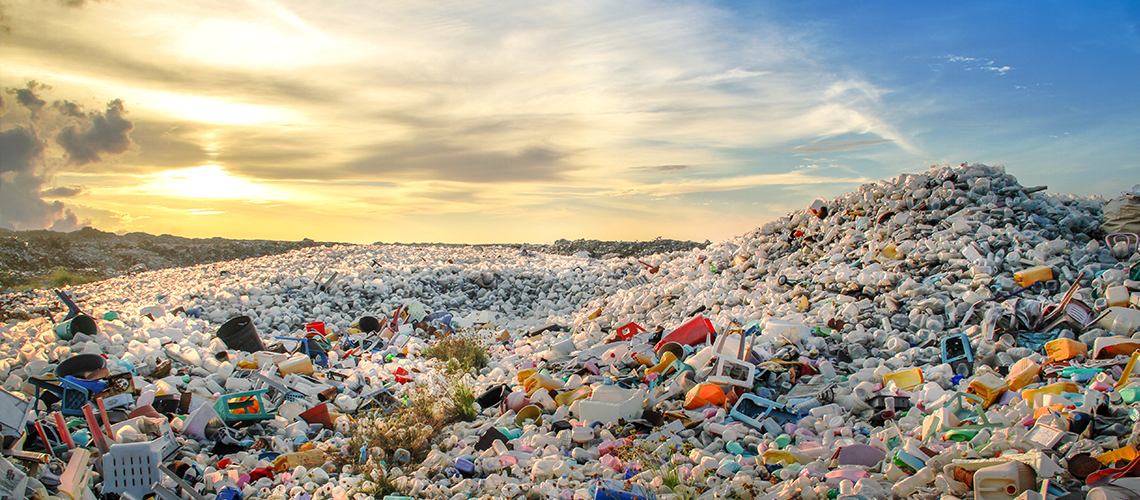
As marine plastic pollution continues to rise, contributing to degradation of the oceans and marine biodiversity, the need for a global plastics treaty is more pressing than ever. Climate scientists and activists have been emphasizing the urgency of implementing a more efficient system of reducing waste and recycling materials.[1] In March 2022, the UN Environmental Assembly unanimously adopted a resolution to develop a legally binding document on plastic pollution by the end of 2024.[2] With that deadline approaching, let’s take a look at the progress that has been made so far.
At the UN assembly back in 2022, an Intergovernmental Negotiating Committee (INC) was established to lead the development of the treaty.[3] The assembly also came to a conclusion that the treaty should address the full lifecycle of plastics, from production to disposal, so as to properly mitigate plastic pollution.[4] So far, the INC has held three sessions to negotiate and draft the treaty.[5] The first session took place in Punta del Este, Uruguay in 2022.[6] The second session took place in Paris, France in 2023.[7] The third, and most recent, session took place in 2023 in Nairobi, Kenya in 2023.[8]
Many activists argue that the oil and gas industries are less invested in making cuts to the production of plastic but rather in recycling and waste management solutions, despite it being an important step in reducing the harmful effects of plastic pollution.[9] While it is important to take into account the entire lifecycle of plastics, including waste and recycling, the key to truly decreasing plastic pollution starts with plastic production. Almost every part of plastic is made of chemicals derived from fossil fuels, hence it is important to not only recycle and manage plastic waste properly, but also cut down on its production.[10]
According to NPR, another impediment to the progression of the treaty deals with the challenge of bringing countries together to create an effective plan in decreasing plastic pollution.[11] While some countries advocate for a stronger framework, there are still a handful that want a looser, more voluntary framework.[12] Furthermore, 143 fossil fuel and chemical industry lobbyists registered for the most recent round of negotiations in Nairobi, giving them access to these negotiations at a critical time as the climate crisis worsens.[13] With the deadline for the treaty approaching, each negotiating session is becoming more critical than the previous one, and it’s likely industry lobbyists will continue to attend and exert influence over the discussions.
During the next session, which is set to be in Ottawa, Canada from April 23 to 29 and is the fourth among five scheduled sessions, major changes need to be made in order for tangible progress to occur by the end of this year. [14] Plastic pollution will continue to increase and severely harm the marine environment if action isn’t taken soon. March 2024 marks the second year since the adoption of the resolution that kick-started the development of a global plastics treaty. A framework that adequately addresses the plastic pollution crisis is more imperative than ever.
Notes:
Plastics Europe, “The Global Plastics Treaty,” Plastics Europe, November 20, 2023, https://plasticseurope.org/changingplasticsforgood/global-plastics-treaty/.
“United Nations Adopts Historic Resolution to End Plastic Pollution,” opc.ca.gov, Accessed February 26, 2024, https://opc.ca.gov/2022/03/united-nations-adopts-historic-resolution-to-end-plastic-pollution/.
“Intergovernmental Negotiating Committee on Plastic Pollution,” UNEP, Accessed February 26, 2024, https://www.unep.org/inc-plastic-pollution.
“Intergovernmental Negotiating Committee on Plastic Pollution,” UNEP, Accessed February 26, 2024, https://www.unep.org/inc-plastic-pollution.
“Intergovernmental Negotiating Committee on Plastic Pollution,” UNEP, Accessed February 26, 2024, https://www.unep.org/inc-plastic-pollution.
“Intergovernmental Negotiating Committee on Plastic Pollution,” UNEP, Accessed February 26, 2024, https://www.unep.org/inc-plastic-pollution.
“Intergovernmental Negotiating Committee on Plastic Pollution,” UNEP, Accessed February 26, 2024, https://www.unep.org/inc-plastic-pollution.
“Intergovernmental Negotiating Committee on Plastic Pollution,” UNEP, Accessed February 26, 2024, https://www.unep.org/inc-plastic-pollution.
Copley, Michael, “Global Talks to Cut Plastic Waste Stall as Industry and Environmental Groups Clash,” NPR, November 20, 2023, https://www.npr.org/2023/11/20/1214141053/un-plastic-waste-pollution-negotiations-treaty-kenya-fossil-fuel-climate-change#:~:text=Negotiations%20over%20a%20global%20plastics,how%20to%20advance%20the%20deliberations.
Copley, Michael, “Global Talks to Cut Plastic Waste Stall as Industry and Environmental Groups Clash,” NPR, November 20, 2023, https://www.npr.org/2023/11/20/1214141053/un-plastic-waste-pollution-negotiations-treaty-kenya-fossil-fuel-climate-change#:~:text=Negotiations%20over%20a%20global%20plastics,how%20to%20advance%20the%20deliberations.
Copley, Michael, “Global Talks to Cut Plastic Waste Stall as Industry and Environmental Groups Clash,” NPR, November 20, 2023, https://www.npr.org/2023/11/20/1214141053/un-plastic-waste-pollution-negotiations-treaty-kenya-fossil-fuel-climate-change#:~:text=Negotiations%20over%20a%20global%20plastics,how%20to%20advance%20the%20deliberations.
Copley, Michael, “Global Talks to Cut Plastic Waste Stall as Industry and Environmental Groups Clash,” NPR, November 20, 2023, https://www.npr.org/2023/11/20/1214141053/un-plastic-waste-pollution-negotiations-treaty-kenya-fossil-fuel-climate-change#:~:text=Negotiations%20over%20a%20global%20plastics,how%20to%20advance%20the%20deliberations.
Copley, Michael, “Global Talks to Cut Plastic Waste Stall as Industry and Environmental Groups Clash,” NPR, November 20, 2023, https://www.npr.org/2023/11/20/1214141053/un-plastic-waste-pollution-negotiations-treaty-kenya-fossil-fuel-climate-change#:~:text=Negotiations%20over%20a%20global%20plastics,how%20to%20advance%20the%20deliberations.
“Fossil Fuel and Chemical Industries Registered More Lobbyists at Plastics Treaty Talks than 70 Countries Combined,” Center for International Environmental Law, November 15, 2023, https://www.ciel.org/news/fossil-fuel-and-chemical-industries-at-inc-3/.
“Intergovernmental Negotiating Committee on Plastic Pollution,” UNEP, Accessed February 26, 2024, https://www.unep.org/inc-plastic-pollution.
Bibliography:
Copley, Michael, “Global Talks to Cut Plastic Waste Stall as Industry and Environmental Groups Clash,” NPR, November 20, 2023, https://www.npr.org/2023/11/20/1214141053/un-plastic-waste-pollution-negotiations-treaty-kenya-fossil-fuel-climate-change#:~:text=Negotiations%20over%20a%20global%20plastics,how%20to%20advance%20the%20deliberations.
“Fossil Fuel and Chemical Industries Registered More Lobbyists at Plastics Treaty Talks than 70 Countries Combined,” Center for International Environmental Law, November 15, 2023, https://www.ciel.org/news/fossil-fuel-and-chemical-industries-at-inc-3/.
“Intergovernmental Negotiating Committee on Plastic Pollution,” UNEP, Accessed February 26, 2024, https://www.unep.org/inc-plastic-pollution.
Plastics Europe, “The Global Plastics Treaty,” Plastics Europe, November 20, 2023, https://plasticseurope.org/changingplasticsforgood/global-plastics-treaty/.
“United Nations Adopts Historic Resolution to End Plastic Pollution,” opc.ca.gov, Accessed February 26, 2024, https://opc.ca.gov/2022/03/united-nations-adopts-historic-resolution-to-end-plastic-pollution/.

The Chevron Deference and the Future of Regulatory Agencies in the United States
By: Eliana Aemro Selassie
Edited by: Eleanor Bergstein and Madison bruno
The Chevron Deference is an important precedent in administrative law that could soon be overturned, changing the legal jurisdiction of both federal agencies and Congress. Chevron became an important legal precedent as a result of the Chevron U.S.A., Inc. v. Natural Resources Defense Council, Inc. case heard by the Supreme Court in 1984. [1] The Chevron case arose when the Environmental Protection Agency (EPA) revised the Clean Air Act, allowing states to group pollution-emitting devices under the same “bubble” or regulatory term. This greatly benefitted major fossil fuel corporations like Chevron since the bubble regulation included provisions allowing industrial and fossil fuel plants to install new pieces of equipment without new permits that the act previously required. Several environmental groups like the Natural Resources Defense Council challenged the regulation, viewing it as a violation of the Clean Air Act and an attempt by the federal government to loosen air pollution restrictions. The case eventually made its way to the Supreme Court, which ruled in favor of the EPA’s interpretation of the Clear Air Act and its applications, establishing the Chevron deference. [2]
Despite marking an initial loss for environmental groups, the Chevron case has had a fundamental impact on administrative law. The Chevron case was particularly impactful because it set a new precedent for the jurisdiction of government agencies, extending their power to determine interpretations of Congressional statutes if the statute is ambiguous. [3] Under the Chevron deference, federal courts can accept a federal agency’s interpretation of “an ambiguous or unclear statute” entrusted to the agency by Congress. Despite the important role that Chevron has played in administrative law, there is a large possibility that it could be overturned. Under the Trump Administration, a growing number of Supreme Court justices have shifted to critique the Chevron deference, questioning its validity. [4] At the forefront of this shift is Justice Clarence Thomas, who was previously one of the biggest proponents of Chevron. In 2005, Thomas wrote an opinion defending Chevron in the National Cable & Telecommunications Association v. Brand X Internet Services case. In the opinion, Thomas argued that “Chevron requires a federal court to accept the agency’s construction of the statute, even if the agency’s reading differs from what the court believes is the best statutory interpretation”. [3]
Thomas’ defense of Chevron and its applications in administrative law has gradually weakened over time. In the Michigan v. Environmental Protection Agency of 2015, Thomas sided with fellow conservative justices, arguing that the EPA had exceeded its jurisdiction, arguing against the extended power that Chevron grants to government agencies. Justice Thomas eventually publicly announced that his opinion in 2005 on the Brand X case was ill-advised, formally shifting his stance to become an opponent of Chevron. Many have pointed out that Thomas’ shift to critiquing Chevron was largely a result of gifts he received from conservative businessmen. Billionaires Harlan Crow and Leonard Leo are among many businessmen who have worked to overturn Chevron to benefit from looser government agency regulations that removing Chevron would provide. Both Crow and Leo have actively provided Thomas and his family with substantial gifts like luxury travel and financial donations. In addition to Justice Thomas, Justices Neil Gorsuch and Brett Kavanaugh have also publicly expressed their opposition to Chevron, illustrating a growing opposition to Chevron's deference in the Supreme Court that could potentially lead to it being overturned [3].
The Chevron deference is now under threat of being overturned in the upcoming Supreme Court case Loper Bright Enterprises v. Raimondo. The case determines whether the federal agency National Marine Fisheries Service (NMFS) can place limits on fish catch to prevent overfishing by major fishing companies like Loper Bright Enterprises. [5] The outcome of the case will effectively determine if the Supreme Court should overrule Chevron. [6] Overturning Chevron could have potentially disastrous consequences for administrative law and the future of government agencies. If Chevron were overturned, federal judges would be increasingly responsible for interpreting statutes that agents specialized in addressing the issues are much better suited to do. [5] Government agencies are responsible for a myriad of health, environmental, safety, and financial issues. Officials in these agencies should be allowed to use their expertise to address matters in those fields, rather than federal judges. Furthermore, as the climate crisis worsens, limiting the jurisdiction of environmental agencies like the EPA could reduce their capacity to address environmental issues. The ever-worsening state of the environment could continue to decline as a result of the limitations placed on environmental agencies, potentially restricting their already limited control over environmental policy. Ultimately, the Supreme Court’s decision could immensely impact how regulatory agencies operate and the future of administrative law in the United States. [7]
Notes:
Cornell University. “Chevron deference Primary tabs.” Cornell Law School Legal Information Institute, https://www.law.cornell.edu/wex/chevron_deference.
Stevens, John Paul. “Chevron U. S. A. Inc. v. Natural Resources Defense Council, Inc.” Oyez, 29 February 1984, https://www.oyez.org/cases/1983/82-1005. Accessed 2 March 2024.
Rock, Julia, and Andrew Perez. “Influenced by Dark Money, Clarence Thomas Has Reversed His Position on a Landmark Legal Doctrine.” Jacobin, 10 May 2023, https://jacobin.com/2023/05/clarence-thomas-chevron-regulatory-doctrine-conservatives-dark-money. Accessed 2 March 2024.
Hamilton, Alexander, and Kenneth Starr. “Chevron deference (doctrine).” Ballotpedia, https://ballotpedia.org/Chevron_deference_(doctrine). Accessed 2 March 2024.
Pazzanese, Christina. “Scholar explains implications of SCOTUS revisiting 'Chevron deference'— Harvard Gazette.” Harvard Gazette, 16 January 2024, https://news.harvard.edu/gazette/story/2024/01/chevron-deference-faces-existential-test/. Accessed 2 March 2024.
Oyez. “Loper Bright Enterprises v. Raimondo.” Oyez, 17 January 2024, https://www.oyez.org/cases/2023/22-451. Accessed 2 March 2024.
Turrentine, Jeff. “What Happens If the Supreme Court Ends “Chevron Deference”?” NRDC, 21 June 2023, https://www.nrdc.org/stories/what-happens-if-supreme-court-ends-chevron-deference. Accessed 2 March 2024.
Bibliography:
Cornell University. “Chevron deference Primary tabs.” Cornell Law School Legal Information Institute, https://www.law.cornell.edu/wex/chevron_deference.
Hamilton, Alexander, and Kenneth Starr. “Chevron deference (doctrine).” Ballotpedia, https://ballotpedia.org/Chevron_deference_(doctrine). Accessed 2 March 2024.
Oyez. “Loper Bright Enterprises v. Raimondo.” Oyez, 17 January 2024, https://www.oyez.org/cases/2023/22-451. Accessed 2 March 2024.
Pazzanese, Christina. “Scholar explains implications of SCOTUS revisiting 'Chevron deference'— Harvard Gazette.” Harvard Gazette, 16 January 2024, https://news.harvard.edu/gazette/story/2024/01/chevron-deference-faces-existential-test/. Accessed 2 March 2024.
Rock, Julia, and Andrew Perez. “Influenced by Dark Money, Clarence Thomas Has Reversed His Position on a Landmark Legal Doctrine.” Jacobin, 10 May 2023, https://jacobin.com/2023/05/clarence-thomas-chevron-regulatory-doctrine-conservatives-dark-money. Accessed 2 March 2024.
Stevens, John Paul. “Chevron U. S. A. Inc. v. Natural Resources Defense Council, Inc.” Oyez, 29 February 1984, https://www.oyez.org/cases/1983/82-1005. Accessed 2 March 2024.
Turrentine, Jeff. “What Happens If the Supreme Court Ends “Chevron Deference”?” NRDC, 21 June 2023, https://www.nrdc.org/stories/what-happens-if-supreme-court-ends-chevron-deference. Accessed 2 March 2024.

Alabama Supreme Court Decision Raises Questions About the Future of Fertility Care
By: Cate Bikales
Edited by: Isabella Canales and Isabel Gortner
Note: This article was written prior to Mar. 6, when Alabama’s Republican governor Kay Ivey signed a bill into law that aims to protect IVF patients and providers from the legal liability raised by the state Supreme Court’s ruling that frozen embryos are considered children. The following day, Alabama clinics resumed IVF treatment.
An Alabama Supreme Court ruling in mid-February that frozen embryos created through in vitro fertilization (IVF) are considered children under state law is already impacting fertility care across the state and could have detrimental impacts on women’s health care nationwide.
Just days after the decision, three IVF-providing clinics in the state suspended services as they grappled with the potential legal repercussions of the decision. [1]
The issue made its way to Alabama’s high court after three families sued a fertility clinic when an intruder removed the plaintiffs’ frozen embryos from a cryogenic nursery and dropped them on the floor, destroying the embryos. The families sued for wrongful death under the state’s Wrongful Death of a Minor Act. [2] “Unborn children are ‘children’ under the Act, without exception based on developmental stage, physical location, or any other ancillary characteristics,” Justice Jay Mitchell wrote in the majority opinion issued on Feb. 16. [3]
In a post-Roe world filled with uncertainty about women’s rights, many are left wondering whether this decision means the right to fertility care will be the next to go.
Indeed, the majority decision cited anti-abortion language that was added to the state constitution in 2018 to justify the ruling: “It is the public policy of this state to ensure the protection of the rights of the unborn child in all manners and measures lawful and appropriate.” [5] Chief Justice Tom Parker’s concurring opinion reflected a similar sentiment, while also referencing his religious beliefs to back up his pro-life stance. “Even before birth, all human beings bear the image of God, and their lives cannot be destroyed without effacing his glory,” he wrote. [6]
Abortion is currently prohibited at all stages of pregnancy in Alabama. [7] White House press secretary Karine Jean-Pierre said that the ruling is exactly the “type of chaos” the Biden Administration expected when the Supreme Court overturned Roe v. Wade in 2022, which “paved the way for politicians to dictate some of the most personal decisions families can make.” [8] In his dissenting opinion, Justice Greg Cook argued that no court anywhere in the country has reached the conclusion the majority reaches, adding that it “almost certainly ends the creation of frozen embryos through [IVF] in Alabama.” [9]
The University of Alabama Birmingham Health System, which includes the largest hospital in the state, was the first to announce its decision to suspend treatment following the ruling. Alabama Fertility and the Center for Reproductive Medicine at Mobile Infirmary — the clinic sued in the court case — quickly followed. [10] “We have made the impossibly difficult decision to hold new IVF treatments due to the legal risk to our clinic and our embryologists,” Alabama Fertility said in a statement on social media on Feb. 22. “[We] will not close. We will continue to fight for our patients and the families of Alabama.” [11]
A recent Pew Research survey found that 42% of American adults say they have used, or know someone who has used fertility treatments. [4] During IVF, mature eggs are surgically removed from the ovary and fertilized within a lab. The fertilized egg, called an embryo, is then implanted into the uterus. Unused embryos can be frozen for later use or discarded. [12] While the Alabama decision does not make IVF illegal, it does bring up many questions. How can IVF continue if it is illegal to destroy an embryo? Even if IVF does continue, it is likely costs will increase significantly, and access will decrease. [13]
“This ruling has profound implications far beyond Alabama’s borders,” the advocacy group RESOLVE: The National Infertility Association said in a statement on social media. “Every American who wants or needs access to family building options like IVF should be deeply concerned about this development and the precedent it will set across the country.” [14]
However, recent efforts to condemn the Alabama ruling by both political parties show that there may be hope for the future of fertility care. Many Republican senators, particularly those running for re-election this year, are urging lawmakers and candidates to express support for IVF. [15] Former President Donald Trump also expressed an opinion in favor of IVF on Truth Social: “Like the OVERWHELMING MAJORITY of Americans, I strongly support the availability of IVF for couples who are trying to have a precious baby.” [16]
Republican presidential candidate Nikki Haley is one of few Republicans who have spoken openly in support of the Alabama decision, saying that “embryos, to me, are babies.” [17]
Leaders in Alabama, including Gov. Kay Ivey (R), say they are working to defend and protect access to IVF in the state. “The Legislature will soon consider a solution that preserves our Alabama values by empowering IVF clinics to continue assisting couples in bringing new life into the world,” said House Republican Speaker Nathaniel Ledbetter. [18]
Until that clarification comes, IVF patients and providers will continue to be left in the dark about the future of fertility care in Alabama and beyond.
Notes:
Bendix, Aria. “Three Alabama clinics pause IVF services after court rules that embryos are children.” NBC News, February 21, 2024. https://www.nbcnews.com/health/health-news/university-alabama-pauses-ivf-services-court-rules-embryos-are-childre-rcna139846.
LePage v. Center for Reproductive Medicine, P.C.
LePage v. Center for Reproductive Medicine, P.C., Alabama Supreme Court (2024) (ruling) https://publicportal-api.alappeals.gov/courts/68f021c4-6a44-4735-9a76-5360b2e8af13/cms/case/343D203A-B13D-463A-8176-C46E3AE4F695/docketentrydocuments/E3D95592-3CBE-4384-AFA6-063D4595AA1D.
Carolina Aragão and Isabel Goddard. “A growing share of Americans say they’ve had fertility treatments or know someone who has.” Pew Research Center, September 14, 2023. https://www.pewresearch.org/short-reads/2023/09/14/a-growing-share-of-americans-say-theyve-had-fertility-treatments-or-know-someone-who-has/.
LePage v. Center for Reproductive Medicine, P.C., Alabama Supreme Court (2024) (ruling)
LePage v. Center for Reproductive Medicine, P.C., Alabama Supreme Court (2024) (ruling)
“Alabama,” Center for Reproductive Rights, Accessed February 23, 2024, https://reproductiverights.org/maps/state/alabama/#:~:text=On%20June%2024%2C%202022%2C%20Alabama,%C2%A7%2026%2D23H%2D4.
Chandler, Kim. “Warnings of the impact of fertility treatments in Alabama rush in after frozen embryo ruling.” AP News, February 21, 2024. https://apnews.com/article/alabama-supreme-court-from-embryos-161390f0758b04a7638e2ddea20df7ca.
LePage v. Center for Reproductive Medicine, P.C., Alabama Supreme Court (2024) (ruling)
Bendix, Aria. “Three Alabama clinics pause IVF services after court rules that embryos are children.” NBC News, February 21, 2024. https://www.nbcnews.com/health/health-news/university-alabama-pauses-ivf-services-court-rules-embryos-are-childre-rcna139846.
Alabama Fertility Specialists, “Dear patients of AFS…,” Facebook, February 22, 2024, https://www.facebook.com/alabamafertility/posts/pfbid037BWz6srp8KUT44H6nDrXrZ8ycKm5Vny9PzuYh8dzfoXd5KBqPaYgug2YURWFhfDHl.
“In vitro fertilization (IVF),” Mayo Clinic, Accessed February 23, 2024, https://www.mayoclinic.org/tests-procedures/in-vitro-fertilization/about/pac-20384716#:~:text=During%20in%20vitro%20fertilization%2C%20eggs,into%20the%20uterus%20(C).
Millhiser, Ian. “The Alabama Supreme Court opinion holding that embryos are children, explained,” Vox, February 20, 2024. https://www.vox.com/2024/2/20/24078513/supreme-court-alabama-ivf-roe-wade-dobbs-abortion-child-embryo.
RESOLVE (@resolveorg), “The Alabama Supreme Court recently ruled…,” Instagram, February 19, 2024, https://www.instagram.com/p/C3iDMh_uguO/?hl=en&img_index=4.
The Editorial Board. “IVF, Alabama, and the Dobbs Ruling,” Wall Street Journal, February 23, 2024. https://www.wsj.com/articles/ivf-alabama-supreme-court-roe-v-wade-dobbs-abortion-6c0ceaaf.
Megan Messerly and Jessica Piper. “Trump says he supports IVF after Alabama court decision,” Politico, February 23, 2024. https://www.politico.com/news/2024/02/23/trump-says-he-supports-ivf-after-alabama-court-decision-00142994
Alex Rhoades and Ali Vitali. “Nikki Haley sides with Alabama Supreme Court on IVF ruling: 'Embryos, to me, are babies',” NBC News, February 21, 2024. https://www.nbcnews.com/politics/2024-election/nikki-haley-sides-alabama-supreme-court-ivf-ruling-embryos-are-babies-rcna139819.
The Editorial Board. “IVF, Alabama, and the Dobbs Ruling,” Wall Street Journal, February 23, 2024. https://www.wsj.com/articles/ivf-alabama-supreme-court-roe-v-wade-dobbs-abortion-6c0ceaaf.
Bibliography:
“Alabama,” Center for Reproductive Rights, Accessed February 23, 2024, https://reproductiverights.org/maps/state/alabama/#:~:text=On%20June%2024%2C%202022%2C%20Alabama,%C2%A7%2026%2D23H%2D4.
Alex Rhoades and Ali Vitali. “Nikki Haley sides with Alabama Supreme Court on IVF ruling: 'Embryos, to me, are babies',” NBC News, February 21, 2024. https://www.nbcnews.com/politics/2024-election/nikki-haley-sides-alabama-supreme-court-ivf-ruling-embryos-are-babies-rcna139819.
Azeen Ghorayshi and Roni Caryn Rabin. “Alabama Rules Frozen Embryos Are Children, Raising Questions About Fertility Care,” The New York Times, February 20, 2024. https://www.nytimes.com/2024/02/20/health/ivf-alabama-abortion.html.
Bendix, Aria. “Three Alabama clinics pause IVF services after court rules that embryos are children.” NBC News, February 21, 2024. https://www.nbcnews.com/health/health-news/university-alabama-pauses-ivf-services-court-rules-embryos-are-childre-rcna139846.
Carolina Aragão and Isabel Goddard. “A growing share of Americans say they’ve had fertility treatments or know someone who has.” Pew Research Center, September 14, 2023. https://www.pewresearch.org/short-reads/2023/09/14/a-growing-share-of-americans-say-theyve-had-fertility-treatments-or-know-someone-who-has/.
Chandler, Kim. “Warnings of the impact of fertility treatments in Alabama rush in after frozen embryo ruling.” AP News, February 21, 2024. https://apnews.com/article/alabama-supreme-court-from-embryos-161390f0758b04a7638e2ddea20df7ca.
“In vitro fertilization (IVF),” Mayo Clinic, Accessed February 23, 2024, https://www.mayoclinic.org/tests-procedures/in-vitro-fertilization/about/pac-20384716#:~:text=During%20in%20vitro%20fertilization%2C%20eggs,into%20the%20uterus%20(C).
Megan Messerly and Jessica Piper. “Trump says he supports IVF after Alabama court decision,” Politico, February 23, 2024. https://www.politico.com/news/2024/02/23/trump-says-he-supports-ivf-after-alabama-court-decision-00142994
Millhiser, Ian. “The Alabama Supreme Court opinion holding that embryos are children, explained,” Vox, February 20, 2024. https://www.vox.com/2024/2/20/24078513/supreme-court-alabama-ivf-roe-wade-dobbs-abortion-child-embryo.
Moniuszko, Sara. “Alabama court ruled frozen embryos are children. Experts explain potential impacts to IVF treatment,” CBS News, February 21, 2024. https://www.cbsnews.com/news/alabama-frozen-embryos-children-experts-ivf-fertility/.
Shoshana Dubnow and Stephanie Sy. “How an Alabama Supreme Court ruling that frozen embryos are children impacts IVF,” PBS, February 21, 2024. https://www.pbs.org/newshour/show/how-an-alabama-supreme-court-ruling-that-frozen-embryos-are-children-impacts-ivf.
The Editorial Board. “IVF, Alabama, and the Dobbs Ruling,” Wall Street Journal, February 23, 2024. https://www.wsj.com/articles/ivf-alabama-supreme-court-roe-v-wade-dobbs-abortion-6c0ceaaf.
Weixel, Nathaniel. “How Alabama’s frozen embryo decision is shaking the nation: What you need to know,” The Hill, February 21, 2024. https://thehill.com/policy/healthcare/4481856-how-alabamas-frozen-embryo-decision-is-shaking-the-nation-what-you-need-to-know/.
Edward Blum’s Staunch Campaign Against Affirmative Action
By: Sari Richmond
Edited by: Jack Pacconi and Samantha Yip
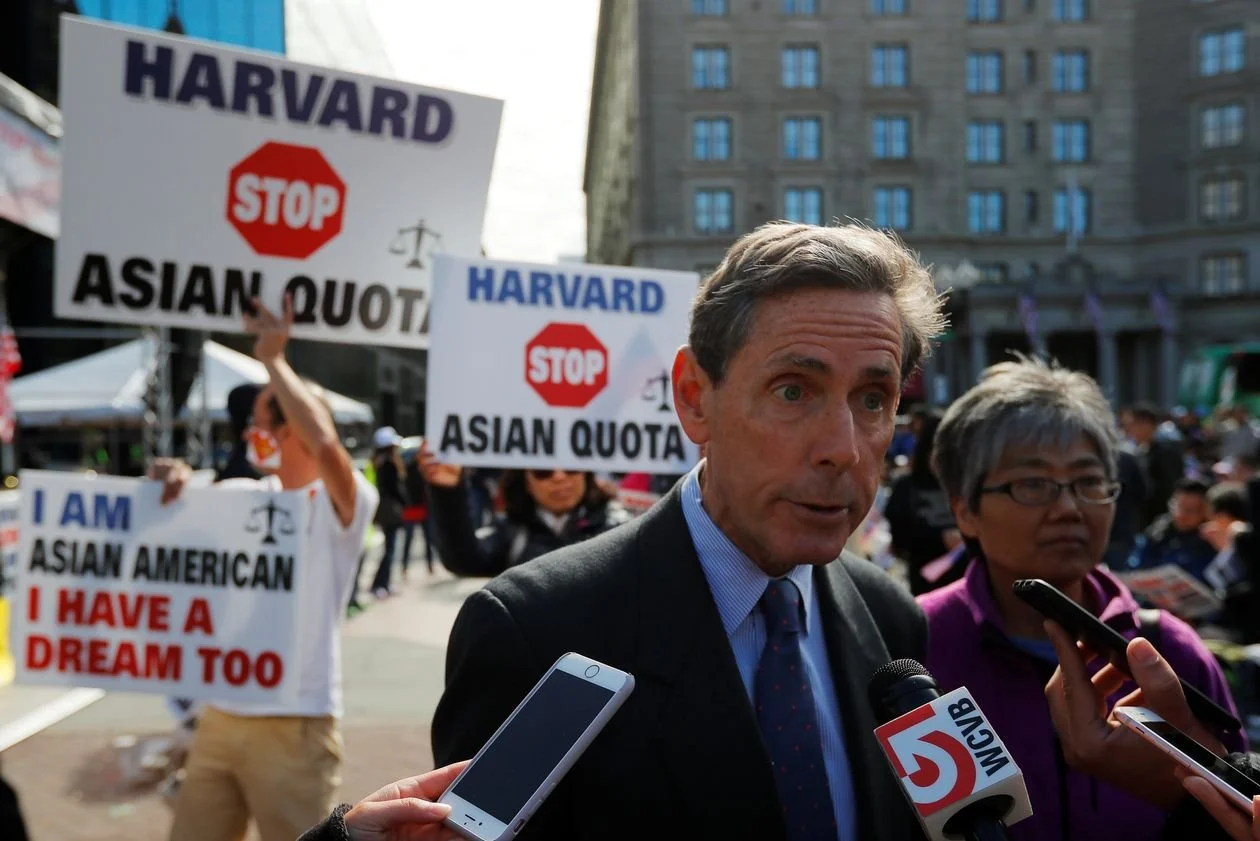
Edward Blum’s recent and most notable victory in his campaign against race-based considerations, the 2023 Supreme Court ruling against affirmative action in higher education, brought many to question what sector of life he will target next. Blum, a conservative litigator, has recently garnered attention for his formation of the group Students for Fair Admissions, which won the landmark affirmative action case against Harvard and the University of North Carolina.[1] This victory comes after decades of Blum filing cases targeting a range of topics from voting rights and electoral districts to affirmative action in education.
In 1990, when Blum first attempted to vote in Houston, Texas after moving into the city with his wife, he was met with no republican option, and then the realization that the Republican Party had not provided a candidate to challenge the Democratic incumbent.[2] After being informed that he resided in a majority-minority district by the Republican Party of Houston, Blum lost the congressional district election to a Black incumbent two years later. While campaigning for this election, Blum discovered that neighborhoods in his district had been intentionally drawn to enhance the weight of minority votes. Blum’s goal then shifted; he enacted a lawsuit against the state of Texas and successfully assembled a legal team with the goal of proving unconstitutional gerrymandering.[2] After this, Blum filed similar lawsuits in states like New York, Virginia, Florida, and others to eliminate race considerations in electoral redistricting. Keeping the same legal team he had assembled for the first suit in Texas, Blum saw opportunities to expand his agenda into education when his alma mater, the University of Texas Austin, proposed race and ethnicity as a factor in admission consideration in 2003. Hoping to replicate the same success he had found in the Supreme Court with his congressional redistricting suits, Blum began searching for potential plaintiffs to file suit against the University of Texas for violating the equal protection clause.[2] Abigail Fisher, a white, legacy applicant who was denied admission, shared Blum’s inclination that the University’s race-neutral auto-admit practice for the top 10% of public high school students in Texas was sufficient to encourage diversity. However, the Supreme Court ruled in 2013 that colleges retained the right to consider and actively pursue diversity as an educational interest.[2]
Blum’s strategy of using litigation to enact social change and the use of test cases–cases meant to set a precedent or alter standards–has been used before with starkly different intentions. The National Association for the Advancement of Colored People (NAACP) began to challenge racial inequalities in the 1930s and 1940s using test cases and a legal team including top minds of the time Charles Hamilton Houston and Thurgood Marshall.[3] In order to target areas of life like education and voting, the NAACP carefully chose litigants and respected plaintiffs who could publically appeal to the goals of the cases and personally testify to the effects of inequality on their lifestyle. Extremely similar to this practice is Blum’s careful selection of Asian American plaintiffs in the 2023 Students for Fair Admissions suit after his white plaintiff did not produce the desired results in his earlier University of Texas suit.[2,3] While the NAACP achieved great success through this strategy earlier in the 20th century, Blum is also finding success using the same pathway of test cases to undo many instances of monumental civil rights legislation. For example, in the 2013 Shelby County v. Holder decision, Blum effectively challenged Section 5 of the Voting Rights Act, a section dedicated to federal oversight of state and local elections ensuring the absence of voter discrimination based on race. Since the successful dismantling of Section 5, partisan gerrymandering rates have risen as states are no longer required to report voting related changes to the Justice Department.[3,4]
Despite his initial loss in the education sector, Blum was not discouraged and immediately began his search for plaintiffs denied admission to Harvard College, the University of North Carolina-Chapel Hill, and the University of Wisconsin Madison. As mentioned, Blum sought out Asian-American plaintiffs earnestly, specifically targeting universities that had been rumored to have Asian quotas or holistic admission considerations that included race or ethnicity.[3] Critics have pointed out that Blum’s attitude towards the selection of Asian American plaintiffs takes advantage of the model minority myth and purposefully forces a narrative of sympathetic victims who are unfairly penalized by affirmative action practices.
After forming Students for Fair Admissions, Blum began to build a case based on the principle that higher education institutions could use race-neutral policies to encourage diversity including a focus on socio-economic status or eliminating legacy preference.[5] Leaning into the stance that affirmative action is a constitutional violation of the equal protection clause which “prohibits distinctions in law by race or color,” Blum and his team argued the case in front of the Supreme Court in October 2022.[6,7] The schools countered with the idea that without programs like affirmative action, achieving student bodies that reflect the diversity of America would be near impossible due to the effects of systemic racism and other trends resulting from long-standing racial discrepancies in American law and practices. Blum himself does not believe in systemic racism, saying in a New York Times interview, “No, I do not believe in it. What your question implies is that in the American DNA there is racism. It was founded upon racism. It is part of what this country is. I reject that.”[1]
After a 6-3 ruling from the Court in 2023 favoring the Students for Fair Admissions, universities and colleges are no longer allowed to consider race in the admissions process.[8] Despite an observed drop in minority enrollment for institutions where affirmative action processes have been eliminated, many still argue that race-neutral considerations carry the same effectiveness as affirmative action policies. However, many institutions have already begun tweaking admissions protocols to account for this change. Schools are not banned from considering how race or ethnicity has impacted an applicant’s life or inviting applicants to write about such topics when they apply.[8]
Blum’s victory in the 2023 affirmative action ruling has prompted him to expand his agenda into other areas. He plans to challenge some corporate boards who exhibit racial preferences and other areas associated with higher education including internships, scholarships, and research grants that are in any way racially exclusive.[1,8] Ironically, eliminating affirmative action-type programs in the corporate realm would negatively impact Asian Americans, the very demographic that Blum used to win the 2023 case. Despite an overrepresentation of Asian Americans in the technology industry, they are marginally underrepresented in senior leadership positions due to anti-Asian bias and the effects of the model minority myth. Most technology companies lack any affirmative action-type programs currently, leading to largely white majority executive boards–despite an increasing number of minorities entering the workforce due to affirmative action programs in higher education for the past few decades.[9]
The American Alliance for Equal Rights (AAFER), another group founded by Blum, has already begun its challenge on scholarship and grant-like programs. AAFER is suing The Fearless Fund, which offers four $20,000 grants a year to Black women to fund start-ups. The Fearless Fund is being sued for violation of the Civil Rights Act of 1866, legislation that was originally written to allow African Americans to enter contracts they had previously been barred from. Many venture capital funds target investments to certain demographics and focus on uplifting these minority groups in the American business sphere. Blum claims that because a fund targeting only white men would be unfair and illegal, then other groups that cater to certain demographics must be held to the same standard.[10]
Edward Blum’s role in the agenda to eliminate affirmative action and similar practices in higher education, voting, and workplaces is undeniable. For decades, Blum has been working to use litigation to undo policies put in place to inject diversity into spaces commonly dominated by Caucasian males. Through using the same legal pathways used by civil rights groups like the NAACP in the past, he has successfully changed precedent in race-related considerations of things like higher education admission and voting districting practices. While some of these victories may seem small, the future implications of Blum’s agenda against affirmative action and similar policies should be considered, as these policies’ effects on diversity are already being eliminated.
Notes:
Garcia, Lulu. 2023. “He Worked for Years to Overturn Affirmative Action and Finally Won. He's Not Done.” The New York Times.
Burns, Hilary. 2023. “Meet Edward Blum, the man behind the Harvard affirmative action case.” Boston.com.
Hayter, Julian M. 2023. “Edward Blum's crusade against affirmative action has used the legal strategy developed by civil rights activists.” The Conversation.
“Shelby County v. Holder.” 2018. Brennan Center for Justice.
Sherman, Mark. 2023. “Supreme Court live updates: Court ends affirmative action in colleges.” AP News.
“20-1199 Students for Fair Admissions, Inc. v. President and Fellows of Harvard College (06/29/2023).” 2023. Supreme Court.
“U.S. Supreme Court Ends Affirmative Action in Higher Education: An Overview and Practical Next Steps for Employers.” 2023. Sidley Austin.
Totenberg, Nina. 2023. “Supreme Court reverses affirmative action, gutting race-conscious admissions.” NPR.
Holloway, Kali. 2023. “Inside the Cynical Campaign to Claim That Affirmative Action Hurts Asian Americans.” The Nation.
n.d. Wikipedia.
Bibliography:
n.d. Wikipedia. https://www.rollingstone.com/politics/politics-features/fearless-fund-vc-fund-edward-blum-affirmative-action-1234808930/?sub_action=logged_in.
Burns, Hilary. 2023. “Meet Edward Blum, the man behind the Harvard affirmative action case.” Boston.com. https://www.boston.com/news/the-boston-globe/2023/05/29/meet-edward-blum-the-man-behind-the-harvard-affirmative-action-case/.
Garcia, Lulu. 2023. “He Worked for Years to Overturn Affirmative Action and Finally Won. He's Not Done.” The New York Times. https://www.nytimes.com/2023/07/08/us/edward-blum-affirmative-action-race.html.
Hayter, Julian M. 2023. “Edward Blum's crusade against affirmative action has used the legal strategy developed by civil rights activists.” The Conversation. https://theconversation.com/edward-blums-crusade-against-affirmative-action-has-used-the-legal-strategy-developed-by-civil-rights-activists-215223.
Holloway, Kali. 2023. “Inside the Cynical Campaign to Claim That Affirmative Action Hurts Asian Americans.” The Nation. https://www.thenation.com/article/society/affirmative-action-asian-americans/.
“Shelby County v. Holder.” 2018. Brennan Center for Justice. https://www.brennancenter.org/our-work/court-cases/shelby-county-v-holder.
Sherman, Mark. 2023. “Supreme Court live updates: Court ends affirmative action in colleges.” AP News. https://apnews.com/article/supreme-court-affirmative-action-college-race-f83d6318017ec9b9029b12ee2256e744.
Totenberg, Nina. 2023. “Supreme Court reverses affirmative action, gutting race-conscious admissions.” NPR. https://www.npr.org/2023/06/29/1181138066/affirmative-action-supreme-court-decision.
“20-1199 Students for Fair Admissions, Inc. v. President and Fellows of Harvard College (06/29/2023).” 2023. Supreme Court. https://www.supremecourt.gov/opinions/22pdf/20-1199_hgdj.pdf.
“U.S. Supreme Court Ends Affirmative Action in Higher Education: An Overview and Practical Next Steps for Employers.” 2023. Sidley Austin. https://www.sidley.com/en/insights/newsupdates/2023/08/us-supreme-court-ends-affirmative-action-in-higher-education--an-overview-and-practical-next-steps.