

THE FORUM: NORTHWESTERN’S PREMIER LEGAL BLOG

The Case of Kilmar Abrego Garcia
By: Taariq Ahmed
Edited by: David Liu and Isabella Canales
Kilmar Abrego Garcia, an undocumented migrant from El Salvador, has become a flashpoint in the immigration debate under the second Trump administration. This year, he was mistakenly deported to a detention center in El Salvador—a facility where human rights violations have been alleged, including by Abrego Garcia—[1] faced a separate criminal case accusing him of being a member of a criminal gang, and was threatened with deportation to countries like Uganda, and now Liberia. [2] The goal, according to the White House, is to make sure Garcia will “never go free” in the U.S. [3] Yet it is the chaotic and constantly dynamic nature of his story that is most striking. In his case, the Trump administration implemented an unorthodox and legally uncharted approach to deport an undocumented migrant. When it comes to Abrego Garcia, the government has constantly pursued new legal pathways for his deportation instead of following a single one.
Having first entered the United States from El Salvador illegally in 2011, in hopes of escaping from gang violence, Abrego Garcia has over the years settled down in Maryland, where he lives with his U.S.-citizen wife and children. In 2019, an immigration judge granted him withholding of removal, a legal protection for individuals who fear imminent threats in their home countries, because of gang activity. [4] This status is unlike asylum in many ways, including that it does not include a path to citizenship. [5] However, the ruling was originally intended to ensure Abrego Garcia could not be deported to El Salvador, where the judge deemed he would face serious threats. This is what fundamentally made his deportation legally problematic—it violated a form of relief he had been given years earlier.
On March 12, 2025, Immigration and Customs Enforcement (ICE) agents arrested Abrego Garcia in Maryland. Three days later, on March 15, he was deported to El Salvador and held in CECOT, a maximum-security terrorism-containment facility, in a move that ICE only later determined was a simple “administrative error.” [2] Without evidence, the Trump administration has alleged Abrego Garcia is a member of the MS-13 gang, a claim his attorneys have denied, citing his lack of a criminal record in either the U.S. or El Salvador. The administration also claimed that because Abrego Garcia was no longer in U.S. custody, his fate was up to the Salvadoran government, arguing instead that judicial authority is limited once deportations cross national borders, where diplomatic relations with El Salvador compel the president to preside over foreign policy. [6] This raised the question of whether the judicial branch can force the executive to undo a wrongful removal, especially when it was to another country, something the Supreme Court prompted discussion about with its ruling. The government acknowledged their mistake but they also claimed that nothing could be done to fix it, despite the fact that they were responsible for it happening in the first place.
On April 4, 2025, Judge of the United States District Court for the District of Maryland Paula Xinis issued a temporary restraining order and instructed federal agencies to “facilitate and effectuate” the return of Abrego Garcia by April 7. [2] After originally pausing the order, the Supreme Court unanimously decided the next week, on April 10, that Abrego Garcia must be returned to the United States. The language in Xinis’ ruling was significant for the legal discussion of the case. The Supreme Court agreed that the government must “facilitate” his release, but pushed back on the word “effectuate,” which means to put into force or operation, ruling that the court may be overstepping its judicial authority by requiring the executive to complete the removal instead of merely taking steps to help it to happen. [2] The Trump administration claimed that this part of the ruling supported their argument that the judge was overreaching, further complicating the interpretation of the ruling. The courts decided that the deportation was legally flawed and required the government to address it, but the government argued the wording of the rulings implied they did not actually have to bring him back.
Following a significant delay in release characterized by uncertainty around Abrego Garcia’s case, on June 6, he returned to the U.S. only to face criminal charges for allegedly smuggling undocumented migrants traveling inland from the Southern border. [2] On August 19, his attorneys formally accused the government of “vindictive and selective prosecution,” alleging that the criminal case was only brought in retaliation for the civil case he brought against his deportation. [7] The fact that the government only brought criminal charges against Abrego Garcia after he returned to the U.S. prompted his lawyers to question the motive: was it about enforcing the law or punishing him for his legal challenge?
Although he was released to his brother on August 22, he was instructed to report to the Baltimore ICE office on August 25, when he was taken into custody once again. [2] Essentially, Abrego Garcia had been offered a deal by the government that would have him plead guilty to smuggling, serve his time for the crime, and then be deported to Costa Rica, where the Central American nation promised he would live freely. However, he rejected this plan, and so the Trump administration responded by claiming that he would then be deported to Uganda. [8] Abrego Garcia’s team argues ICE has been using the threat of a second deportation, to yet another country where he faces potential human rights abuses, as coercion. [9] According to his lawyers, by turning up the pressure with deportation threats, the Trump administration was attempting to remove him before he could exercise all of his legal rights to challenge his deportation. [8] The Trump administration announced in November that it has everything in order to deport him to Liberia if a judge rules in their favor, but the next rulings in his case—and where he will ultimately end up—have not yet been determined. Every time the government didn’t get its desired outcome, it sought another method of deportation, illustrating how its approach repeatedly evolved while Abrego Garcia’s legal case remained the same.
The case of Kilmar Abrego Garcia highlights the legal tensions at the intersection of the executive and judicial authority, civil and criminal law, and individual due process rights. Ultimately, his story underscores how the Trump administration employed unconventional legal arguments and avenues for deporting Garcia.
Notes:
Gerstein, Josh, and Kyle Cheney. 2025. “Kilmar Abrego Garcia Describes ‘Severe Beatings’ and ‘Psychological Torture’ in Salvadoran Prison.” POLITICO. Politico. July 3, 2025. https://www.politico.com/news/2025/07/02/kilmar-abrego-garcia-salvadoran-prison-account-00438153.
Romero, Laura, Peter Charalambous, James Hill, Ely Brown, Armando Garcia, and Katherine Faulders. 2025. “Timeline: Wrongful Deportation of Kilmar Abrego Garcia to El Salvador.” ABC News. April 18, 2025. https://abcnews.go.com/US/timeline-wrongful-deportation-kilmar-abrego-garcia-el-salvador/story?id=120803843.
Faguy, Ana. 2025. “Trump Administration Says Kilmar Ábrego García Will ‘Never Go Free’ on American Soil.” BBC, June 23, 2025. https://www.bbc.com/news/articles/cx2ny7yl097o.
Camilo Montoya-Galvez. 2025. “Trump Administration Says Kilmar Abrego Garcia Has Received Sufficient Due Process, Asks Judge to Allow Deportation to Liberia.” Cbsnews.com. November 8, 2025. https://www.cbsnews.com/news/trump-administration-judge-deport-kilmar-abrego-garcia-liberia/.
U.S. Department of Homeland Security, U.S. Immigration and Customs Enforcement, Guide to Asylum, Withholding of Removal, and CAT (2022), PDF, 2022, https://portal.ice.gov/pdf/LOPPdf/AsylumWORCATGuide/Asylum_WOR_CAT-Guide-2022_ENGLISH_508_compliant.pdf.
Jouvenal, Justin, and Ann E Marimow. 2025. “Supreme Court Says Trump Officials Must ‘Facilitate’ Return of Wrongly Deported Man.” The Washington Post. April 10, 2025. https://www.washingtonpost.com/politics/2025/04/10/supreme-court-kilmar-abrego-garcia-deportation-el-salvador/
McAvoy, Audrey. 2025. “Abrego Garcia’s Lawyers Ask a Judge to Dismiss Smuggling Charges.” AP News. August 20, 2025. https://apnews.com/article/abrego-garcia-release-deportation-trial-d56bcbe412d617cf042a76463ef4c799.
Roebuck, Jeremy, Maria Sacchetti, and Dana Munro. 2025. “Judge Temporarily Bars Kilmar Abrego García’s Deportation to Uganda.” The Washington Post. August 25, 2025. https://www.washingtonpost.com/immigration/2025/08/25/kilmar-abrego-garcia-detained/
Cole, Devan. 2025. “Trump Administration Might Deport Kilmar Abrego Garcia to Uganda.” CNN. August 23, 2025. https://www.cnn.com/2025/08/23/politics/kilmar-abrego-garcia-uganda-deport.
Bibliography:
Romero, Laura, Peter Charalambous, James Hill, Ely Brown, Armando Garcia, and Katherine Faulders. 2025. “Timeline: Wrongful Deportation of Kilmar Abrego Garcia to El Salvador.” ABC News. April 18, 2025. https://abcnews.go.com/US/timeline-wrongful-deportation-kilmar-abrego-garcia-el-salvador/story?id=120803843.
Roebuck, Jeremy, Maria Sacchetti, and Dana Munro. 2025. “Judge Temporarily Bars Kilmar Abrego García’s Deportation to Uganda.” The Washington Post. August 25, 2025. https://www.washingtonpost.com/immigration/2025/08/25/kilmar-abrego-garcia-detained/
Supreme Court of the United States. 2025a. “KRISTI NOEM, SECRETARY, DEPARTMENT of HOMELAND SECURITY, et AL. V. KILM.” https://www.supremecourt.gov/opinions/24pdf/24a949_lkhn.pdf.
Camilo Montoya-Galvez. 2025. “Trump Administration Says Kilmar Abrego Garcia Has Received Sufficient Due Process, Asks Judge to Allow Deportation to Liberia.” Cbsnews.com. November 8, 2025. https://www.cbsnews.com/news/trump-administration-judge-deport-kilmar-abrego-garcia-liberia/.
Cole, Devan. 2025. “Trump Administration Might Deport Kilmar Abrego Garcia to Uganda.” CNN. August 23, 2025. https://www.cnn.com/2025/08/23/politics/kilmar-abrego-garcia-uganda-deport.
The Emerging Role of Artificial Intelligence in the Courtroom
By: Smriti Vijay
Edited by: Sophia Cheng and Hanna Becker
As artificial intelligence in everyday life has grown more prominent in recent years, it was only a matter of time before discussions emerged about AI’s impact on the legal industry. AI continues to challenge the balance between improving productivity and preserving human judgment in the courtroom.
Earlier this year, U.S. Senate Judiciary Committee Chairman Chuck Grassley discovered that two U.S. District Judges, Henry Wingate of Mississippi and Julien Xavier Neals of New Jersey, used artificial intelligence to prepare court orders.[1] One of Wingate’s law clerks used Perplexity.ai, an AI-powered answer engine, as a drafting assistant, while a law school intern for Neals used ChatGPT for research purposes. As a result, Wingate and Neals’s court orders were riddled with errors, including misquotes of state law and references to nonexistent people and events.
Following the exposure of their inaccurate court orders, both Wingate and Neals have instituted preventive measures to ensure that similar AI-related mistakes do not occur again. For instance, Wingate now requires all draft opinions, orders, and memos to undergo another independent review by other law clerks, and all cited cases to be printed and attached to the final draft. Similarly, Neals requires further reviews for all documents and has also prohibited all law clerks and interns from using AI when drafting opinions and orders.[2]
Although these judges quickly moved to resolve these issues, the broader conversation about the extent of AI usage in the courtroom persists. As AI becomes more popular and embedded in daily life, is it reasonable to completely prohibit its use? Furthermore, can lawmakers use AI as a beneficial and effective tool while still upholding the law's main tenets?
The National Center for State Courts recommends that courts begin implementing AI through small tasks like summarizing documents or drafting internal communications. [8] With larger undertakings, however, courts need to consider their contracts with the parties involved in cases and other security risks.
In a statement, Grassley warned lawmakers of the use of AI in legal proceedings and emphasized that those who use this technology must ensure that it does not violate the rights of litigants or prevent fair treatment under the law.[3] Similarly, many lawmakers have been taking measures to understand how AI can play a part in the courtroom.
Despite its potential harms, AI boasts indisputable benefits. For example, Technology-Assisted Review (TAR) is an AI tool that uses predictive coding to categorize electronic documents.[4] The court first approved of such computer-assisted review in 2012, in the landmark case Da Silva Moore v. Publicis Groupe et al.[5] In litigation, TAR helps handle the large volume of data typically involved in legal cases. Human reviewers manually review some documents and organize them based on their relevance to the case, and Large Language Models learn from these categorizations and analyze the remaining documents. TAR has the potential to significantly reduce the time required for document review and to accelerate the overall timeline of court cases.
While AI tools like TAR increase productivity and efficiency, it is important for lawmakers to consider the potential impact of AI-related mistakes in the courtroom. Ranking a document as highly important or insignificant could be the difference in an important breakthrough in a case. As a result, people’s lives could be at risk, so procedures involving real human action should be handled with care.
Earlier this year, the Administrative Office of the U.S. Courts Director Judge Robert J. Conrad said an AI task force has assumed responsibility for developing a guide on using AI and distributing it to federal courts.[5] While Conrad acknowledged the benefits of AI in his statement, he did not shy away from the qualms he and many other lawmakers have about its capabilities, including “concerns around maintaining high ethical standards, preserving the integrity of judicial opinions, safeguarding sensitive Judiciary data, and ensuring the security of the Judiciary’s IT systems.” While the AI task force’s guide was not released to the public, Conrad shared that it focuses on suggestions for AI use when handling confidential information and ensuring the security of court cases.
In addition, the Senate has held hearings on AI, discussing the future of regulation and its implications for the Judiciary.[6] During these hearings, the Senate focused on the main risks of AI, including bias, privacy violations, scams, fraud, cyberattacks, discrimination, and misinformation. As for handling these risks, much of the conversation has focused on the National Institute of Standards and Technology (NIST) AI Risk Management Framework.[7] The Framework outlines four imperatives to manage AI risks: govern, or promote a culture of risk management; map, or recognize the context of AI risks in any given situation; measure, or assess and analyze identified risks; and manage, or prioritize AI risks based on their impact. Additionally, commonly suggested preventive measures have emphasized transparency in AI use, like implementing disclosure requirements and adding watermarks to AI-generated content.
Ultimately, while AI has the potential to transform judicial proceedings, human verification at every step remains necessary. [9] AI is successful at pattern recognition but it still lacks the ability to make judgments that are comparable to those of humans. Especially in the courtroom, where human intelligence and empathy are so crucial, AI, in its current form, should be used cautiously. To be as safe as possible, courts should assume that AI-generated content may contain errors or biases. Even the most advanced AI models can still suffer from “hallucinations,” which are fabricated and deceptive statements in AI-generated work.
However, the answer is not to completely reject AI in the litigation process; many courts are currently testing AI tools for legal research, document review, and case management. As of now, courts should use AI on a case-by-case basis to ensure that generative tools are used responsibly. Furthermore, courts must continue to prioritize human judgment and fair treatment under the law.
Notes:
1. Sara Merken, “Two Federal Judges Say Use of AI Led to Errors in U.S. Court Rulings,” Reuters, October 23, 2025, https://www.reuters.com/sustainability/society-equity/two-federal-judges-say-use-ai-led-errors-u s-court-rulings-2025-10-23/.
2. U.S. Senate Committee on the Judiciary, “Grassley Releases Judges’ Responses Owning Up to AI Use, Calls for Continued Oversight and Regulation,” Press Release, November 5, 2024, https://www.judiciary.senate.gov/press/rep/releases/grassley-releases-judges-responses-owning-u p-to-ai-use-calls-for-continued-oversight-and-regulation.
3. National Center for State Courts, “Guidance for Implementing AI in Courts,” NCSC, 2024, https://www.ncsc.org/resources-courts/guidance-implementing-ai-courts.
4. U.S. Senate Committee on the Judiciary, “Grassley Calls on the Federal Judiciary to Formally Regulate AI Use,” Press Release, October 17, 2024, https://www.judiciary.senate.gov/press/rep/releases/grassley-calls-on-the-federal-judiciary-to-for mally-regulate-ai-use.
5. Paul W. Grimm, Cary Coglianese, and Maura R. Grossman, “AI in the Courts: How Worried Should We Be?” Judicature 107, no. 3 (2024). https://judicature.duke.edu/articles/ai-in-the-courts-how-worried-should-we-be/.
6. Da Silva Moore v. Publicis Groupe, 2012 WL 607412 (S.D.N.Y. Feb. 24, 2012)
7. Madison Alder, “Interim AI Guidance for U.S. Courts Aims for Experimentation, Guardrails,” FedScoop, August 14, 2024,
https://fedscoop.com/interim-ai-guidance-us-courts-aims-experimentation-guardrails/.
8. Faiza Patel and Melanie Geller, “Senate AI Hearings Highlight Increased Need for Regulation,” Brennan Center for Justice, July 9, 2024,
https://www.brennancenter.org/our-work/analysis-opinion/senate-ai-hearings-highlight-increased -need-regulation.
9. National Institute of Standards and Technology (NIST), Artificial Intelligence Risk Management Framework (AI RMF 1.0), NIST AI 100-1 (Gaithersburg, MD: U.S. Department of Commerce, 2023), https://nvlpubs.nist.gov/nistpubs/ai/NIST.AI.100-1.pdf.
10. Alexander Melvin, “AI Hallucinations in Legal Proceedings,” JDSupra, July 8, 2024, https://www.jdsupra.com/legalnews/ai-hallucinations-in-legal-proceedings-9738494/
Bibliography:
Alder, Madison. “Interim AI Guidance for U.S. Courts Aims for Experimentation, Guardrails.” FedScoop, August 14, 2024.
https://fedscoop.com/interim-ai-guidance-us-courts-aims-experimentation-guardrails/.
Da Silva Moore v. Publicis Groupe. 2012 WL 607412 (S.D.N.Y. February 24, 2012).
Grimm, Paul W., Cary Coglianese, and Maura R. Grossman. “AI in the Courts: How Worried Should We Be?” Judicature. Vol. 107 No. 3 (2024)
https://judicature.duke.edu/articles/ai-in-the-courts-how-worried-should-we-be/.
Melvin, Alexander. “AI Hallucinations in Legal Proceedings.” JDSupra, July 8, 2024. https://www.jdsupra.com/legalnews/ai-hallucinations-in-legal-proceedings-9738494/.
Merken, Sara. “Two Federal Judges Say Use of AI Led to Errors in U.S. Court Rulings.” Reuters, October 23, 2025.
https://www.reuters.com/sustainability/society-equity/two-federal-judges-say-use-ai-led-errors-u s-court-rulings-2025-10-23/.
National Center for State Courts. “Guidance for Implementing AI in Courts.” NCSC. 2024. https://www.ncsc.org/resources-courts/guidance-implementing-ai-courts.
National Institute of Standards and Technology (NIST). Artificial Intelligence Risk Management Framework (AI RMF 1.0). NIST AI 100-1. Gaithersburg, MD: U.S. Department of Commerce, 2023. https://nvlpubs.nist.gov/nistpubs/ai/NIST.AI.100-1.pdf.
Patel, Faiza, and Melanie Geller. “Senate AI Hearings Highlight Increased Need for Regulation.” Brennan Center for Justice, July 9, 2024.
https://www.brennancenter.org/our-work/analysis-opinion/senate-ai-hearings-highlight-increased -need-regulation.
U.S. Senate Committee on the Judiciary. “Grassley Calls on the Federal Judiciary to Formally Regulate AI Use.” Press Release, October 17, 2024.
https://www.judiciary.senate.gov/press/rep/releases/grassley-calls-on-the-federal-judiciary-to-for mally-regulate-ai-use.
U.S. Senate Committee on the Judiciary. “Grassley Releases Judges’ Responses Owning Up to AI Use, Calls for Continued Oversight and Regulation.” Press Release, November 5, 2024.
https://www.judiciary.senate.gov/press/rep/releases/grassley-releases-judges-responses-owning-u p-to-ai-use-calls-for-continued-oversight-and-regulation.
The Ongoing Controversy Over the Epstein Files
By: Kate Litman
Edited by: Valerie Lane and Eliana Aemro Selassie
Jeffrey Epstein, an American financier later exposed as a serial child sex offender, died by suicide in 2019 in federal custody while awaiting trial on sex trafficking charges. In the years following his death, the handling of the records related to his trial has generated universal attention. Amongst both released and withheld details regarding his case, Americans have speculated about the contents of the Epstein case files and the government’s hesitation to release them in full.
The unreleased “Epstein Files” contain thousands of pages of court documents, interview transcripts, investigative records, and critical evidence related to the criminal and civil cases involving Jeffrey Epstein. These files hold personal details about high-profile individuals connected to Epstein, including reports and records from the FBI’s Miami and New York investigations, victim interviews, business records, and flight logs. While some documents have been unsealed through litigation, others remain sealed due to court orders. [1]
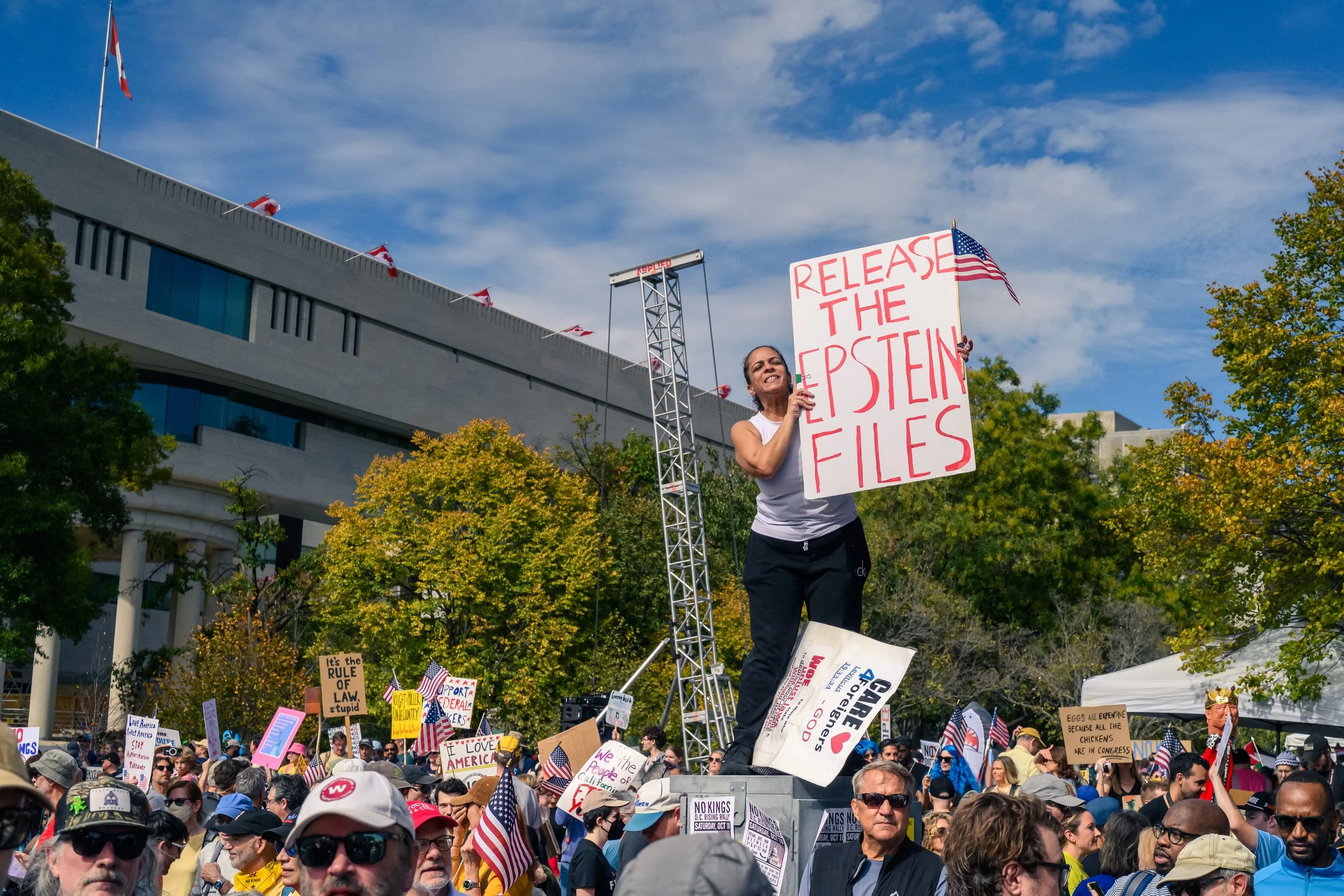
Although these files were not publicly available throughout the Epstein trial, they have since caused commotion amongst its followers, generating significant public interest as to who may be referenced in the files and why. As a result, there have been continuous public demands for greater disclosure from the federal government regarding the Epstein files.
The demand for the release of the Epstein files is centered around the necessity of government transparency, for Americans to understand the government’s handling of Epstein's case and why he was allowed to take his own life in prison. [2] Additionally, government transparency is often viewed as a way to address asked conspiracies about those involved on Epstein Island, territory owned by Jeffrey Epstein in the U.S. Virgin Islands used as a primary location for sexual abuse. Furthermore, the release of the files could also help raise awareness for the victims, individuals who were silenced for thousands of dollars and have had to endure the long-term consequences of sexual assault.
In light of the 2024 presidential election, President Donald Trump’s stance on the release of the Epstein files appeared to shift significantly. During his first term, Trump referred to the release of the files as a “Democratic hoax.” However, while campaigning in June of 2024, Trump claimed he would consider declassifying certain materials upon request. [3] This enticing promise offered the public the opportunity to finally receive answers about what exactly happened on Epstein Island. As Trump repeatedly emphasized his interest in releasing the files alongside the introduction of the H.R.4405, the Epstein Files Transparency Act in July of 2025, hope for the release of the case grew amongst Americans. This bill required the Department of Justice to publicly release all unclassified documents, records, and investigative materials in their possession related to the prosecution of Jeffrey Epstein, with permission to withhold personal information about Epstein’s victims. [4]
However, after being elected, Trump distanced himself from his earlier stance supporting disclosure. Trump demanded that audience members, specifically those demanding answers on the Epstein trial, not waste their time urging for the release of the files, which suggests that releasing the files may no longer serve his political objectives. [5] In July 2025, Trump came out with a public statement urging supporters not to waste time on the Epstein files, creating a lot of political backlash amongst those who urged for the files’ release.
Despite Trump’s hesitance, individuals remain adamant about the unfiltered release of the Epstein Files. This urgency partially stems from a misconception of how much access to legal documents the public is entitled to under the Freedom of Information Act (FOIA). The FOIA emphasizes that government records should be transparent, but creates the measures that outline what information can be withheld. [6] Federal agencies are legally allowed to withhold information that invades personal privacy or compromises ongoing law-enforcement investigations, such as the Epstein case. As the Epstein files contain victim testimonies and sealed court material, much of what the public demands from these files sharply contrasts with the FOIA.
Trump’s unkept promise has solicited negative feedback from constituents, with many suggesting that his hesitation has unraveled because his name is included on an unconfirmed list of individuals who are associated with Epstein. Attorney General Pam Bondi released a statement refusing to publish any information within the files, including the suspected “client list.” Statements from Department of Justice Officials refusing to publish information regarding the alleged “client list” left the public without explicit answers as to why the documents remain heavily redacted, with only a small fraction of the files released relative to the total amount of information they contain. [3] The President’s dismissal of the matter has only stimulated further discontent and conspiracies.
The further invigorated outrage resulted in yet another amendment in Trump’s promise, where, in November of 2025, he verbally expressed an openness to release limited parts of the files, following with Congress’s vote on those portions. With the passage of the Epstein Transparency Act, thousands of photographs emerged from the files, including images of former President Bill Clinton in a hot tub with Jeffrey Epstein. [7] While these images enticed the public, the government's hesitation on the complete release of these files poses questions about the violation of FOIA stipulations. Individuals longed for uncensored and complete information about what was contained in those files and will continue to protest for their full release.
Ultimately, the contention surrounding the Epstein files reflects a larger ongoing discussion about the desire for government transparency and the legal boundaries of government investigations. While the FOIA provides distinct parameters for what information the federal government can release about an investigation without compromising the privacy of victims, the lack of compliance to release these files jeopardizes the victims’ ability to achieve justice. Additionally, the Epstein Files Transparency Act provided false hope to Americans who have been following Epstein’s case since his imprisonment, as they continue to yearn for more details. Whether these files are released or not, the public will continue delving for information regarding their unanswered questions.
Notes:
Scannell, Kara, and Evan Perez. 2025. “What We Know about the Epstein Files.” CNN. July 25, 2025. https://www.cnn.com/2025/07/25/politics/epstein-files-justice-department
Moore, Russell. 2025. “Why We Want to See the Epstein Files - Christianity Today.” Christianity Today. July 16, 2025. https://www.christianitytoday.com/2025/07/jeffrey-epstein-files-pam-bondi-nixon-trump-russell-moore/
Hutzler, Alexandra. 2025. “What Trump Has Said about Jeffrey Epstein over the Years, Including on 2024 Campaign Trail.” ABC News. July 16, 2025. http://abcnews.go.com/Politics/trump-jeffrey-epstein-years-including-2024-campaign-trail/story?id=123778541
Khanna, Rep. 2025. “H.R.4405 - 119th Congress (2025-2026): Epstein Files Transparency Act.” Congress.gov. 2025. https://www.congress.gov/bill/119th-congress/house-bill/4405
“Trump Tells Supporters Not to ‘Waste Time’ on Epstein Files. They’re Not Happy.” 2025. NPR. July 14, 2025. https://www.npr.org/2025/07/14/nx-s1-5467151/trump-epstein-files-doj-fbi-maga
United States Department of Justice. n.d. “FOIA.gov - Freedom of Information Act: Learn.” FOIA.gov. https://www.foia.gov/about.html
Hayes, Christal. 2025. “Epstein Files: Who and What Are in the Documents?,” December 20, 2025. https://www.bbc.com/news/articles/c8r38ne1x2mo.
Bibliography:
Hayes, Christal. 2025. “Epstein Files: Who and What Are in the Documents?,” December 20, 2025. https://www.bbc.com/news/articles/c8r38ne1x2mo
Hutzler, Alexandra. 2025. “What Trump Has Said about Jeffrey Epstein over the Years, Including on 2024 Campaign Trail.” ABC News. July 16, 2025. http://abcnews.go.com/Politics/trump-jeffrey-epstein-years-including-2024-campaign-trail/story?id=123778541
Khanna, Rep. 2025. “H.R.4405 - 119th Congress (2025-2026): Epstein Files Transparency Act.” Congress.gov. 2025. https://www.congress.gov/bill/119th-congress/house-bill/4405
Moore, Russell. 2025. “Why We Want to See the Epstein Files - Christianity Today.” Christianity Today. July 16, 2025. https://www.christianitytoday.com/2025/07/jeffrey-epstein-files-pam-bondi-nixon-trump-russell-moore/.
Scannell, Kara, and Evan Perez. 2025. “What We Know about the Epstein Files.” CNN. July 25, 2025. https://www.cnn.com/2025/07/25/politics/epstein-files-justice-department
“Trump Tells Supporters Not to ‘Waste Time’ on Epstein Files. They’re Not Happy.” 2025. NPR. July 14, 2025. https://www.npr.org/2025/07/14/nx-s1-5467151/trump-epstein-files-doj-fbi-maga
United States Department of Justice. n.d. “FOIA.gov - Freedom of Information Act: Learn.” FOIA.gov. https://www.foia.gov/about.html

The Past, Present, and Future of Section 230
By: Gillian Ho
Edited by: Clark Mahoney and Lauren Levinson
Section 230 of the Communications Decency Act has been in effect since 1996, which protects online platforms from liability for content posted by their users for content posted by their respective users, shielding companies from being deemed publishers of user-generated content, such as social media platforms Facebook and Reddit. [1] Section 230 also allows platforms to moderate and remove content “in good faith” without being held liable for such actions. While the policy was originally enacted to foster free speech and protect online service providers, today, Section 230 has raised debates on its interpretation and applications. For example, courts have used the policy to preemptively end lawsuits and legal actions that would hold providers and users liable for third-party content. As digital communication has grown more complex, the meaning and practical impact of Section 230 have been continually tested. Policymakers and courts now debate how to balance free expression, innovation, and platform accountability, raising questions about whether the law should be reinterpreted, narrowed, or reformed for the modern internet.
Officially, Section 230 is built around two subsections, 230(c)(1) and 230(c)(2), which together define both the scope of platform immunity and the boundaries of content moderation. The text of 230(c)(1) states that “no provider or user of an interactive computer service shall be treated as the publisher or speaker of any information provided by another information content provider.” In practice, this clause prevents courts from holding online platforms legally responsible for most content created by third parties. Congress enacted this language to encourage the growth of online communication by ensuring that platforms would not be forced to assume the traditional legal responsibilities of publishers, such as liability for defamation or other byproducts from user speech. A key aspect of the subsection is its distinction between a publisher, who can be held liable for the content they vet or endorse, and an interactive computer service, which simply hosts user content. Section 230 clarifies that content moderation does not transform computer services into publishers legally. This distinction allows platforms to operate and facilitate online posts without being required to assume traditional editorial liability.
The second major subsection, 230(c)(2), known as the “Good Samaritan” clause, protects platforms that restrict or remove content in good faith. The law explicitly states that providers cannot be held liable for taking action to moderate material they consider obscene, violent, harassing, or otherwise objectionable, even if that material is constitutionally protected. This clause was designed to encourage responsible moderation by preventing platforms from facing free-speech-related lawsuits for attempting to create safer online environments.
Together, these two sections form the foundation of Section 230’s original intentions—shielding platforms from liability for user posts while giving them broad discretion to moderate content without legal penalty. Nonetheless, Section 230 was enacted for the online communication world of 1996. Today, companies like Facebook, YouTube, TikTok, and X serve billions of users and operate as primary venues for public communication, news consumption, and political discussion. This modern shift has kick-started debates about whether a policy designed for early technology remains satisfactory for governing platforms that now shape global information spheres.
The Supreme Court’s consideration of Reynaldo Gonzalez, et al. v. Google LLC, 598 U.S. 617 in 2023 defined a moment in the modern debate over online platform liability. Gonzalez v. Google arose from a lawsuit filed by the family of Nohemi Gonzalez, an American student killed in the 2015 ISIS attack in Paris. [2] Her relatives alleged that YouTube, owned by Google, had contributed to ISIS’s recruitment and radicalization efforts by recommending extremist videos through its algorithms. The plaintiffs argued that the platform’s recommendation systems played an impactful role in promoting dangerous material. The question, therefore, was whether these algorithmic suggestions constituted actions taken “as a publisher,” which Section 230 shields, or whether they amounted to separate platform conduct not covered by the statute. This distinction challenged the foundational assumptions of Section 230. When the law was enacted in 1996, “publishing” largely meant hosting or distributing user content. Recommendation algorithms were far from the minds of the statute’s authors, yet they are now foundational to the content architecture of social media platforms. The plaintiffs argued that algorithmic promotion is fundamentally different from passive hosting, because it reflects platform-designed choices that influence which content users see and how it spreads. [3] Ultimately, the Court avoided the central Section 230 question. Instead, it sent Gonzalez v. Google back to the lower courts. [4] The Court reasoned that the claims in Gonzalez v. Google were insufficient even without considering Section 230, and therefore declined to interpret the statute at all. Most notably, the Court did not determine whether algorithmic recommendations are protected under Section 230. As a result, the distinction between neutral tools, such as chronological feeds and algorithmic curation, is still legally ambiguous. Lower courts have generally treated recommendations as part of the publisher function, but their reasoning varies, and several judges have expressed unease about extending immunity to increasingly sophisticated, personalized, and profit-driven recommendation engines. [5] Generally, Gonzalez v. Google signals that the future of Section 230 will likely depend on how the law adapts to platform scale and technological sophistication.
Conversely, the Supreme Court’s decision in Twitter, Inc. v. Taamneh, 598 U.S. 47 in 2023 addressed whether platforms can be held secondarily liable under the Anti-Terrorism Act (ATA) for failing to prevent terrorist organizations from using their services. Twitter v. Taamneh originated from a lawsuit filed by the family of a victim of the 2017 ISIS attack at the Reina nightclub in Istanbul. [6] The plaintiffs argued that Twitter, Google, and Facebook had “aided and abetted” ISIS by allowing the group to maintain accounts, disseminate propaganda, and reach global audiences through their platforms. Unlike in Gonzalez, the plaintiffs did not rely on Section 230; instead, they invoked the Justice Against Sponsors of Terrorism Act, a 2016 amendment to the ATA that allows civil suits against entities that “knowingly provide substantial assistance” to terrorist acts. [7] The core question before the Court was therefore whether the platforms’ failure to eliminate ISIS-related content amounted to “knowing and substantial assistance” of a specific terrorist attack. In effect, they argued that platforms provide an enabling environment for terrorism simply by failing to fully eliminate extremist activity. The Supreme Court unanimously rejected this theory. Writing for the Court, Justice Clarence Thomas held that the ATA requires a concrete and direct connection between the defendant’s actions and the particular attack at issue. [8] Mere awareness that bad actors use a widely available service does not amount to “knowing assistance,” nor does a failure to detect and remove harmful content transform a neutral tool into substantial aid. The Court emphasized that imposing liability for general platform use would dramatically expand the concept of aiding and abetting, potentially exposing countless technology providers to sweeping legal risk.
Although Twitter v. Taamneh did not involve Section 230 directly, its implications for the statute’s future are substantial. First, the decision reinforces the Court’s reluctance to impose broad liability on platforms for user behavior in the absence of clear legislative direction. The decision signals that, even outside the protections of Section 230, courts will require highly specific allegations of intentional misconduct before allowing claims against platforms to proceed. This raises the bar for future plaintiffs seeking to hold platforms liable for harms stemming from user content, whether related to terrorism, extremist activity, or other forms of online harm.
The unresolved questions surrounding Section 230 have prompted a wave of reform efforts at both the federal and state levels. Although lawmakers across the political spectrum disagree on the causes and consequences of platform harms, there is bipartisan consensus that Section 230, written in 1996—long before the rise of algorithmic curation and global social media—requires modernization. The central challenge for policymakers is determining how to update the statute without inadvertently undermining the open, participatory structure of the modern internet.
For one, The EARN IT Act, introduced repeatedly with bipartisan support, seeks to condition Section 230 protections on compliance with best practices for detecting and preventing child sexual exploitation online. [9] Similarly, the bipartisan SAFE TECH Act, aims to narrow immunity by excluding paid content, targeted advertising, and certain algorithmic recommendations from Section 230 protection. [10]
Regardless of modernization, any successful reform must balance innovation with responsibility and preserve free expression while ensuring user safety. Achieving this balance will determine whether Section 230 continues to support an open, dynamic digital environment or becomes a constraint on the next era of internet development.
Notes:
Congress.gov. “Section 230: An Overview,” 2025. https://www.congress.gov/crs-product/R46751.
"Gonzalez v. Google LLC." Oyez. 2022.https://www.oyez.org/cases/2022/21-1333.
Hasan, Zayn. “Supreme Court Report: Gonzalez v. Google LLC, 21-1333.” National Association of Attorneys General, October 17, 2022. https://www.naag.org/attorney-general-journal/supreme-court-report-gonzalez-v-google-llc
Hamm, Andrew. “Gonzalez v. Google LLC.” SCOTUSblog, April 12, 2022. https://www.scotusblog.com/cases/case-files/gonzalez-v-google-llc/.
Congress.gov. “Liability for Algorithmic Recommendations,” 2025. https://www.congress.gov/crs-product/R47753.
"Twitter, Inc. v. Taamneh." Oyez. 2022. https://www.oyez.org/cases/2022/21-1496.
LII / Legal Information Institute. “Twitter, Inc. V. Taamneh,” 2023. https://www.law.cornell.edu/supct/cert/21-1496.
Golde, Kalvis. “Twitter, Inc. V. Taamneh.” SCOTUSblog, June 8, 2022. https://www.scotusblog.com/cases/case-files/twitter-inc-v-taamneh/.
Graham, Lindsey. “S.1207 - 118th Congress (2023-2024): EARN IT Act of 2023.” Congress.gov, 2023. https://www.congress.gov/bill/118th-congress/senate-bill/1207.
Mark, Warner,. “S.560 - 118th Congress (2023-2024): SAFE TECH Act.” Congress.gov, 2023. https://www.congress.gov/bill/118th-congress/senate-bill/560.
Bibliography:
Congress.gov. “Liability for Algorithmic Recommendations,” 2025. https://www.congress.gov/crs-product/R47753.
Congress.gov. “Section 230: An Overview,” 2025. https://www.congress.gov/crs-product/R46751.
Golde, Kalvis. “Twitter, Inc. V. Taamneh.” SCOTUSblog, June 8, 2022. https://www.scotusblog.com/cases/case-files/twitter-inc-v-taamneh/.
"Gonzalez v. Google LLC." Oyez. 2022. https://www.oyez.org/cases/2022/21-1333.
Graham, Lindsey. “S.1207 - 118th Congress (2023-2024): EARN IT Act of 2023.” Congress.gov, 2023. https://www.congress.gov/bill/118th-congress/senate-bill/1207.
Hamm, Andrew. “Gonzalez v. Google LLC.” SCOTUSblog, April 12, 2022. https://www.scotusblog.com/cases/case-files/gonzalez-v-google-llc/.
Hasan, Zayn. “Supreme Court Report: Gonzalez v. Google LLC, 21-1333.” National Association of Attorneys General, October 17, 2022.
https://www.naag.org/attorney-general-journal/supreme-court-report-gonzalez-v-google-llc
LII / Legal Information Institute. “Twitter, Inc. V. Taamneh,” 2023. https://www.law.cornell.edu/supct/cert/21-1496.
Mark, Warner,. “S.560 - 118th Congress (2023-2024): SAFE TECH Act.” Congress.gov, 2023.
https://www.congress.gov/bill/118th-congress/senate-bill/560.
"Twitter, Inc. v. Taamneh." Oyez. 2022.